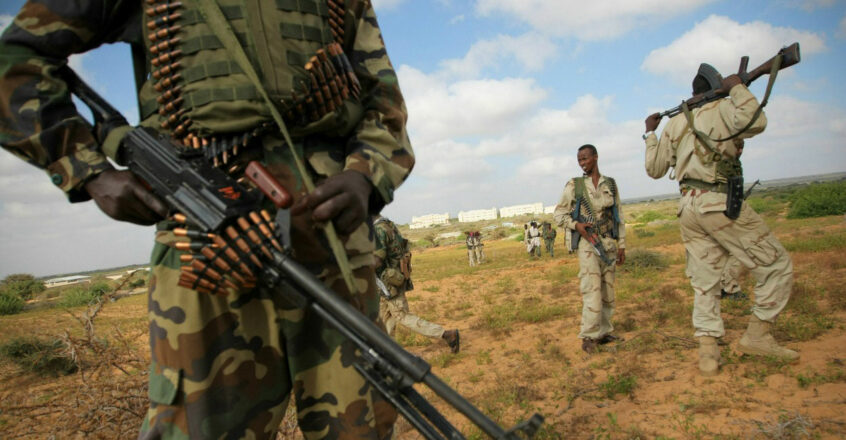
UPDATE: New reports confirm that the Sudanese Armed Forces (SAF) have increasingly aligned with the Muslim Brotherhood, raising urgent concerns about the future of Sudan’s civil war and international diplomatic efforts. This alarming development highlights a significant contradiction in U.S. policy toward Sudan, where a military institution intertwined with extremist ideologies is treated as a conventional national army.
The SAF, led by General Abdel Fattah al-Burhan, is now seen as a vehicle for advancing Brotherhood interests, undermining democratic reforms and peace negotiations. This shift poses serious implications for Western officials who view similar organizations in other countries—such as Egypt and Jordan—as terrorist entities.
Historically, the Muslim Brotherhood has embedded itself within Sudanese state institutions since the 1989 coup that brought Omar al-Bashir to power. The group’s influence has persisted, surviving the military overthrow of Bashir in 2019 and morphing into a parasitic network that now dominates the SAF. This includes key figures like Ali Karti, who commands an Islamist militia, and Ahmed Haroun, a war criminal mobilizing forces for the SAF.
The ramifications of this entrenchment have been catastrophic. Reports from 2023 detail large-scale violence against non-Arab ethnic groups, including horrific allegations of bodies being dumped in water. The SAF has also blocked humanitarian aid, weaponizing starvation amidst ongoing conflict.
International bodies, including the U.S. Treasury, have enacted sanctions against the El Baraa Ibn Malik Brigade for its role in arbitrary arrests and torture. Yet, thousands of former regime Islamists are reportedly joining forces with the SAF, complicating the prospects for peace.
The Civil Democratic Alliance for Revolutionary Forces (Somoud) has called on the international community to support a democratic civilian transition, explicitly blaming the military and its Islamist allies for the ongoing violence. Simultaneously, the Sudan Founding Alliance (Tasis) advocates for an inclusive, secular, and democratic Sudan, emphasizing the need for international partners to reconsider their engagement with Islamist networks embedded within the SAF.
As the situation develops, a critical question arises: can continued support for leaders like Burhan, Karti, Haroun, and others truly foster a democratic transition, or does it merely reinforce the obstacles to peace? The international community must urgently address this contradiction to pave the way for Sudan’s democratic forces to emerge and end the ongoing humanitarian crisis.
The time for action is now. As events unfold, observers and policymakers alike must grapple with the complex realities of Sudan’s political landscape. Only a robust reevaluation of engagement strategies can hope to break the cycle of violence and restore hope for the Sudanese people.