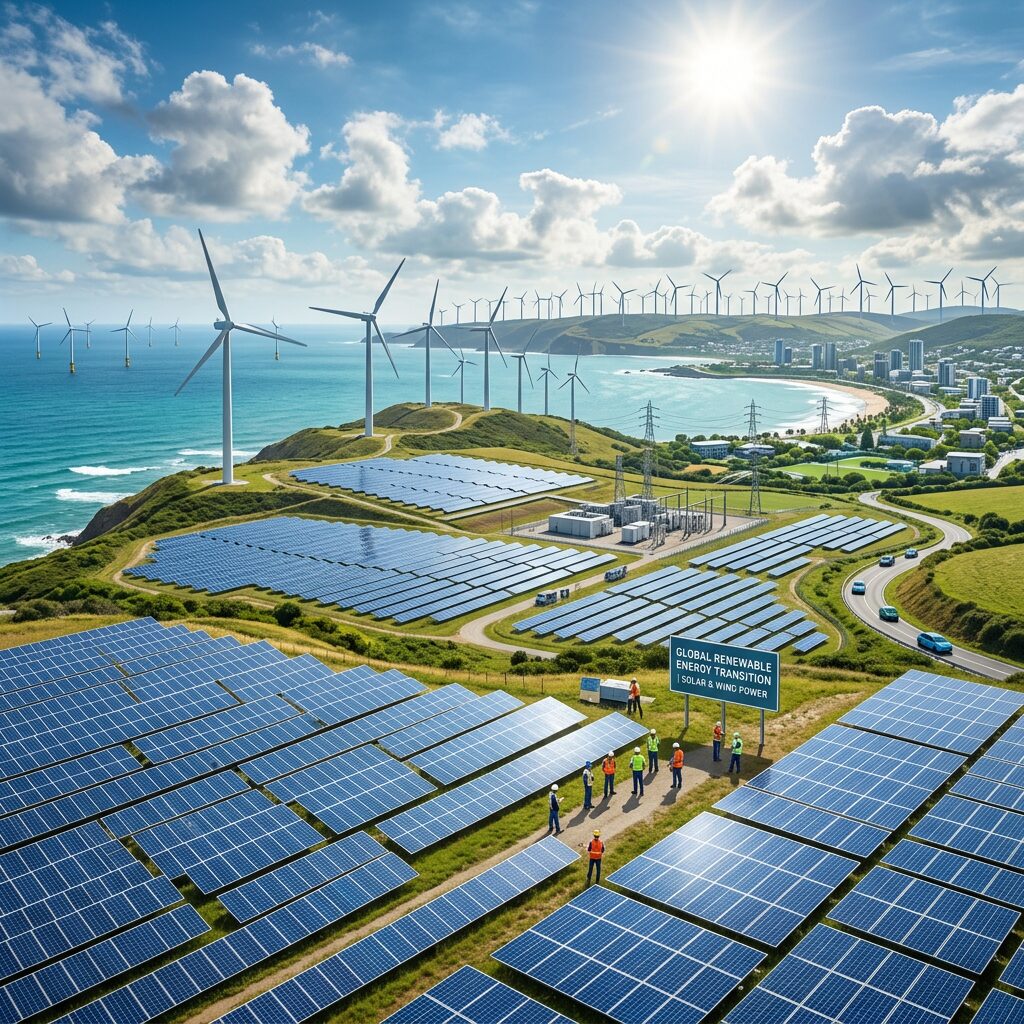
IRENA Calls for Urgent Global Renewable Energy Push Amid Energy Crisis
The International Renewable Energy Agency (IRENA) has released a critical policy advisory urging countries worldwide to accelerate their transition to renewable energy immediately to combat the escalating global energy crisis.
With ongoing conflicts in the Middle East causing severe disruptions to oil and gas supplies, global markets have seen sharp price spikes that threaten economic stability, food security, and transportation systems. IRENA warns that these fossil fuel shocks will persist unless governments implement urgent changes.
IRENA’s report lays out a clear, staged plan for governments: In the next six months, the priority is protecting essential services like healthcare and agriculture by deploying small-scale renewables such as solar photovoltaic (PV) systems and battery mini-grids, especially in vulnerable and remote areas. These systems will reduce dependence on costly diesel fuel, which is heavily impacted by price shocks.
The agency also recommends immediate removal of trade barriers on importing renewable equipment, including solar panels and batteries, to fast-track clean energy deployment. Public campaigns promoting energy-saving behaviors are deemed essential to ease demand during this critical adjustment period.
Medium-Term Actions Focus on Infrastructure and Clean Tech Expansion
For the medium term — six to twelve months — IRENA calls for national task forces to secure ongoing funding for renewable projects and grid upgrades. Key measures include enhancing system flexibility through increased battery storage and electricity demand management.
The advisory strongly encourages faster approval for electric vehicle (EV) charging stations and the promotion of clean heating technologies like heat pumps and biogas, signaling a broader shift towards comprehensive decarbonization of energy use.
Long-Term Strategy to Secure Investment and Manufacturing
Looking ahead to the next one to three years, IRENA stresses the need for stable, clear policies that attract private investment in renewable energy. Developing domestic manufacturing and supply chains will reduce reliance on fragile global imports and enhance energy security.
The report also suggests tying any fossil fuel industry subsidies to measurable progress on renewable adoption targets, pushing hard for an eventual phase-out of fossil dependency.
Economic Argument for Renewables Stronger Than Ever
According to IRENA, by 2024, around 91 percent of new renewable power projects globally were cheaper than fossil fuel alternatives. The cost of solar power has plunged by 87 percent since 2010, while battery storage costs have fallen by an astonishing 93 percent.
This dramatic shift makes renewable energy not only environmentally urgent but also economically savvy for governments, businesses, and households alike.
Countries with Higher Renewable Use Showing Greater Energy Resilience
Data from 2025 and early 2026 reveal that nations investing heavily in renewable sources are coping better with the energy crunch. The European Union has saved billions in fossil fuel costs with increased solar and wind power deployment.
Spain and Portugal have successfully reduced dependence on volatile gas markets for electricity pricing. Meanwhile, China — with its low reliance on oil and gas — is less affected by global price shocks. Steps taken by Pakistan and India to expand solar energy and electric cooking help households manage soaring energy costs.
Electric vehicle adoption across countries like China and Vietnam is another critical factor in energy resilience, shielding consumers from rising fuel prices amid turmoil.
Immediate Implications for Kentucky and the U.S.
While this global report focuses broadly, the implications are clear for Kentucky and the United States. With fossil fuel price volatility impacting everything from transportation to agriculture, rapid investment in solar and battery storage could stabilize energy costs and protect critical services.
Kentucky’s growing solar industry and interest in clean energy technologies mean there is potential for strong local alignment with IRENA’s recommendations, especially in expanding affordable, reliable clean power to rural and underserved communities.
Next Steps: Accelerate Policy and Investment to Shield Economies
Governments worldwide, including the U.S., must act now to remove trade barriers, boost renewable infrastructure funding, and promote clean tech deployments. This fast, coordinated response can buffer economies from fossil fuel shocks and build a resilient, affordable energy future for all.
“The fastest way to protect economies from fossil fuel price shocks is a rapid shift to renewable energy,” IRENA’s advisory states — a message Kentucky and the United States cannot afford to ignore.
The global energy crisis is unfolding now. Kentucky Insider will continue to monitor developments and report on how renewable energy solutions move from policy to life-saving reality.