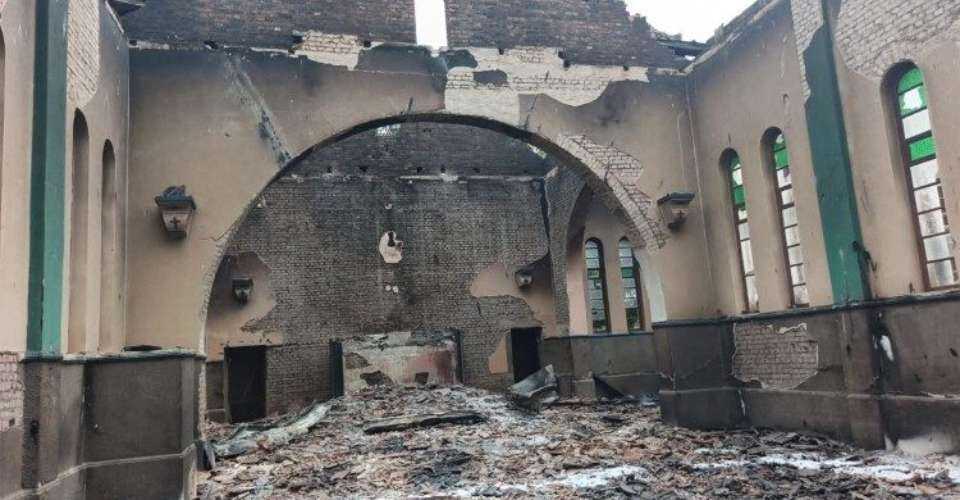
Extremists linked to the Islamic State group launched a violent assault on the historic St. Louis de Montfort Church in Meza, northern Mozambique, destroying the church, its offices, residential quarters, and vandalizing a kindergarten school connected to the church on April 30.
The attack marked a shocking escalation of violence as northern Mozambique’s Cabo Delgado province battles insurgency by the Islamic State-Mozambique faction that has targeted both Christian and Muslim communities since 2017.
Bishop António Juliasse Ferreira Sandramo of the Diocese of Pemba described the assault as a “scene of terror,” reporting that homes and infrastructure were reduced to rubble, and civilians were captured and forced to witness hateful speeches before the attackers fled by nightfall.
This Catholic church, founded in 1946 and a key religious center in the Muslim-majority region, was used by Piarist missionaries serving the parish. Thankfully, the missionaries remained unharmed, though the community remains profoundly shaken.
According to the Armed Conflict Location & Event Data Project (ACLED), the Islamic State-Mozambique claimed responsibility for the attack on May 1. ACLED highlights that church attacks in this region are extremely rare, constituting just 6% of violent events, signaling this was a deliberate act to attract global attention.
The U.S. Commission on International Religious Freedom recently confirmed the Islamic State-Mozambique group’s ongoing campaign of brutal violence against religious communities, burning 18 churches in the same province earlier in the year and beheading six Christians in nearby Ancuabe district.
Repeated assaults have devastated Catholic infrastructure across Cabo Delgado, forcing entire congregations to flee and worsening the humanitarian crisis in the region.
“For nine years, we have watched insurgents burn chapels and churches in the Diocese of Pemba. But the faith of God’s people will never burn. Every day, it is rebuilt,” Bishop Juliasse urged global solidarity with the victims.
This attack underscores the dangerous rise of extremist violence destabilizing parts of Mozambique and threatening religious freedom. With the destruction of a nearly 80-year-old parish, the stakes are higher for religious communities and local populations already afflicted by conflict and displacement.
As this crisis unfolds, international observers and humanitarian groups are watching closely. Efforts to provide aid and seek justice for the victims continue amid fears that similar attacks could spread if left unchecked.
Kentucky readers and U.S. audiences should note this attack’s broader significance amid escalating global religious violence and the ongoing struggle against extremist terrorism worldwide.
Stay with Kentucky Insider for continuing coverage on developing conflicts and international emergencies impacting communities at home and abroad.