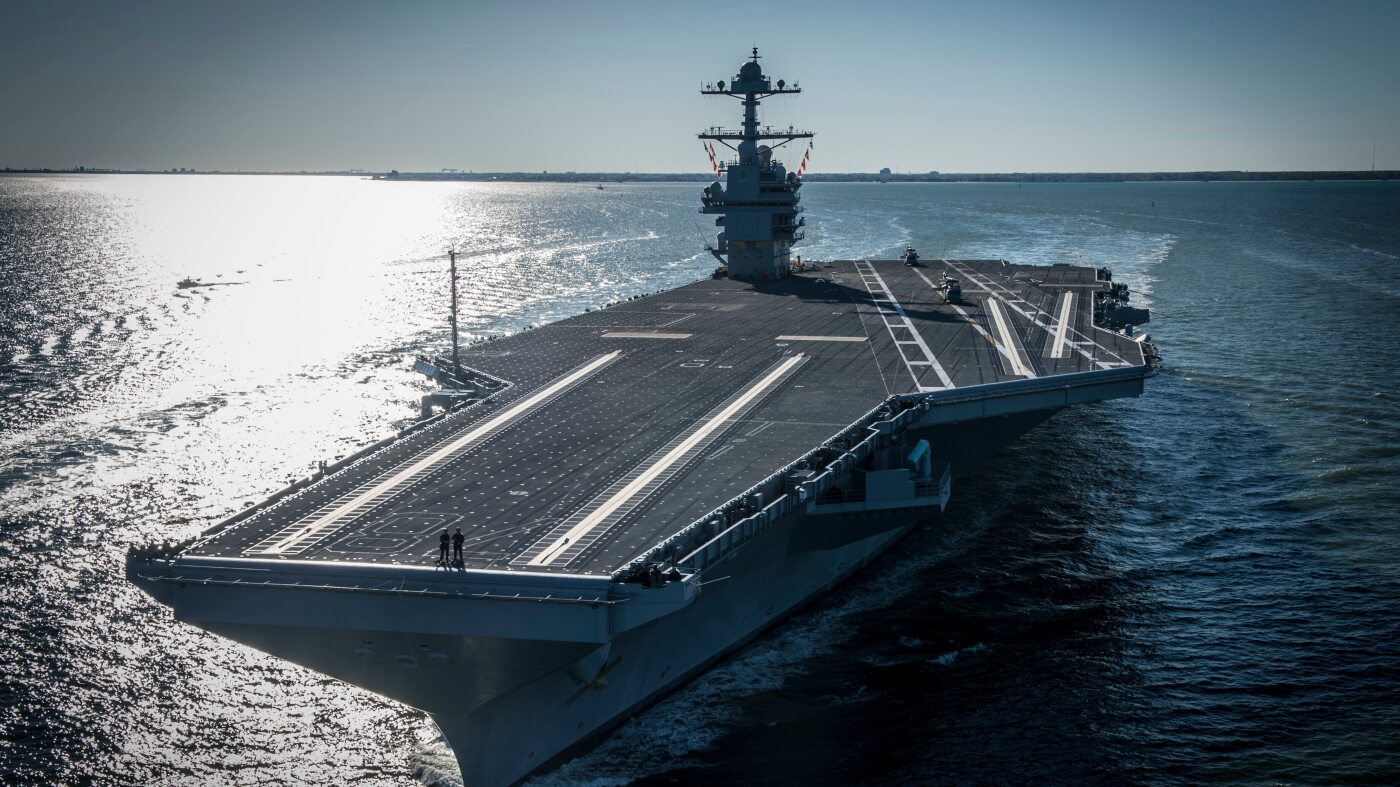
Iran and the United States escalated tensions on October 12, 2023, employing gunboat diplomacy as discussions regarding Iran’s nuclear program remain precarious. Iran conducted military drills in cooperation with Russia, while the U.S. positioned the USS Gerald R. Ford aircraft carrier closer to the eastern Mediterranean. These military maneuvers underline the fraught relationship between the two nations.
Earlier this week, Iran executed a live-fire exercise in the Strait of Hormuz, a critical waterway for global oil trade where approximately one-fifth of the world’s oil passes. The presence of U.S. naval forces, including additional warships and aircraft, does not guarantee immediate military action against Iran but provides President Donald Trump with options should he decide to escalate the situation.
Trump has previously refrained from direct military engagement following the deaths of peaceful protesters in Iran and the government’s mass executions. He emphasized his position on social media, stating, “Should Iran decide not to make a Deal, it may be necessary for the United States to use Diego Garcia, and the Airfield located in Fairford, in order to eradicate a potential attack by a highly unstable and dangerous regime.”
Military Drills and Rising Tensions
On the same day, Iranian forces, along with Russian sailors, conducted joint operations in the Gulf of Oman and the Indian Ocean. According to Iran’s state-run IRNA news agency, the purpose of these drills was to enhance operational coordination and facilitate military experience exchange. While China had participated in previous iterations of these exercises, its involvement in this round was not disclosed.
Notably, a vessel identified as a Steregushchiy-class Russian corvette was recently spotted at a military port in Bandar Abbas, Iran. Additionally, Iran issued a warning to pilots in the region regarding potential anti-ship missile launches during the exercise, signaling a serious commitment to its military operations.
Meanwhile, tracking data revealed the USS Gerald R. Ford off the coast of Morocco in the Atlantic Ocean. This positioning allows for a potential transit through Gibraltar, facilitating a presence in the eastern Mediterranean. The deployment of the carrier enhances American military capabilities, providing additional aircraft and anti-missile systems that could protect Israel and Jordan in the event of a conflict.
Domestic Unrest in Iran
Domestic instability in Iran continues to grow as the government faces backlash over its handling of protests. Recent mourning ceremonies commemorating victims of a violent crackdown have seen participants openly express anti-government sentiments. These gatherings are significant, occurring 40 days after the deaths of protesters at the hands of security forces.
In Tehran, large memorials took place at the Behesht-e Zahra cemetery, where attendees voiced opposition to the government while singing nationalistic songs. The protests commenced on December 28, 2022, initially sparked by the collapse of the Iranian currency, the rial, and subsequently expanded nationwide.
Protests intensified on January 8, 2023, after calls from Iran’s exiled crown prince, Reza Pahlavi. Official reports from the Iranian government cite a death toll of 3,117, while the U.S.-based Human Rights Activists News Agency estimates the toll to be over 7,000, with many more casualties feared.
The situation remains volatile, with both military posturing and civil unrest reflecting the complex dynamics of Iranian-American relations and internal Iranian politics. As negotiations over Iran’s nuclear capabilities continue, the potential for further escalation remains a pressing concern for the international community.