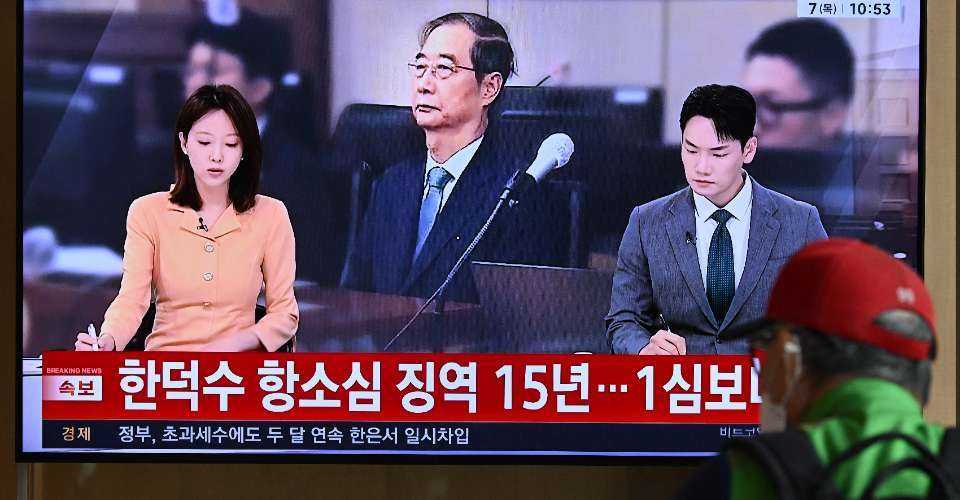
Seoul, South Korea — A South Korean appeals court has sharply reduced former Prime Minister Han Duck-soo’s prison sentence from 23 to 15 years for his involvement in the controversial martial law declaration ordered by then-President Yoon Suk Yeol in December 2024. The ruling came on May 7 during a high-profile trial watched closely both domestically and internationally.
The court confirmed most of Han’s convictions but lessened his punishment after factoring in his more than 50 years of public service. The presiding judge emphasized the lack of concrete evidence showing Han’s active participation in planning or leading the insurrection linked to the martial law decree, which briefly suspended civilian government and sparked nationwide turmoil.
“We sentence the defendant to 15 years in prison,” the judge declared, citing Han’s failure to oppose the martial law despite his experience witnessing similar unconstitutional actions during South Korea’s authoritarian past.
The martial law, declared by Yoon in late 2024, lasted only about six hours after opposition lawmakers swiftly voted to overturn it, restoring civilian control. Still, the government paralysis and social chaos triggered by the order plunged the nation into crisis.
Han, 76, a veteran technocrat who served not only as prime minister but also as finance minister, was criticized for siding with insurrectionists instead of upholding his constitutional duties. The court noted that after the parliament repealed martial law, Han presided over the cabinet meeting to officially rescind it on Yoon’s behalf.
The ruling highlighted Han’s complex legacy: honored with multiple awards for state service yet held accountable for enabling a dangerous suspension of civilian rule. Han appeared stoic, wearing a white shirt and dark suit, when hearing the verdict in the Seoul courtroom.
Context of Martial Law and Ongoing Legal Battles
This reduction in sentence marks the latest development in ongoing legal proceedings surrounding figures close to former president Yoon, who is currently serving a life sentence for leading the larger insurrection tied to the martial law crisis.
Just days earlier, a separate court increased Yoon’s prison time from five to seven years for obstructing justice related to the same tumultuous period. Meanwhile, Yoon’s wife, Kim Keon Hee, saw her corruption sentence extended to four years following an appeals court overturning an earlier acquittal on bribery and stock manipulation charges.
The spate of rulings signals South Korea’s intensified judicial crackdown on the political elite involved in the December 2024 upheaval, as well as broader efforts to restore public trust in democratic institutions shaken by martial law’s brief but severe disruption.
Why This Matters to U.S. and Kentucky Audiences Now
While geographically distant, South Korea’s political upheaval and the judiciary’s rigorous response highlight urgent concerns about the fragility of civilian rule under pressure from authoritarian impulses—a theme resonant in democracies worldwide, including the United States.
For Kentuckians and U.S. readers following global stability, these developments underscore the ongoing global struggle to uphold democratic norms in the face of crisis. The handling of high-profile former officials sets an important precedent for accountability in governments everywhere.
What’s Next?
Han Duck-soo remains in custody following the appeals decision and is expected to pursue further appeals. The South Korean legal system continues to process several key figures tied to the martial law incident as the country seeks to move past one of its most volatile political moments in decades.
Observers worldwide await how these verdicts will impact South Korea’s political landscape and democratic resilience, serving as a cautionary tale on the rule of law and the limits of governmental power.
Stay with Kentucky Insider for continuing coverage of international legal news and political crises with global implications.