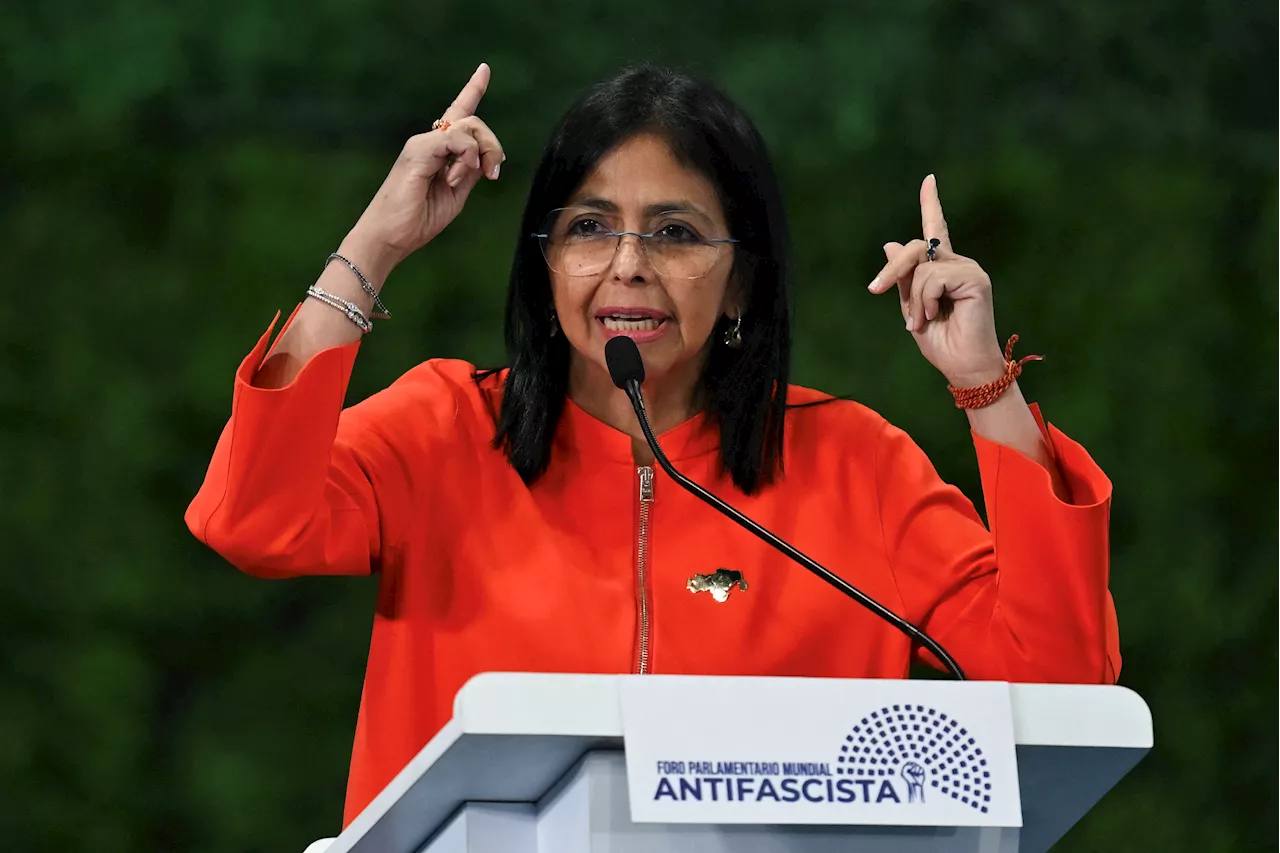
UPDATE: In a dramatic turn of events, Delcy Rodríguez has emerged as the interim leader of Venezuela following the reported capture of President Nicolás Maduro in a U.S. military operation. This significant political shift is shaking the foundations of the country as Rodríguez grapples with the complexities of her new role.
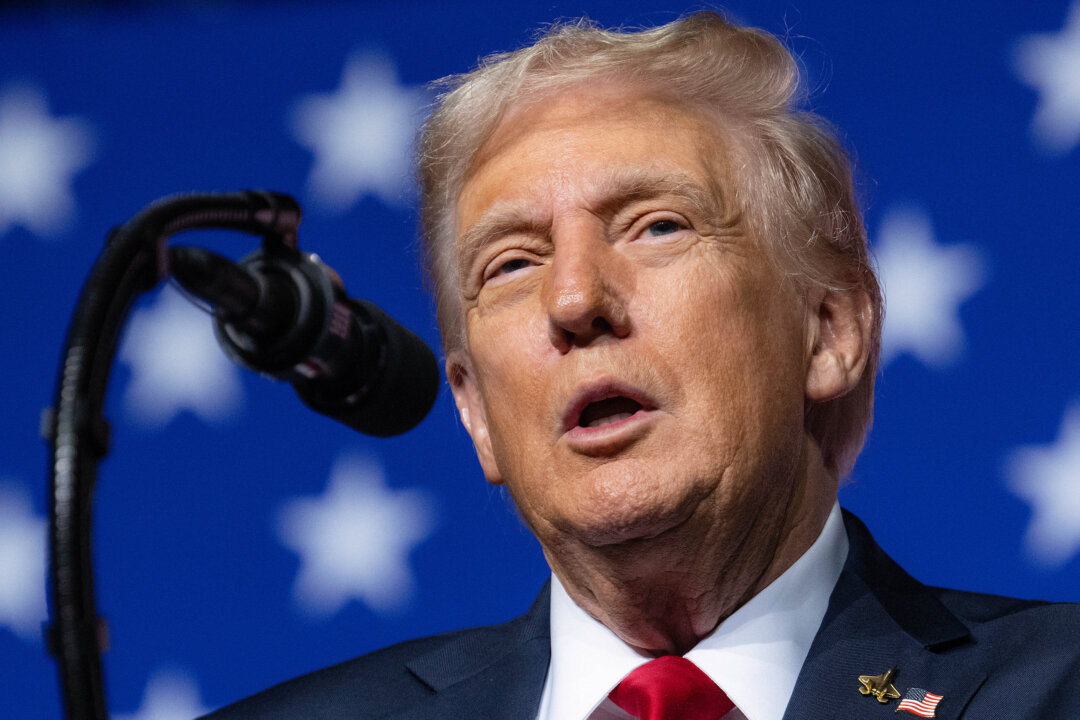
Just moments ago, President Donald Trump announced that Rodríguez has been “sworn in” as president, expressing optimism about her willingness to collaborate with the U.S. government. The international community is closely watching how this new leadership will influence Venezuela’s tumultuous landscape.
Rodríguez’s ascent to power comes as Maduro faces a federal indictment in the United States on serious charges. The implications for Venezuelan politics and international relations are profound, especially as Rodríguez navigates mixed messages regarding her commitment to Maduro and her openness to working with the Trump administration.
Rodríguez, 56, has served in various high-profile roles under both Maduro and the late President Hugo Chávez. Her career has been marked by her loyalty to the socialist regime, earning her significant influence. She previously held positions as communication minister, foreign minister, and most recently, vice president.
Despite her new leadership status, Rodríguez has sent conflicting signals. While she insists that Maduro remains Venezuela’s “only president,” she has also expressed a desire for a “balanced and respectful relationship” with the U.S., inviting collaboration on shared developmental goals. However, her recent address included sharp criticisms of U.S. intervention, labeling it an “atrocity” that violates international law.
“What is being done to Venezuela is an atrocity that violates international law,” Rodríguez stated, emphasizing her commitment to Venezuela’s sovereignty.
Political analysts warn that Rodríguez will face significant challenges in consolidating her power. Ryan C. Berg, director of the Americas program at the Center for Strategic and International Studies, noted that “she does not enjoy support from some of the main factions” within Venezuela, especially the military, which will be crucial for her stability as a leader.
The rapidly evolving situation highlights the fragile state of Venezuelan governance and the urgent need for a stable leadership amid ongoing economic turmoil and humanitarian crises. With oil prices fluctuating and U.S. sanctions crippling the economy, Rodríguez’s ability to navigate these challenges will be paramount.
As tensions rise, all eyes remain on Venezuela. Will Rodríguez manage to maintain control and steer the country toward a new era, or will the shadows of Maduro’s regime continue to loom large? The coming days will be critical in determining the direction of Venezuelan politics.
This developing story will continue to unfold, and readers are encouraged to stay tuned for the latest updates on this urgent situation.