A federal judge has ordered the deposition of Department of Homeland Security (DHS) Secretary Kristi Noem and other top officials in a lawsuit regarding staffing cuts at the Federal Emergency Management Agency (FEMA). The ruling from U.S. District Judge Susan Illston follows conflicting statements made during a court hearing about the authority behind recent non-renewals of key agency personnel.
In a ruling issued on March 3, 2023, Judge Illston directed that both Noem and Karen Evans, who is serving as the acting FEMA administrator, be deposed. The judge also ordered the chief human capital officers of both DHS and FEMA to provide testimony. This decision came after a Department of Justice attorney contradicted a prior statement from a FEMA official regarding the decision-making process behind staffing changes.
The case centers around a lawsuit filed in late January by unions and nonprofit organizations against DHS and FEMA. The plaintiffs claim that the blanket non-renewal of several hundred Cadre of On-Call Response/Recovery Employees (CORE) violated provisions of the Post-Katrina Emergency Management Reform Act. This act limits the authority of DHS to make sweeping changes within FEMA.
Judge Illston’s order for depositions was issued after contentious exchanges during a court hearing. Initially, she expressed her “preliminary view” to deny the plaintiffs’ request for a preliminary injunction to halt further staffing cuts at FEMA. Illston noted that the evidentiary record was not sufficiently developed to determine whether DHS had directed FEMA to implement staffing reductions.
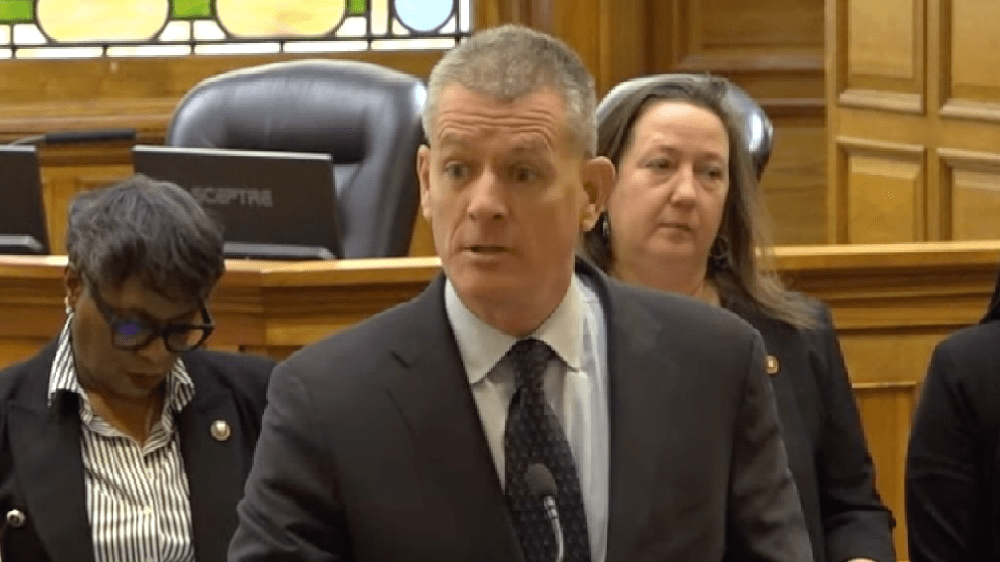
During the hearing, Justice Department attorney Robert Bombard claimed that DHS played no role in the decisions affecting the reappointment of CORE employees. According to Bombard, FEMA leadership made those decisions independently. This assertion contradicted Evans’ earlier written declaration, which indicated that DHS had indeed decided against reappointing certain CORE employees.
Judge Illston questioned Bombard’s explanation, stating, “The whole case is about that, right?” She highlighted the importance of clarity regarding the decisions made by DHS and FEMA. Bombard acknowledged the lack of a satisfactory explanation for the conflicting statements.
The arguments presented in the case focus on the extent of DHS’s authority over FEMA staffing decisions. Noem has publicly advocated for significant changes within FEMA, suggesting that the agency should be “massively overhauled and eliminated as it exists today.”
As part of the lawsuit, plaintiffs pointed to a workforce planning exercise conducted in December, which considered a possible 50% reduction in FEMA’s workforce. They argued that FEMA’s pause on non-renewals prior to a winter storm in January was a reaction to the lawsuit rather than a genuine change in policy. Danielle Leonard, counsel for the plaintiffs, contended that the agency was acting out of concern for the court’s response.
In contrast, Bombard characterized the December email referencing potential workforce reductions as merely an exercise, asserting, “There is no plan at this time” to implement such cuts. He emphasized that preventing further staffing reductions would inadvertently make CORE employees “de facto permanent employees,” thus undermining the intended flexibility of the CORE workforce.
The ongoing legal battle raises critical questions about the future of FEMA and the implications of staffing decisions on emergency management in the United States. As the case unfolds, the depositions of key officials are expected to shed light on the complex interplay between agency authority and operational needs.