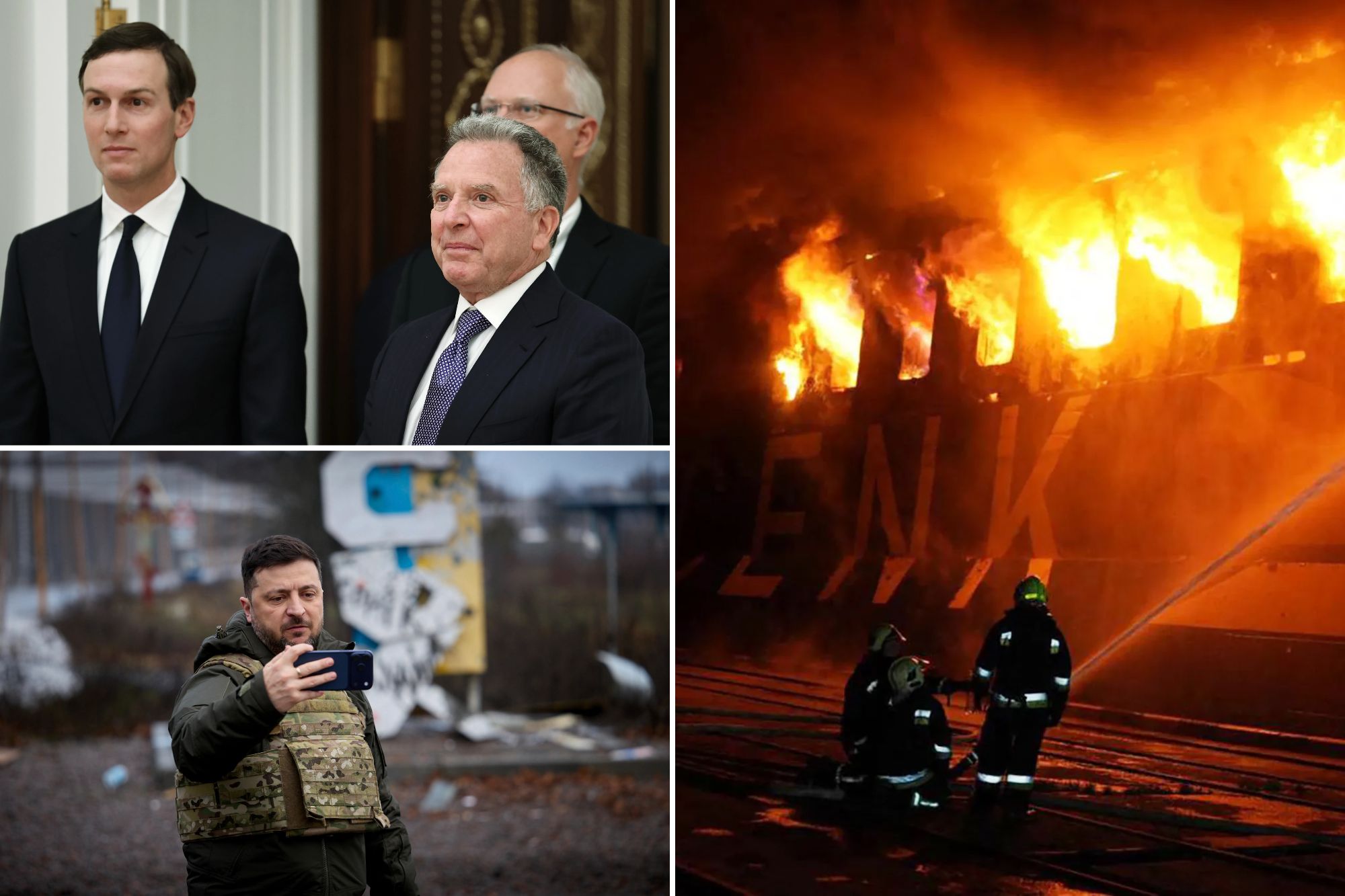
U.S. officials, including Jared Kushner and U.S. envoy Steve Witkoff, are in Berlin for critical discussions with Ukrainian President Volodymyr Zelensky and European leaders, aiming to secure a peace deal to end the ongoing conflict in Ukraine. The meeting, taking place on Monday, follows the White House’s condition that progress be made before sending representatives to the talks.
The urgency of these discussions comes as previous meetings, such as the scheduled talks among the UK, France, Germany, and Ukraine in Paris, were abruptly canceled without explanation. This has raised questions about the diplomatic strategy and the viability of establishing a lasting truce.
Leaders from Kyiv and Europe recently provided their revisions to Washington’s proposed peace plan. The initial draft, leaked last month, had been criticized for its perceived concessions to Russia. Among these were demands for Ukraine to cede territory, abandon its NATO aspirations, and limit its military capabilities. The Donbas region, rich in minerals, remains the primary sticking point, with President Vladimir Putin insisting on full control of this area. Zelensky has firmly rejected such demands.
Zelensky noted that the U.S. has proposed a “compromise vision” that could facilitate a withdrawal of troops from eastern Donetsk, where Russian forces currently hold approximately 80% of the region. In his remarks, Zelensky outlined discussions about creating a “free economic zone,” which the U.S. proposes while Russia refers to it as a “demilitarized zone.” He expressed concerns regarding the management and policing of this zone, emphasizing the need for assurances that Russian troops would genuinely withdraw.
The Ukrainian leader indicated that the U.S. aims to have a comprehensive understanding of the peace plan by Christmas. Nonetheless, he asserted that any decisions regarding territorial adjustments must be made by the Ukrainian people, either through elections or a referendum.
On security matters, a potential NATO Article 5-style clause is under consideration, aimed at providing assurances to Kyiv in the event of further Russian aggression, without necessitating Ukraine’s formal membership in the alliance. A French official confirmed to Reuters that this option is being evaluated.
In a notable shift, former President Donald Trump stated earlier this week that the U.S. is prepared to offer security assurances for Ukraine, suggesting this could be essential for finalizing a peace agreement.
Despite these diplomatic efforts, fighting continues in Ukraine. Reports indicate that at least two Russians were killed in the southwest Saratov region following a Ukrainian strike on a Russian oil refinery, which has been targeted in recent weeks. In Ukraine, three individuals lost their lives overnight in the contested Donetsk region, and Governor Vadym Filashkin reported that nearly 400 residents had to evacuate from the frontline areas.
In a broader context, Russian forces launched approximately 450 drones and 30 missiles, resulting in power outages across parts of Kyiv. Interior Minister Ihor Klymenko confirmed that over a million people were left without electricity due to these attacks. Zelensky condemned these actions, asserting that they demonstrate Russia’s ongoing aggression and its intent to inflict suffering on the Ukrainian population.
He emphasized the necessity of applying pressure on Russia to end the war, stating, “For all our diplomatic efforts to yield results, pressure must be applied to the aggressor so that they end the war they started.”
As the situation develops, the outcome of the Berlin talks may significantly impact the trajectory of the conflict and the prospects for peace in Ukraine.