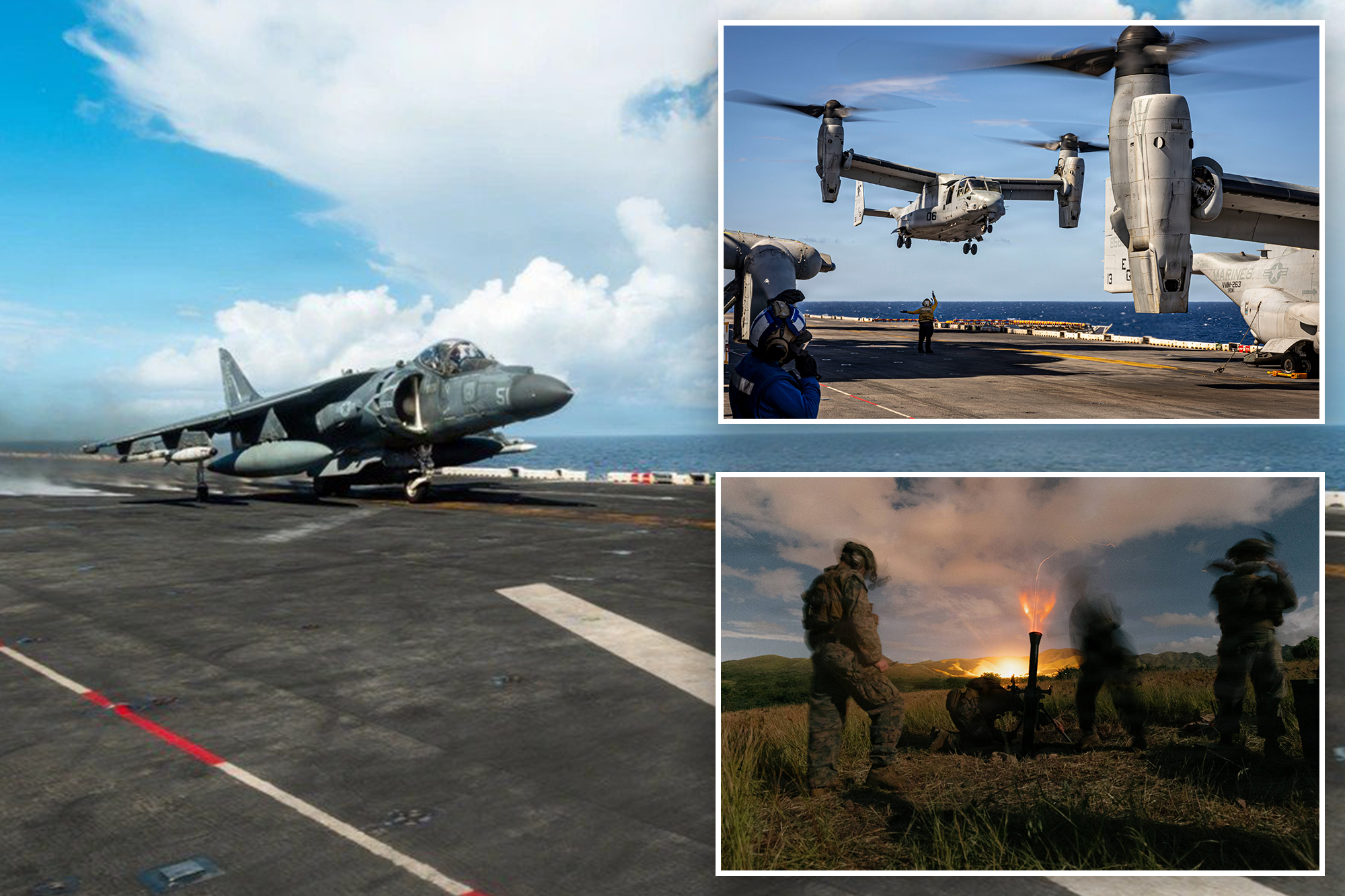
The United States has showcased its military capabilities in the Caribbean, highlighting the training of approximately 2,200 Marines as tensions with Venezuela escalate. On Monday, the US Southern Command released striking photographs of the Marines engaged in various exercises, including live-fire drills and drone operations, amid ongoing efforts to apply pressure on Venezuelan leader Nicolás Maduro.
The troops, part of the 22nd Marine Expeditionary Force, conducted maneuvers in Puerto Rico and aboard the amphibious assault ship, the USS Iwo Jima. These exercises, which included firing mortar systems and training on first-person view attack drones, took place between November 20 and December 16, illustrating a combat-ready force ready to respond to regional challenges.
Strategic Signaling to Adversaries
According to Alex Plitsas, a senior fellow at the Atlantic Council and former US intelligence officer, the display serves multiple purposes. “It’s meant to demonstrate capability and capacity, and in some cases, it can also be signaling to adversaries,” he explained. While the current troop strength is not sufficient for a ground invasion to oust Maduro, the military presence aims to exert psychological pressure on the Venezuelan regime.
Plitsas emphasized that an estimated 100,000 troops would be necessary for a full-scale invasion to ensure stability in Venezuela afterwards. The current military strategy focuses on compelling Maduro to step down voluntarily, although options for airstrikes on land targets remain a possibility, as previously suggested by President Donald Trump.
The military display coincides with remarks from Marco Rubio, the US Secretary of State, who labeled Maduro’s government as the primary threat to American security in the Western Hemisphere. During a year-end press conference, Rubio stated, “The status quo with the Venezuelan regime is intolerable for the United States,” reiterating the US commitment to seeking Maduro’s removal from power.
Heightened Tensions and Ongoing Operations
The US military’s actions also align with a broader campaign to disrupt illicit activities associated with the Maduro regime. The US Coast Guard is currently pursuing an oil tanker off the coast of Venezuela accused of participating in what Washington describes as “black-market” oil shipments. This vessel is believed to be operating under a false flag and is under a judicial seizure order from the US.
The military has been tracking the tanker since at least December 17, and if seized, it would mark the third tanker taken by US military assets within two weeks. This aggressive stance reflects a concerted effort by the Trump administration to diminish revenue streams for Maduro, who is alleged to utilize oil sales to finance drug trafficking and other criminal enterprises.
US officials assert that these tankers are part of a “shadow fleet,” which undermines international sanctions and energy regulations. As the situation unfolds, the US remains steadfast in its commitment to addressing the challenges posed by the Maduro regime and its connections to groups such as Hezbollah and Colombian terrorist organizations like the ELN and FARC dissidents.
The display of military readiness in the Caribbean underscores the United States’ strategic interests in the region and its determination to confront threats that it perceives as detrimental to its national security.