The United States has conducted airstrikes targeting members of the Islamic State (ISIS) in the northwest region of Nigeria. The strikes, confirmed by the US Africa Command (AFRICOM) on Thursday, were aimed at militant camps in Sokoto state. Specific details regarding the operation are limited, as AFRICOM cited operational security as a reason for withholding further information.
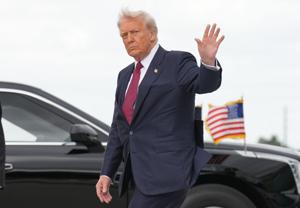
In a post on his Truth Social account, President Donald Trump described the airstrikes as a decisive action against what he referred to as “ISIS Terrorist Scum,” emphasizing that these militants have been responsible for the deaths of innocent civilians, particularly Christians. Trump stated, “Tonight, at my direction as Commander in Chief, the United States launched a powerful and deadly strike against ISIS terrorists in Northwest Nigeria.”
Local residents in Jabo town expressed surprise at the suddenness of the attack, indicating they had not experienced airstrikes in the region for the past two years. Reports suggest that the strikes specifically targeted the villages of Warriya and Alkassim, known to harbor militant camps.
Yusuf Maitama Tuggar, Nigeria’s Foreign Minister, clarified in an interview with the BBC that the operation was a “joint operation” and emphasized that it was not motivated by religious factors. He noted that planning for the airstrikes had been underway for “quite some time,” hinting that additional military actions may occur in the future.
The authority for such military operations falls under the US Constitution, allowing the president to order strikes. However, significant military actions can require congressional approval, as outlined in the War Powers Resolution. The Congressional Research Service has documented instances where presidents have engaged military forces without obtaining congressional consent since this resolution was enacted.
International law also plays a critical role in the context of these airstrikes. Under Customary International Humanitarian Law (CIHL), military operations must target legitimate military objectives. Furthermore, the inherent right to self-defense is recognized by the United Nations Charter, specifically in Article 51, which allows military action in response to armed attacks.
These recent airstrikes align with a broader strategy from the Trump administration regarding Nigeria. In November, the administration directed the Pentagon to create plans for military action in the country. This initiative followed Trump’s designation of Nigeria as a “country of particular concern” due to ongoing reports of persecution against Christians.
Nigeria has been grappling with violence from various militant groups, leading to mass abductions affecting both Muslim and Christian communities. In November 2025, a surge of violence resulted in the abduction of over 300 pupils and 12 students, primarily in areas outside Sokoto state.
As the situation evolves, the implications of these airstrikes will likely resonate within the context of international relations and domestic policies regarding military intervention. The international community will be closely monitoring the developments following this significant military action.