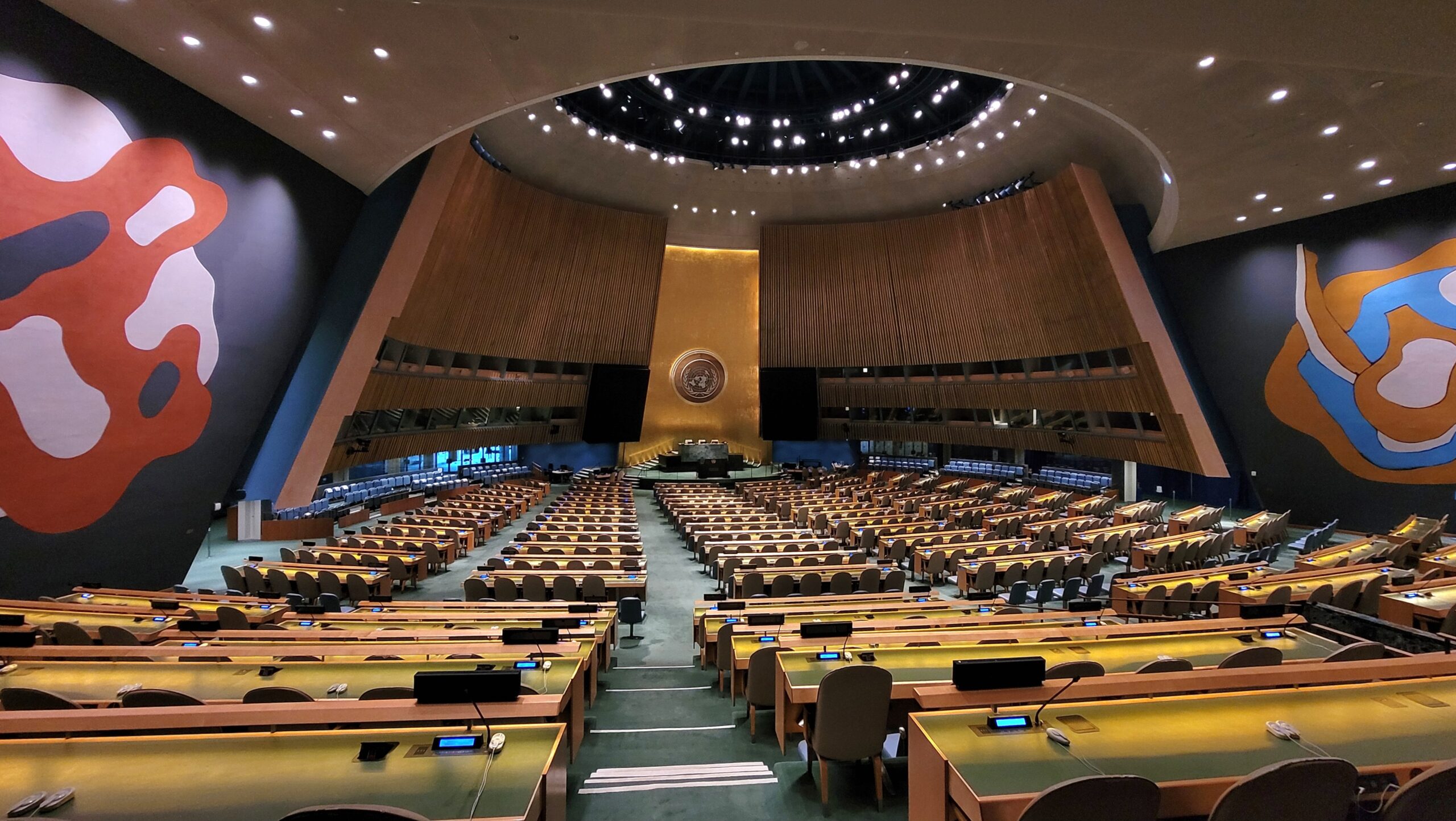
The UN General Assembly has called for the return of all Ukrainian children who have been deported or forcibly transferred to Russia since the onset of the conflict. On Wednesday, the resolution passed with a significant majority, garnering 91 votes in favor, while 12 countries voted against and 57 nations abstained. This outcome meets the two-thirds majority requirement stipulated under Article 18 of the UN Charter.
During the emergency special session, the resolution urged Russia to “ensure the immediate, safe and unconditional return of all Ukrainian children who have been forcibly transferred or deported.” General Assembly President Annalena Baerbock emphasized the severity of the situation, stating, “What we are witnessing therefore is not merely a tragedy of some children, but a violation of international law.”
Russia’s response to the resolution was one of strong opposition. Ambassador Maria Zabolotskaya condemned the vote, asserting, “Each vote for the resolution is support for lies, war and confrontation,” and claimed it undermines ongoing peace efforts.
Documented Violations and International Response
The Independent International Commission of Inquiry on Ukraine has reported grave findings regarding the transfer of children. In a report released in 2023, the Commission documented that in May 2022, 31 children were transferred from Ukraine to Russian territory, concluding that these actions amounted to war crimes. The complexity of the situation is underscored by differing data from Russia and Ukraine, making it challenging to fully understand the extent of these transfers.
In March 2023, the International Criminal Court (ICC) issued an arrest warrant for Russian President Vladimir Putin, citing reasonable grounds to believe he was responsible for the unlawful deportation and transfer of children. Furthermore, in May 2025, the European Parliament adopted a resolution calling for the return of Ukrainian children forcibly transferred by Russia, characterizing these actions as “part of a genocidal strategy to erase Ukrainian identity.”
The forcible transfer and deportation of children contravene Article 49 of the Fourth Geneva Convention, which protects civilian persons in times of war. This act of forced transfer qualifies as a war crime under international law, reinforcing the urgency of the UN General Assembly’s resolution.
Ongoing Conflict and Humanitarian Concerns
The conflict between Russia and Ukraine continues to escalate, with significant humanitarian impacts. In September 2025, the UN condemned a large-scale Russian missile strike against Ukraine, marking one of the most severe attacks since the invasion began in 2022. The use of drones has also raised alarms; in October, a Russian drone strike targeted a humanitarian convoy delivering aid to Southern Ukraine.
The situation remains dire for many in Ukraine, particularly for children who have been separated from their families and communities. The UN’s recent resolution aims to address these injustices and restore the rights of those affected by the ongoing conflict. As international scrutiny intensifies, the call for the return of deported Ukrainian children underscores a broader commitment to upholding human rights and international law amid the turmoil.