President Donald Trump has argued for the acquisition of Greenland, suggesting it is essential for the United States to bolster its defenses against missile threats. This assertion has sparked considerable debate among lawmakers and security experts who contend that such a move could undermine U.S. national security rather than enhance it.
The proposed Golden Dome missile defense system, which aims to protect against various threats including ballistic and hypersonic missiles, has become a focal point in this discussion. As details about the program remain limited, both the House and Senate appropriators expressed concerns in the fiscal defense appropriations bill, citing “insufficient budgetary information.” They stated that this lack of clarity hampers their ability to effectively oversee planned programs for the 2026 Golden Dome efforts, despite acknowledging the operational objectives as vital for national security.
Greenland’s role in U.S. military strategy is well-documented, particularly in the context of the Trump administration’s recent National Defense Strategy. The U.S. military has a long history in Greenland, dating back to World War II and extending through the Cold War. Some experts argue that while expanding military presence in Greenland may be considered to support Golden Dome, the existing military agreements with Denmark already provide sufficient flexibility for U.S. operations.
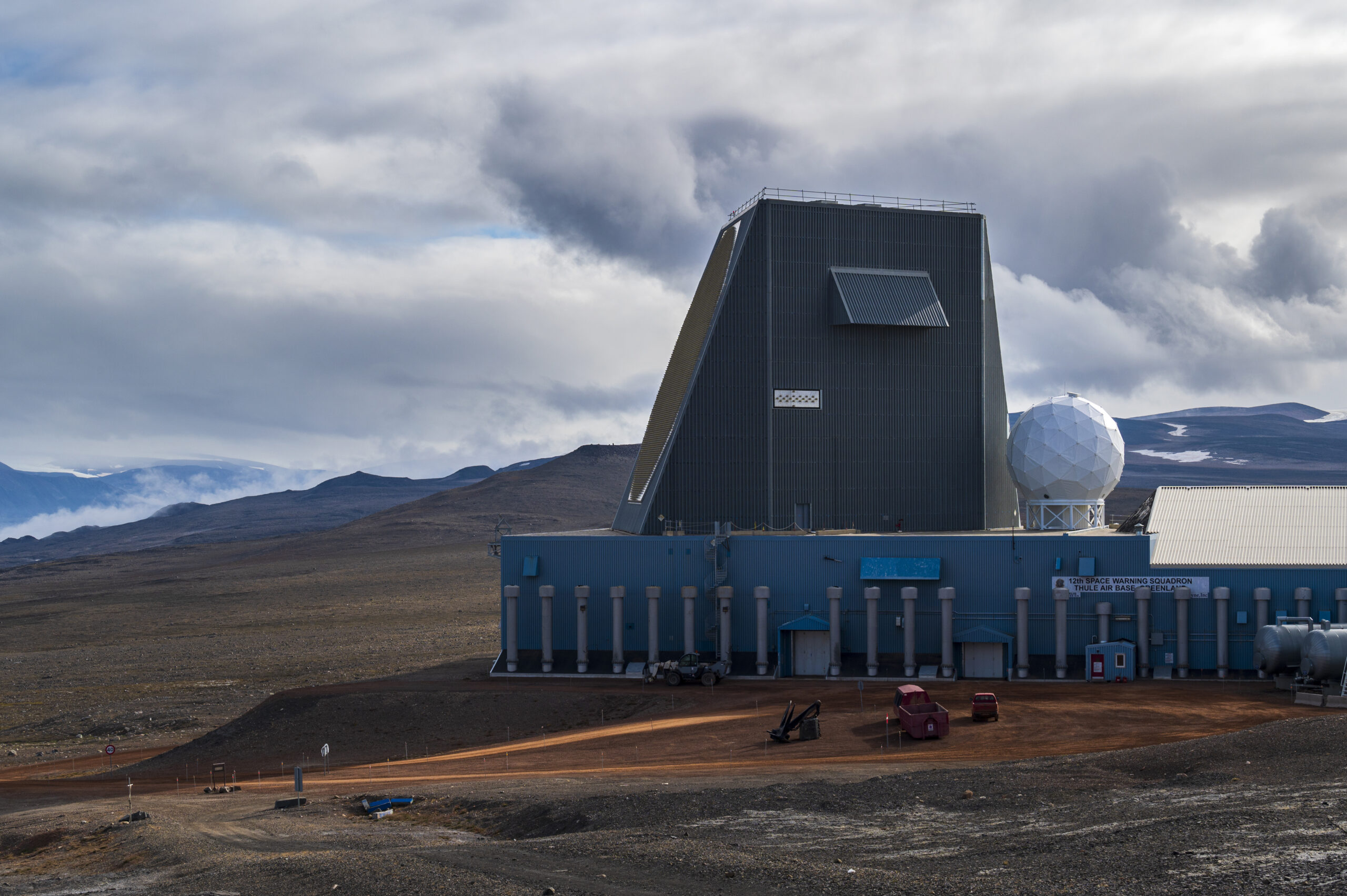
According to an executive order from January 2025, Golden Dome is envisioned as a multilayered defense system. It will integrate various components of the current missile defense architecture, including the Ground-based Midcourse Defense (GMD) system, which is designed to intercept intercontinental ballistic missiles. The system is reportedly set to feature four interceptor layers—three land-based and one space-based—along with 11 short-range missile defense batteries located across the United States. Notably, the system will utilize sensors, including the long-standing ground-based radar at the Pituffik Space Base in Greenland.
Even if the U.S. were to expand its military footprint in Greenland, the terms of the 1951 agreement with Denmark allow for significant military enhancements. This agreement includes provisions for the U.S. to “construct, install, maintain, and operate facilities and equipment” in Greenland. Historical precedents exist, such as the unanimous approval by the Danish parliament in 2004 for upgrades to radar installations requested by the George W. Bush administration.
Despite these provisions, there is little indication that new ground-based sensors will be developed as part of Golden Dome; the focus appears to be on establishing space-based sensor networks. Furthermore, the need for interceptors in Greenland is questionable. The U.S. currently operates 44 GMD interceptors stationed in Alaska and California, with plans for a third site at Fort Drum, New York. This setup meets any strategic requirement for northern positioning without necessitating a site outside the continental United States.
Critics argue that forcibly annexing Greenland would not enhance U.S. national security. Such an action could alienate a NATO ally, potentially weakening the military alliance that has been a cornerstone of transatlantic security for over seventy years. Officials from the Space Force have emphasized that international partnerships are crucial to U.S. defense strategies. Chief of Space Operations Gen. Chance Saltzman has articulated that “Spacepower is the ultimate team sport,” underscoring the importance of collaboration with allies.
The complexities surrounding Golden Dome, including its potential astronomical costs and technical challenges, further complicate the rationale for annexing Greenland. Victoria Samson, chief director of space security and stability at the Secure World Foundation, and Krystal Azelton, senior director of program planning, stress that the justification for territorial claims should not hinge on defense systems that risk escalating tensions with allied nations.
In conclusion, while the discourse surrounding U.S. military strategy in Greenland is evolving, the perceived necessity for territorial acquisition remains contentious. The implications for national and international security must be considered carefully as the U.S. navigates its defense priorities in an increasingly complex global landscape.