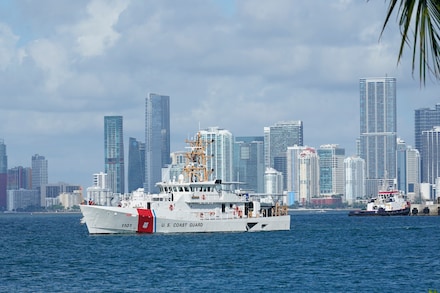
The United States has intercepted a vessel in the Caribbean Sea shortly after President Donald Trump announced a comprehensive blockade on all sanctioned oil tankers entering or leaving Venezuela. This action is part of the Trump administration’s intensified efforts to apply pressure on the government of President Nicolás Maduro.
On April 2, 2020, the U.S. Department of Justice revealed that the vessel was carrying a cargo of oil linked to the Maduro regime. The operation aligns with Trump’s declaration of a “complete blockade,” which aims to halt the flow of oil that the U.S. considers vital for funding the Venezuelan government.
The blockade is a response to ongoing concerns regarding human rights abuses and the erosion of democratic norms in Venezuela. The U.S. has long accused Maduro of corruption and of using oil revenues to sustain his government amidst a deepening economic crisis. The U.S. has implemented various sanctions over the years, but this latest move marks a significant escalation in U.S. policy towards Venezuela.
According to the U.S. Coast Guard, the recent interception underscores the administration’s commitment to disrupt illicit oil shipments that bolster the Maduro administration. The U.S. has previously seized multiple vessels suspected of transporting oil from Venezuela, asserting that these actions are necessary to protect both U.S. national security interests and the stability of the region.
The blockade has prompted mixed reactions internationally. Supporters argue that it is essential for promoting democracy in Venezuela, while critics warn that it may exacerbate the humanitarian crisis already facing the Venezuelan people. Humanitarian organizations have expressed concern that such measures could worsen access to essential goods and medical supplies for a population struggling under severe shortages.
As the situation evolves, the U.S. administration is likely to continue its efforts to isolate the Maduro government through economic and diplomatic means. This includes working with regional allies to enforce the blockade and curb the flow of oil that is critical for Venezuela’s economy.
The impact of this blockade on the global oil market remains to be seen, as U.S. sanctions could further limit Venezuela’s already diminished oil exports. In recent years, the country’s oil production has plummeted, making it one of the lowest producers in the world.
In summary, the U.S. interception of the vessel illustrates a decisive step in the Trump administration’s strategy to exert maximum pressure on Venezuela. As this blockade takes effect, the implications for both U.S. foreign policy and the Venezuelan economy are unfolding, raising significant questions about the future trajectory of the region.