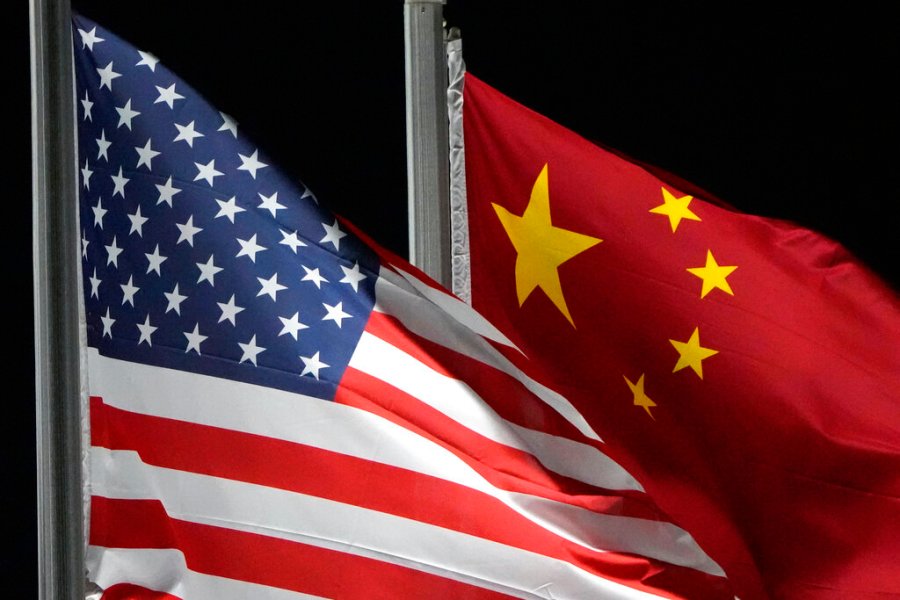
The strategy of strategic decoupling between the United States and China is failing to deliver the intended results. This policy, which aims to reduce dependence on China, has led to significant financial losses for American businesses, creating confusion among U.S. allies, and unintentionally propelling China’s technological independence forward.
The U.S. Department of Commerce has been at the forefront of implementing these decoupling measures, which include export restrictions and tariffs. Despite these efforts, American companies are facing increasing challenges in the global market. Many firms report losing contracts and market share due to the uncertainty surrounding U.S.-China relations. March 2024 data shows that U.S. exports to China fell by 15%, translating to an estimated loss of around $1.4 billion for key sectors such as technology and agriculture.
Confusion among allies regarding U.S. intentions has also emerged as a significant concern. The European Union, for example, is navigating its relationship with China while trying to align with U.S. policies. Some European businesses are hesitant to sever ties with China, fearing loss of competitiveness. This disunity could jeopardize the collective bargaining power of Western nations in the global market.
China, on the other hand, is capitalizing on the situation. The country has accelerated its efforts to achieve technological self-sufficiency. Investments in domestic research and development have surged, with China’s tech sector projected to grow by 20% annually over the next five years. This growth is supported by government initiatives that encourage innovation and local production, further distancing Chinese companies from reliance on U.S. technology.
The National Security Council has acknowledged the need for a reevaluation of the decoupling strategy. Officials have pointed out that while reducing reliance on China is crucial for national security, the current approach may be counterproductive. There is a growing call for a more nuanced policy that balances security concerns with the economic realities of globalization.
In light of these developments, American firms are advocating for clearer guidelines and support from the government. Many industry leaders argue that a collaborative approach with allies, rather than isolation, would better serve U.S. interests. They emphasize the need for strategic partnerships to enhance innovation and competitiveness in the global landscape.
As the economic landscape evolves, the implications of U.S. decoupling from China will continue to unfold. Without a coherent plan, the current trajectory may inadvertently favor Chinese advancements, undermining U.S. innovation and economic strength. The urgency for effective policy reform is evident, as businesses and policymakers alike seek a way forward in an increasingly complex international environment.