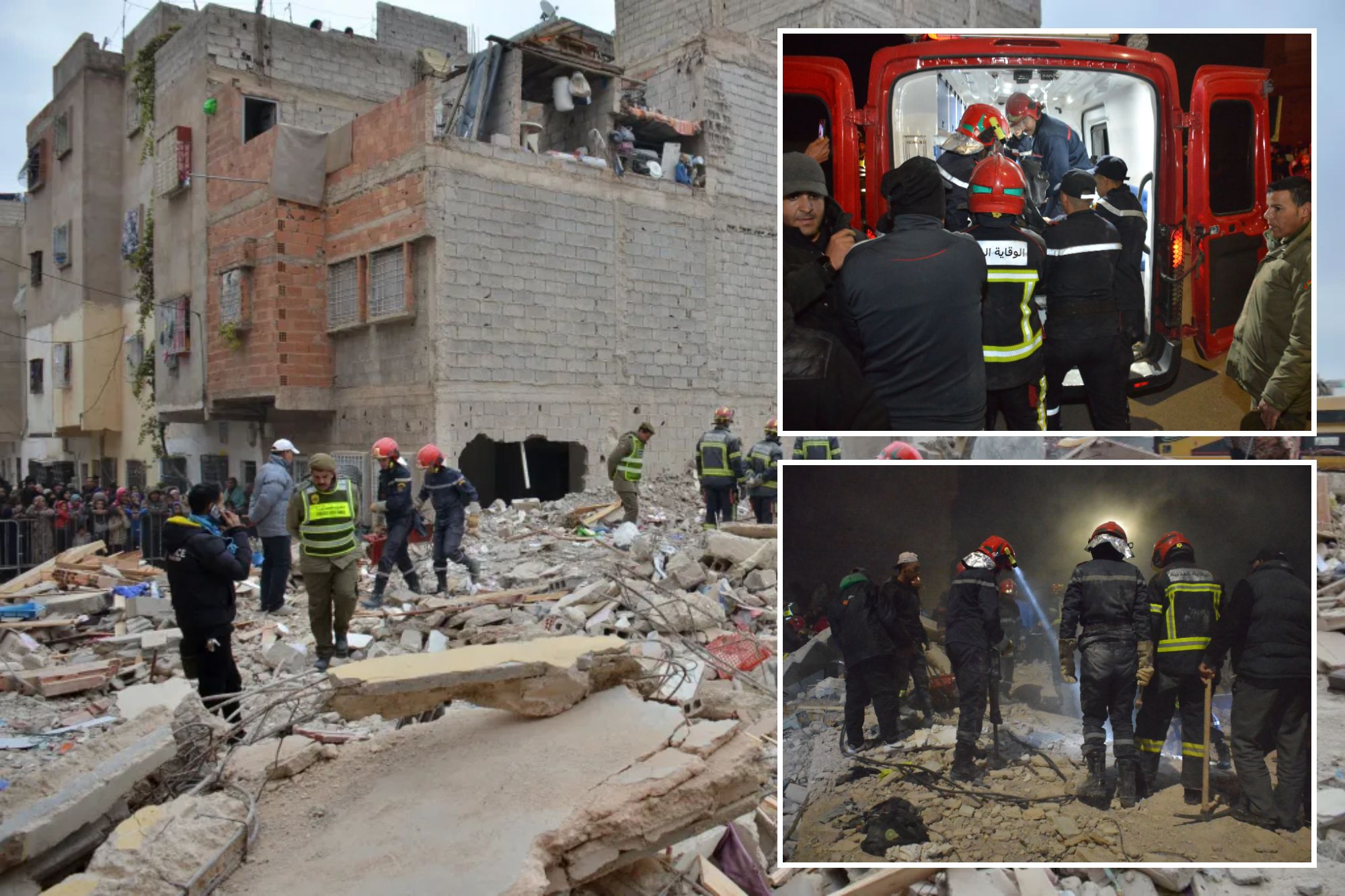
At least 22 people have died and 16 others sustained injuries following the collapse of two buildings in Fez, one of Morocco’s oldest cities. The incident occurred overnight, with the local prosecutor confirming the tragic toll on Wednesday. One of the collapsed buildings was unoccupied, while the other was hosting an Aqiqah, a traditional Muslim celebration for a newborn, according to statements from local authorities.
The prosecutor noted that the death toll is preliminary, and an investigation has been launched to determine the cause of the collapse. Reports indicate that eight families resided in the building where the celebration took place. Both structures were four stories tall and had previously shown visible signs of damage.
Witness Accounts and Rescue Efforts
Survivors are recounting harrowing experiences. One man, who lost his wife and three children, told local Medi1 TV that rescuers had managed to recover one body but he was still waiting for updates on the others. Footage from state-owned broadcaster SNRT News showed rescue workers and local residents working tirelessly to dig through the rubble.
Witnesses described alarming conditions prior to the incident. One elderly woman recounted, “My son who lives upstairs told me the building is coming down. When we went out, we saw the building collapsing.” Reports indicate that the buildings, located in the densely populated Al-Mustaqbal neighborhood, had exhibited cracks for some time.
Broader Context of Safety and Public Unrest
The collapse comes in the wake of heightened concerns about building safety in Morocco. In January, Adib Ben Ibrahim, the housing secretary of state, revealed that approximately 38,800 buildings across the country had been deemed at risk of collapse. This tragic event marks one of the worst building failures in Morocco since a minaret fell in Meknes in 2010, resulting in the deaths of 41 individuals.
Fez, with a rich history dating back to the eighth century, is Morocco’s third-most populous city. Recently, it has been a focal point of protests over deteriorating living conditions and inadequate public services. Youth-led unrest has highlighted frustrations regarding poverty and insufficient infrastructure, particularly as the government pushes for ambitious projects, including preparations for the 2030 FIFA World Cup and the ongoing African Cup of Nations.
This tragedy not only underscores the immediate human cost but also reflects broader systemic issues affecting many Moroccan cities, where financial and industrial resources are primarily concentrated in the northwest, leaving other regions reliant on agriculture and tourism.
As authorities investigate the cause of the building collapse, the community mourns the loss of life and grapples with the urgent need for improvements in safety and public services. The situation in Fez serves as a stark reminder of the challenges faced by many communities across Morocco.