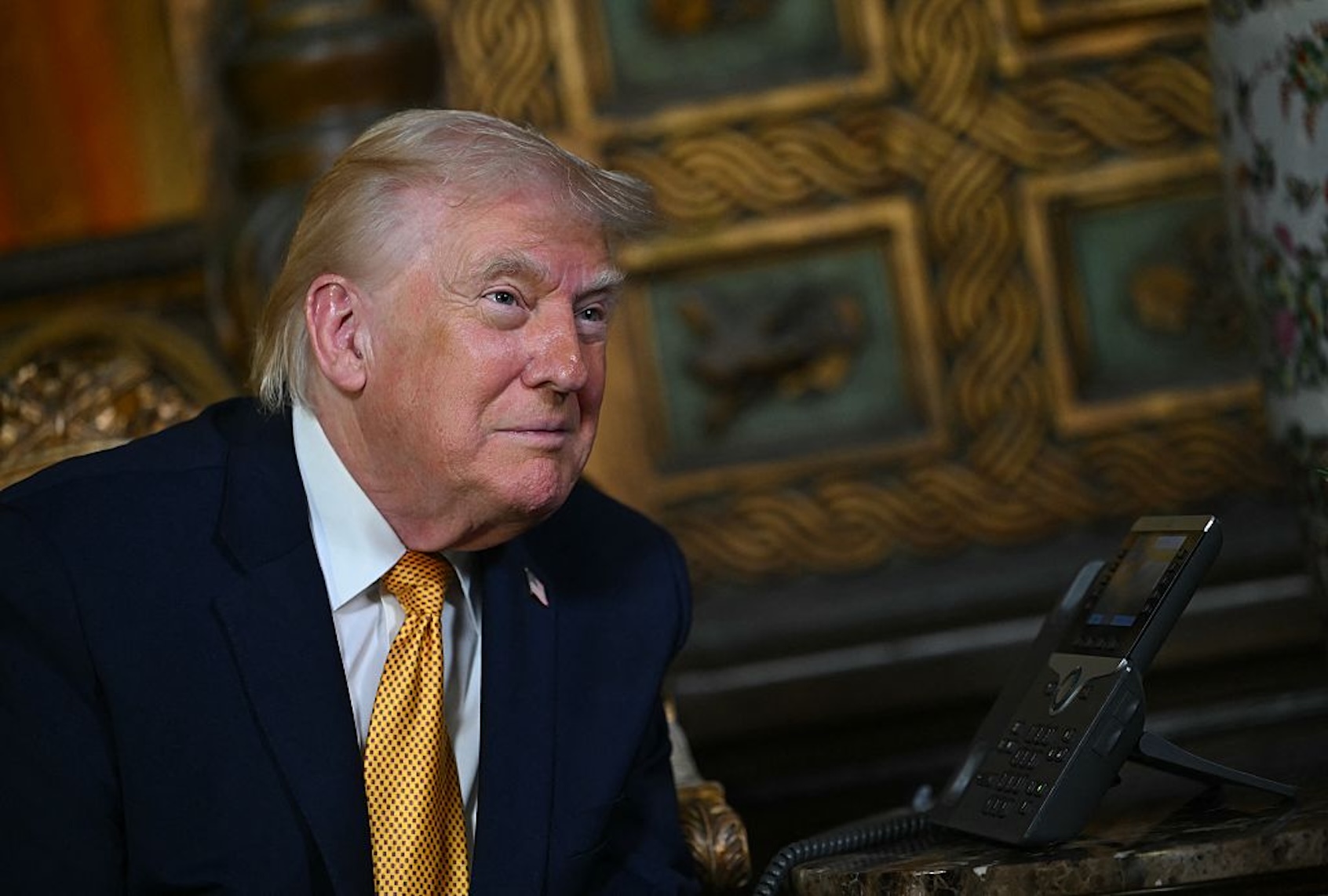
Donald Trump’s recent visit to Georgia highlighted his persistent focus on claims of voter fraud, overshadowing discussions about the economy. While touring a steel company and visiting a local restaurant, the former president dedicated significant time to addressing the FBI raid on the Fulton County election offices and reiterating his unfounded allegations of widespread voter fraud. This visit exemplifies Trump’s ongoing refusal to acknowledge his defeat in the 2020 election, a stance that has contributed to a legacy of sowing doubt about the integrity of American elections.
Trump’s fixation on election fraud is not a novel concept but rather a continuation of longstanding conservative rhetoric. According to historian Alexander Keyssar, this narrative has been used for decades to justify measures aimed at voter suppression. In his book, The Right To Vote: The Contested History Of Democracy In The United States, Keyssar argues that accusations of voter fraud have historically served as a mechanism to disenfranchise marginalized groups. During the Jim Crow era, discriminatory practices were justified under the guise of preventing supposed electoral fraud, with claims that poor individuals, particularly Black voters, were likely to sell their votes.
The echoes of this narrative persist today, manifesting in various legislative efforts that seek to restrict voting access. For instance, during the Civil Rights Movement, the shift of Black voters from the Republican Party to the Democratic Party prompted the development of the Southern Strategy, which exploited racial tensions to rally support among white voters in the South. This political maneuvering has become a cornerstone of modern conservatism’s approach to voting rights.
The rhetoric surrounding voter fraud gained momentum in the early 2000s, particularly following the contentious 2000 election, which was decided by a mere 537 votes in Florida. Under President George W. Bush, the focus on voter impersonation as a form of fraud intensified, despite extensive investigations led by Attorney General John Ashcroft that yielded no substantial evidence. The GOP’s narrative has consistently aimed to energize its base by framing voter fraud as a significant threat, even when data suggests otherwise.
Trump’s rise in politics saw him adopt these long-held conservative tropes. By 2016, he was already claiming that the election would be rigged unless he won. During his presidency, he established a voter fraud commission in an attempt to substantiate his claims of having won both the electoral and popular vote. His insistence on the falsehood of mail-in voting being fraudulent only amplified leading up to the 2020 election.
As the political landscape continues to evolve, the Supreme Court’s upcoming decision in the case of Louisiana v. Callais could have significant implications for voting rights in the United States. Many observers anticipate that a ruling favoring the state could severely undermine the Voting Rights Act, marking a long-held aspiration for conservative leaders.
Trump’s unwillingness to accept electoral defeat reflects not only his personal grievances but also a broader strategy that has been cultivated by conservatives over many years. His actions are a culmination of decades of efforts to manipulate the narrative around voting rights, aiming to restrict access and maintain power.
In summary, while Trump may have amplified claims of voter fraud, he has drawn from a deep well of conservative ideology that predates his presidency. This history reveals how accusations of fraud have often been weaponized to suppress the votes of those deemed undesirable by those in power. The ongoing discourse around voter fraud continues to shape the political landscape, revealing the complexities and challenges surrounding democracy in the United States.