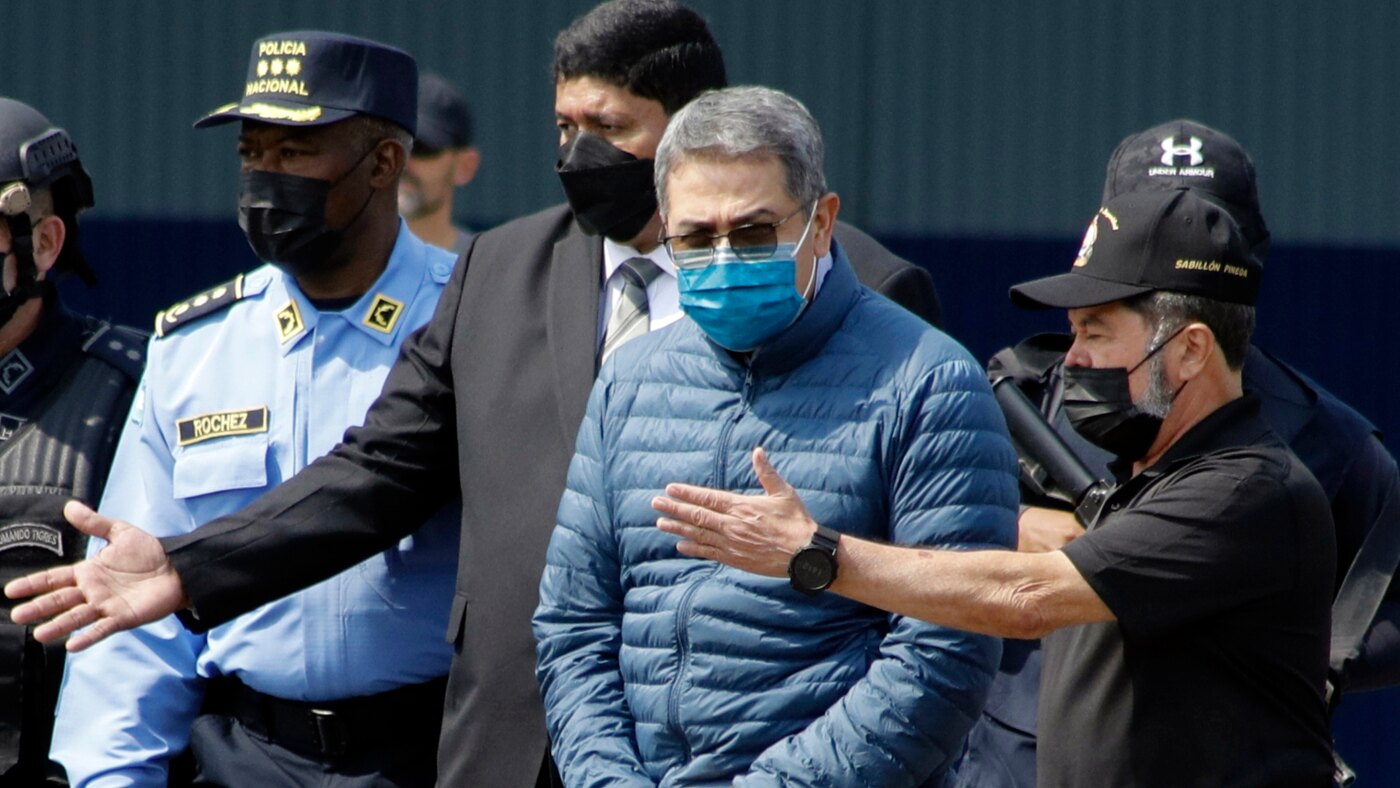
President Donald Trump has confirmed plans to pardon former Honduran President Juan Orlando Hernandez, who was convicted in March 2024 on drug trafficking and weapons charges. Hernandez, sentenced to 45 years in prison, has maintained his innocence throughout the proceedings. Trump announced his decision via social media, stating that Hernandez was “treated very harshly and unfairly” according to respected individuals.
Hernandez, who served two terms as the leader of Honduras, was found guilty in a U.S. court of conspiring to import cocaine into the United States. He is currently incarcerated at the U.S. Penitentiary in Hazelton, West Virginia. His attorney, Renato C. Stabile, expressed gratitude for Trump’s intervention, saying, “A great injustice has been righted.” Stabile expressed hope for a renewed partnership between the United States and Honduras, anticipating Hernandez’s return to his home country.
In tandem with the pardon announcement, Trump endorsed Nasry “Tito” Asfura for the Honduran presidency. He indicated that the U.S. would support Honduras under Asfura’s leadership, emphasizing the importance of choosing the right leader. If Asfura loses in the upcoming election, Trump warned against continuing financial support, stating that “a wrong leader can only bring catastrophic results.”
Asfura, aged 67, is making his second run for president representing the conservative National Party. Previously the mayor of Tegucigalpa, he has promised to address the country’s pressing infrastructure needs, despite facing allegations of embezzling public funds, which he denies. Alongside Asfura, Rixi Moncada of the Libre Party and Salvador Nasralla, a former television personality, are also key candidates in the race.
Trump has framed the upcoming election as a critical test for democracy in Honduras. He cautioned that a loss for Asfura could lead Honduras down a path similar to that of Venezuela, under the leadership of Nicolás Maduro. In recent months, Trump has increased pressure on Maduro’s regime, deploying U.S. military assets, including the advanced aircraft carrier, USS Gerald R. Ford, to the Caribbean.
Outgoing Honduran President Xiomara Castro has adopted a leftist stance but has maintained a cooperative relationship with the U.S. administration. Castro has welcomed visits from U.S. officials, including Kristi Noem, the Secretary of Homeland Security, and Laura Richardson, the former commander of U.S. Southern Command. She has also moderated her previous threats to terminate Honduras’ extradition treaty and military cooperation with the U.S.
In a show of international support for Asfura, Argentine President Javier Milei endorsed him on social media, stating, “I fully support Tito Asfura, who is the candidate who best represents the opposition to the leftist tyrants who have destroyed Honduras.” This endorsement highlights the broader regional implications of the Honduran election.
As the election approaches, the political landscape in Honduras remains charged, with significant implications for both domestic stability and international relations.