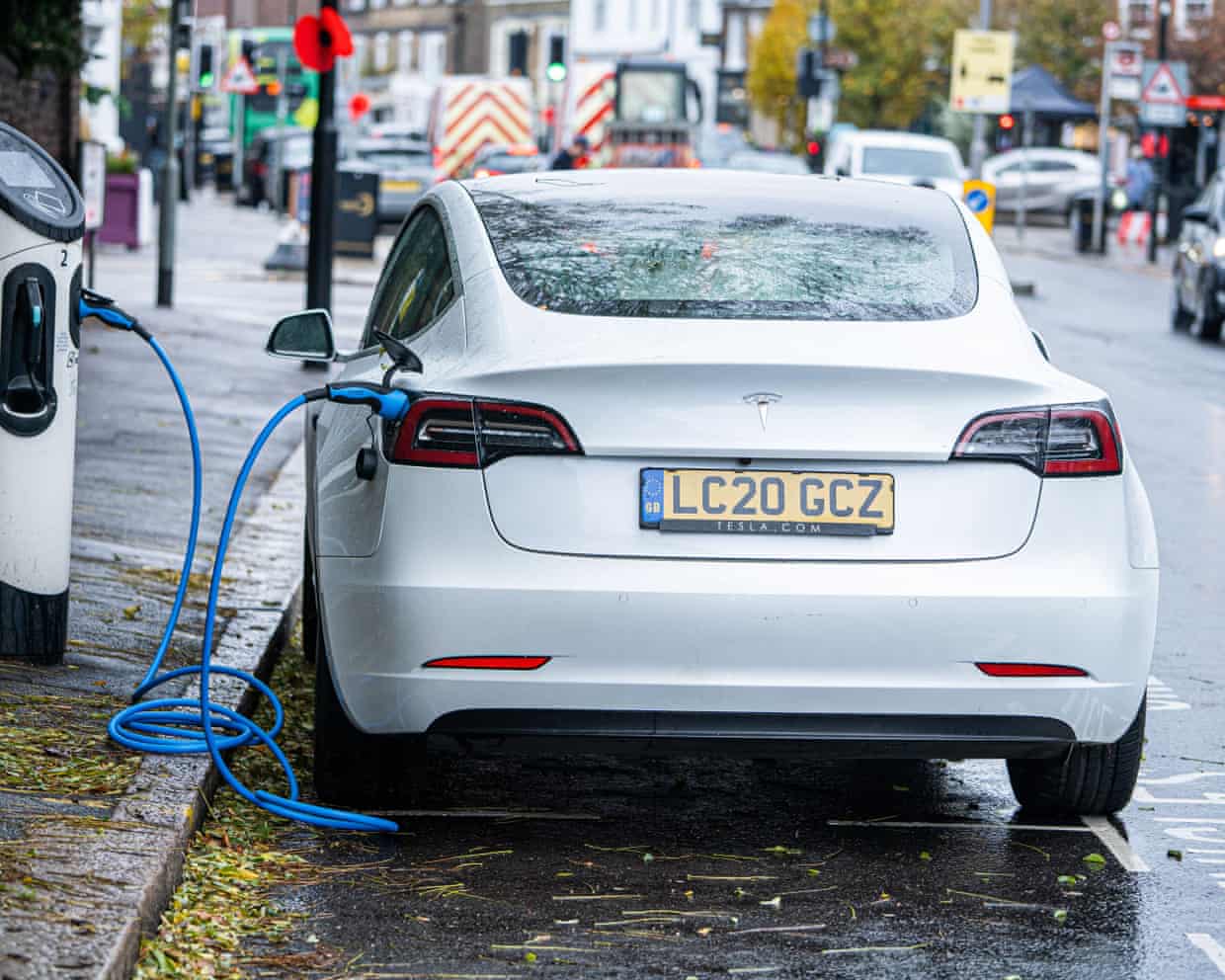
Tesla has privately cautioned the UK government that potential changes to electric vehicle regulations could adversely affect battery car sales and jeopardize the nation’s carbon dioxide reduction goals. Documents obtained by the *Fast Charge* newsletter, which focuses on electric vehicles, reveal that the American automaker, led by Elon Musk, urged the government to maintain robust regulations and support for the used-car market during a consultation earlier this year.
In April, the Labour government’s decision to loosen the regulations known as the zero-emission vehicle (ZEV) mandate raised concerns among electric vehicle manufacturers. The ZEV mandate requires an annual increase in electric vehicle sales, but recent adjustments have introduced loopholes that permit manufacturers to sell additional petrol and diesel vehicles. Critics have warned that new taxes on electric cars announced in the recent budget could further diminish demand.
Several automakers, including BMW, Jaguar Land Rover, Nissan, and Toyota, expressed in their submissions to the consultation that these regulatory changes were damaging investment, as they were losing money on electric vehicle sales. Conversely, environmental advocates and manufacturers primarily focused on electric vehicles contended that the existing rules were effectively driving the intended growth in EV sales, with no automakers reportedly facing penalties for not meeting sales targets in 2024.
Tesla emphasized the critical nature of steadfast regulations for the electric vehicle market. The company stated that introducing new loopholes, referred to as “flexibilities,” would significantly reduce the supply of battery electric vehicles (BEVs) and could lead to substantial emissions impacts. “Changes will suppress BEV supply, carry a significant emissions impact, and risk the UK missing its carbon budgets,” Tesla articulated in the documents.
The UK Chancellor, Rachel Reeves, further unsettled automakers during the budget announcement by revealing plans for a “pay-per-mile” charge on electric vehicles set to take effect in 2028. This new charge could detract from the attractiveness of electric cars compared to more polluting petrol and diesel models. In a somewhat conflicting move, Reeves also announced the extension of grants for new electric vehicles, which the industry welcomed.
Tom Riley, the author of *Fast Charge*, pointed out the contradictory nature of the budget’s impact on the electric vehicle transition. He remarked, “Just as the EV transition looked settled, the budget pulled it in two directions at once – effectively robbing Peter to pay Paul. If carmakers push again for a softer mandate, Labour only has itself to blame when climate targets slip.”
The responses from Tesla, Ford, and Mercedes-Benz were initially withheld but were released following appeals under freedom of information laws. Many pages of the documents were redacted, but one section indicated Tesla’s call for “support for the used-car market.” Tesla did not clarify whether this support would include financial grants.
In contrast, both Ford and Mercedes-Benz lobbied against stricter regulations that would require further reductions in average carbon dioxide emissions post-2030. They expressed concerns that more stringent rules could limit their ability to market less environmentally friendly vehicles for an extended period. Ford, which had previously supported stronger targets, criticized European governments for failing to uphold their end of the deal regarding electric vehicle sales.
Mercedes-Benz suggested that the UK government should reduce value-added tax (VAT) on public charging from 20% to 5% to align with home electricity rates. The automaker also proposed implementing a price cap on public charging rates. Tesla further advocated for a ban on the sale of plug-in hybrid electric vehicles with a battery-only range of less than 100 miles after 2030, a limitation that would affect many popular models in that category.
As the landscape of electric vehicle regulations in the UK continues to evolve, the combined pressures from industry giants and government policies will likely play a pivotal role in shaping the future of electric car adoption in the country.