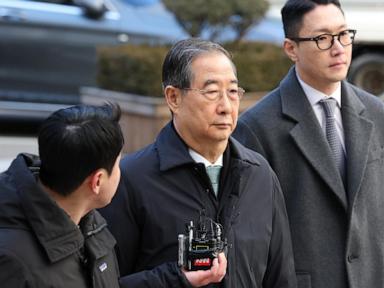
A South Korean court has sentenced former Prime Minister Han Duck-soo to 23 years in prison for his role in a rebellion linked to the imposition of martial law by then-President Yoon Suk Yeol. The ruling, delivered on Wednesday, marks a significant legal milestone as it is the first conviction of a high-ranking official from Yoon’s administration regarding the martial law enacted in December 2024.
The case against Han underscores the serious nature of rebellion charges in South Korea, where such accusations carry substantial legal repercussions. With Han’s conviction, attention now turns to the broader implications for Yoon and other officials who face similar charges. The verdict is expected to influence upcoming rulings related to these cases, including Yoon’s own impending trial.
Details of the Court Ruling
The Seoul Central District Court found Han guilty of participating in actions that constituted rebellion during a period of political instability that ultimately led to Yoon’s impeachment and removal from office. Han, who was appointed by Yoon to serve as the nation’s second-highest official, played a pivotal role as one of three caretaker leaders during the tumultuous martial law crisis.
Legal experts suggest that this ruling may set a precedent in how the courts handle similar cases involving high-ranking officials. The severity of the sentence reflects the court’s stance on rebellion charges, which are among the most serious in South Korea’s legal framework.
In a related development, the independent counsel has called for the death penalty for Yoon, alleging he masterminded the rebellion that led to the martial law. The public and political reaction to these developments remains intense, with many viewing the proceedings as a critical moment for South Korea’s democratic institutions.
Future Implications
The ruling against Han is not just a legal matter; it also carries significant political consequences. As the Seoul Central District Court prepares to rule on Yoon’s rebellion charges on February 19, the outcome of these proceedings could reshape the political landscape in South Korea. The potential for further convictions among Yoon’s associates could lead to a broader reevaluation of the administration’s actions during the crisis.
Public sentiment towards Yoon’s leadership and the martial law implementation has been complex, with many citizens divided over the implications of these legal proceedings. As the nation watches closely, the court’s decisions in the coming weeks will likely have lasting effects on South Korea’s political future and the rule of law.
In summary, Han Duck-soo’s conviction represents a pivotal moment in South Korea’s ongoing struggle with political accountability and governance. With the focus now shifting to Yoon and other officials, the ramifications of these legal battles are set to unfold in the coming months, shaping public discourse and political dynamics.