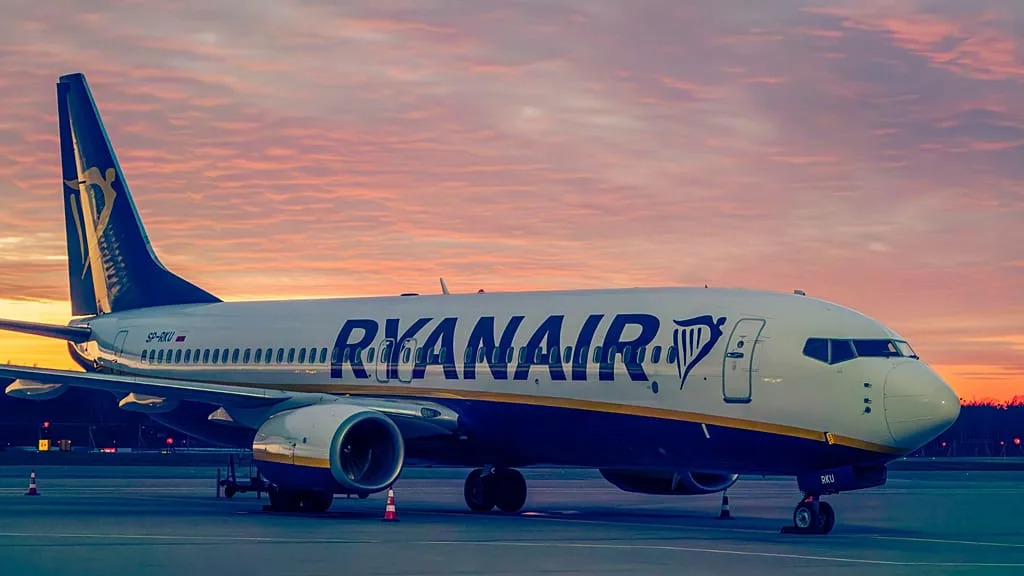
Ryanair, the European budget airline, announced significant route cuts that will impact travel options across several countries in 2026. This decision follows a year of expansion and challenges for the airline, which included the addition of new routes and a focus on increasing passenger numbers. However, Ryanair’s latest move will eliminate millions of seats and affect connections to various cities, particularly in Germany, Spain, France, Belgium, and Portugal.
Route Reductions in Germany
In October 2025, Ryanair revealed plans to cut 24 routes to and from Germany for the Winter 2025/2026 schedule. This reduction translates to a decrease of almost 800,000 seats. Airports in cities such as Hamburg, Berlin, Cologne, Memmingen, Frankfurt-Hahn, Dresden, Dortmund, and Leipzig will be affected. Notably, operations at Leipzig, Dresden, and Dortmund will remain suspended beyond the winter season.
Ryanair cited high air traffic control (ATC) and security fees, along with elevated German aviation taxes, as key factors behind these cuts. The airline criticized the German government for its failure to lower these costs, which have hindered competitiveness. In a press release, Ryanair stated, “Germany’s sky-high access costs are in stark contrast with countries such as Ireland and Spain, which have no aviation taxes.” The airline also pointed out that Germany operates at just 88 percent of its pre-COVID air traffic levels.
Impacts on Spain and Other Destinations
Spain will also see a significant reduction in Ryanair’s flight offerings. The airline plans to cut around 1.2 million seats from its summer 2026 schedule, including the complete cessation of flights to Asturias and Vigo. Additionally, Ryanair will close its base at Santiago de Compostela and further reduce capacity for routes to Santander and Zaragoza, significantly impacting connections to the Canary Islands.
Ongoing disputes with Spanish airport operator Aena regarding steep tax hikes and what Ryanair describes as “illegal bag fines” have contributed to these cuts. The airline stated, “Aena’s monopoly approach to pricing is that small underused regional airports should charge similar rates as busy main airports.” Ryanair is shifting capacity to larger airports in Spain, where demand is higher, while moving operations to lower-cost airports in Croatia, Morocco, and Italy.
In France, Ryanair has already reduced its offerings by 750,000 seats and 25 routes due to high airline taxes. Although the airline plans to resume flights to Bergerac in summer 2026, services to Brive and Strasbourg will remain suspended. Ryanair’s Chief Commercial Officer, Jason McGuinness, indicated that more cancellations may follow if conditions do not improve.
Belgium is also on the receiving end of Ryanair’s route cuts, with plans to remove 20 routes and around one million seats from the Brussels and Charleroi bases for the Winter 2026/2027 schedule. This decision is largely driven by a new aviation tax that will double the charge to €10 per passenger, which Ryanair argues will stifle traffic and tourism.
Portugal is set to lose all six of its routes to and from the Azores, affecting approximately 400,000 passengers annually. This reduction represents a 22 percent cut in Ryanair’s capacity in the country, attributed to increased air traffic control fees and new travel taxes imposed by the government. The airline has called for intervention, stating, “The ANA monopoly faces no competition in Portugal, which has allowed it to extract monopoly profits.”
Finally, Ryanair is also scaling back operations in Bosnia and Serbia. The airline will reduce the number of flights from Banja Luka and Niš, reallocating resources to areas with growing demand, such as Croatia.
Ryanair’s decisions reflect an ongoing struggle within the airline industry, balancing operational costs against competitive pricing. The airline has expressed a willingness to restore capacity if government policies become more favorable. As these changes unfold, millions of travelers across Europe will need to adjust their travel plans accordingly.