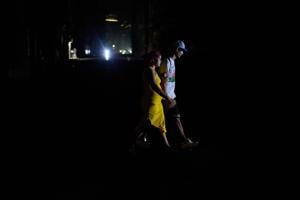
Cuba is gradually restoring power after a significant blackout impacted the western region of the island, leaving many residents without electricity for nearly 24 hours. The outage, linked to an aging electrical grid and fuel shortages, particularly affected Havana, where approximately 660,000 customers, or 77% of the city’s population, regained power as of Thursday. However, officials have cautioned that full restoration may take an additional three to four days.
Efforts to repair a critical boiler at one of Cuba’s largest thermoelectric plants have been ongoing. Workers were able to locate a crack in the boiler drum that caused the shutdown and began repairs after cooling the affected area, which took around 12 hours. Additionally, state media reported that two power plants remain offline due to a lack of petroleum, further complicating the situation.
Despite some areas regaining power, millions of Cubans continue to face outages. Residents like Miguel Leyva, who lives with his ill mother and brother, expressed their frustration. Leyva, aged 65, described the unbearable conditions, stating, “I have no words to describe what I’m going through: the heat, the mosquitoes and no electricity. The food could spoil.”
In response to the crisis, the Ministry of Energy and Mines announced on social media platform X (formerly Twitter) that the electrical system is functioning at a “limited capacity,” with priority given to essential services such as health care and water supply.
While some residents have managed to adapt, the challenges are evident. Sonia Vázquez, aged 61, continued to sell coffee to passersby, using gas for preparation under a rechargeable lamp. “I didn’t sleep last night. Too many mosquitoes,” she remarked, highlighting the difficulties faced by many in the community.
Business owners are also feeling the pressure. José Ignacio Dorta, who runs a café, reported that some of his frozen food has spoiled due to the outage. “We’ve looked for ways to prevent further spoilage. We’re working on it. We hope nothing else will spoil,” he said.
Cuba’s energy crisis has been exacerbated in recent months, primarily due to disruptions in key oil shipments from Venezuela. Following U.S. sanctions and political tensions, the island has struggled to secure adequate fuel supplies. In January, U.S. President Donald Trump warned that tariffs would be imposed on countries supplying oil to Cuba, further complicating the situation.
On Thursday, Trump hinted at a potential deal with Cuba but did not provide details. He noted the desire for the Cuban government to make an agreement, stating, “They want to make a deal so badly. You have no idea.” His remarks come amid ongoing discussions about U.S. foreign policy priorities, particularly regarding Iran.
This blackout marks the second significant outage in western Cuba within the last three months. The previous blackout in December lasted approximately 12 hours. Many of Cuba’s thermoelectric plants, some operating for over three decades, rely on outdated infrastructure and have received little maintenance due to financial constraints. Sanctions imposed by the United States hinder the government’s ability to procure new equipment and essential parts.
As restoration efforts continue, the challenges underscore the pressing need for a more resilient energy infrastructure in Cuba. The situation remains fluid, with many residents anxiously awaiting the return of full power.