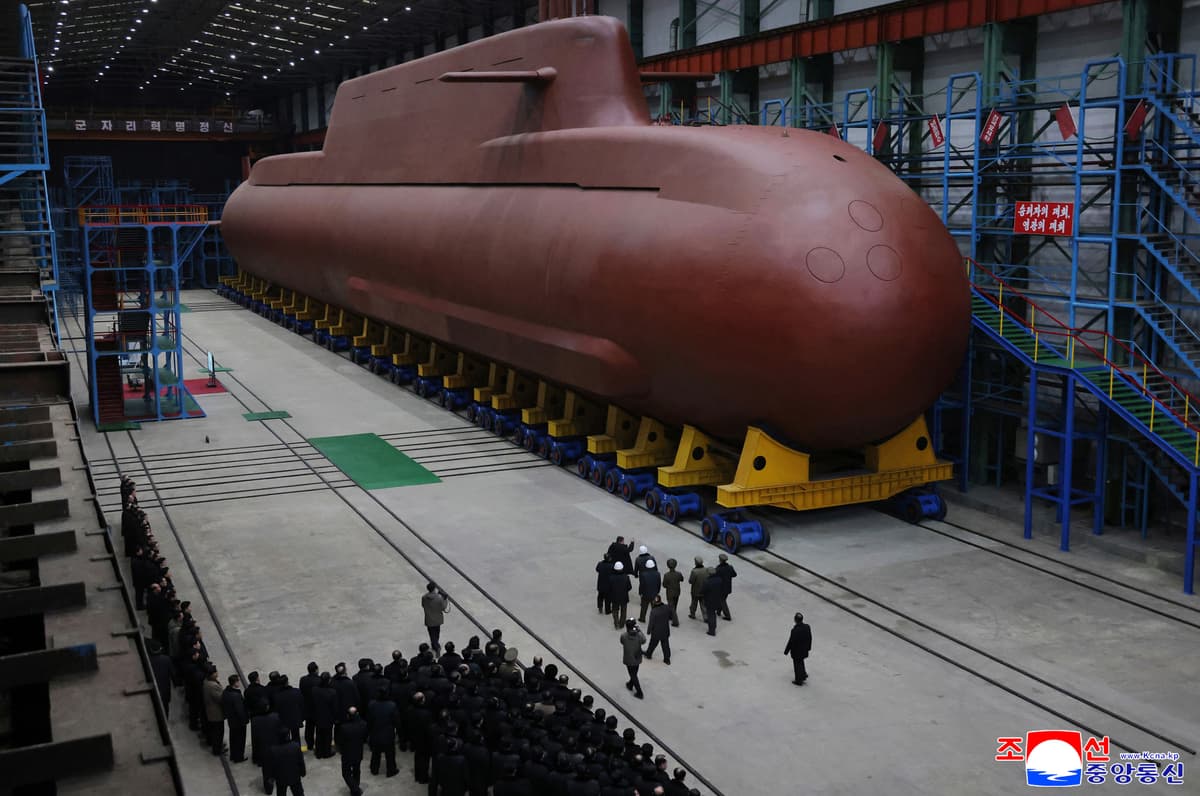
Tensions on the Korean Peninsula are escalating as both North Korea and South Korea advance their nuclear submarine programs. North Korea is reportedly nearing the completion of its first nuclear-powered submarine, while South Korea has begun construction of its own nuclear submarine at a shipyard in Philadelphia. This development marks a significant shift in military capabilities for both nations.
The North Korean submarine, which has been described by state media as a potential game-changer for the country’s naval strength, aims to bolster its deterrence against perceived threats from the United States and its allies. Throughout March 2024, North Korean leader Kim Jong-un has emphasized the need for advanced military technology to ensure national security.
In a parallel move, the South Korean government announced its plans to develop its first nuclear submarine, seeking to enhance its defense posture in response to North Korea’s growing military ambitions. The project, based in a shipyard in Philadelphia, reflects South Korea’s commitment to modernize its naval forces. The South Korean administration believes that possessing nuclear submarines will provide a strategic advantage in the regional security landscape.
Both countries’ submarine programs are expected to have significant implications for regional security dynamics. As tensions rise, the potential for an arms race in the region becomes increasingly likely. Analysts suggest that the introduction of nuclear submarines could lead to a more aggressive posture from both nations, with heightened risks of miscalculation.
The development of these submarines is not just a military endeavor; it also involves substantial financial investments. North Korea’s military spending has reportedly increased in recent years, although exact figures remain opaque due to the secretive nature of the regime. Conversely, South Korea’s investment in its submarine program is expected to reach billions of dollars, with the aim of ensuring technological parity with its northern neighbor.
In addition to military considerations, the international community is closely monitoring these developments. The United States, which maintains a significant military presence in South Korea, has expressed concerns about North Korea’s advancing capabilities. U.S. officials have reiterated the importance of diplomatic efforts to mitigate tensions on the peninsula.
As both nations move forward with their respective submarine programs, the ramifications for peace and security in the region remain uncertain. The potential introduction of nuclear submarines into the operational fleets of North and South Korea could alter the strategic balance, prompting neighboring countries to reassess their own military strategies.
The situation on the Korean Peninsula is evolving rapidly. With the stakes higher than ever, the international community watches closely as North Korea and South Korea navigate this complex and potentially dangerous landscape. The coming months will be critical in determining the future trajectory of military relations in the region.