Washington lawmakers unveiled a compromise on the fiscal year 2026 National Defense Authorization Act (NDAA) that proposes significant adjustments to key Pentagon programs. Released late on Sunday, the bill aims to increase the Pentagon’s budget by $8 billion beyond the request made by the previous administration. If passed, this legislation will shape the funding landscape for various defense initiatives, although final allocations will ultimately be determined by congressional appropriators.
Rep. Adam Smith, D-Wash., emphasized the importance of following the appropriators’ decisions, stating, “Mostly we like to follow their money, but since they didn’t put a number out there, we can’t move our bill forward with having a number.” As lawmakers work through the NDAA, several key provisions have emerged that focus on enhancing air and space capabilities.
Key Provisions for Air Force and Army Programs
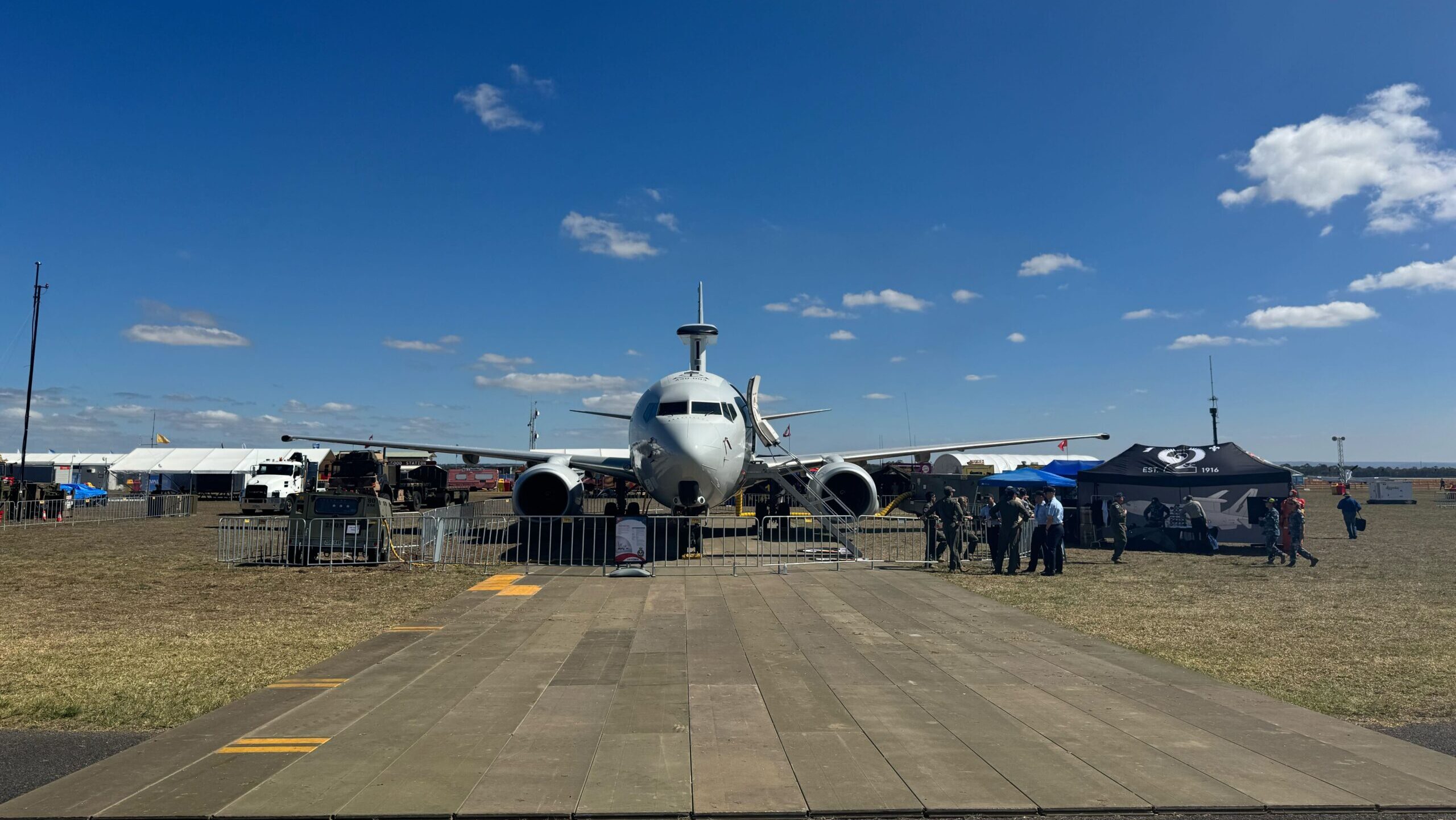
One notable aspect of the NDAA is the support for the Air Force’s E-7 Wedgetail program, which previously faced potential cuts. The bill includes $846.7 million for the continued development and procurement of this radar plane. Additionally, the Air Force’s C-40 program is set to receive $250 million for the procurement of one jet aimed at VIP transport.
In a significant shift, the NDAA mandates that the Air Force maintain a minimum of 502 tankers in its inventory by October 2028, an increase from the current requirement of 466 tankers. Despite earlier plans to retire the KC-10 Extender, lawmakers now require that these retired aircraft be kept in storage. The legislation also includes stipulations to slow down the retirement of A-10 aircraft and prohibits the retirement of any F-15Es within the fiscal year 2026.
While no additional F-35 Joint Strike Fighters are included in the proposed legislation, there is a focus on spare parts procurement, with an extra $250 million allocated for F-35A parts and $125 million each for the F-35B and F-35C variants. The bill also trims over $300 million collectively across different military branches for the development of the F-35’s Block 4 upgrade, which has experienced delays.
Support for Army Initiatives and Future Aircraft
On the Army side, the NDAA grants new multiyear procurement authority for the Black Hawk UH-60 helicopters starting in fiscal year 2027. This decision comes in light of the Army’s Transformation Initiative, which has led to cuts in its aviation portfolio while prioritizing the Future Long-Range Assault Aircraft (FLRAA) program.
Earlier discussions among Army leaders hinted at a potential phase-out of the Black Hawk, but Maj. Gen. Clair Gill, the Program Acquisition Executive of Maneuver Air, reassured that the Black Hawk will remain a vital part of the fleet for the foreseeable future. He stated, “We’re not getting rid of Black Hawk anytime soon. We’re all going to be off this earth, and Black Hawk is still going to be flying.”
The NDAA authorizes an additional $100 million for the modernization of the Black Hawk fleet and allows the Army Secretary to initiate early production contracts for FLRAA. This provision aims to accelerate production efforts and is accompanied by a requirement for Secretary Dan Driscoll to brief Congress within 180 days after enactment on the implementation plan and expected benefits of this early production effort.
With these developments, the NDAA not only addresses immediate needs but also sets a framework for future military capabilities, ensuring that the U.S. armed forces remain prepared for evolving challenges. As the legislative process continues, the bill represents a critical step in shaping the future of defense spending and military readiness.