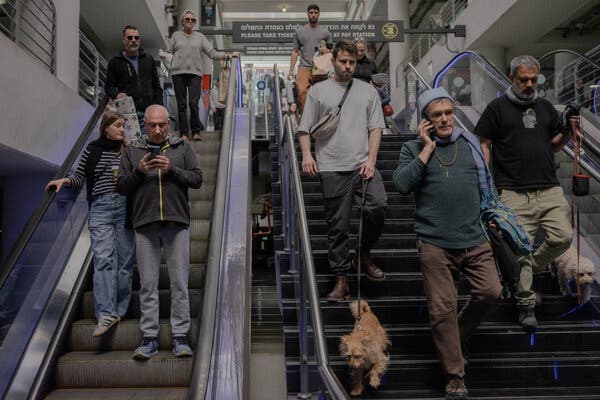
Israeli cities are facing an urgent situation as sirens blare in response to Iranian missile attacks, prompting residents to seek refuge in public and private bomb shelters. The recent missile strikes have brought to light a critical shortage of fortified safe spaces across the nation, raising concerns about the safety of civilians. A report from Israel’s state comptroller, published in January 2025, reveals that over three million people in Israel reside in areas lacking “standard protection” against potential missile threats.
The alarming statistics indicate that nearly one-third of Israel’s population could be left vulnerable if Iranian ballistic missiles were to strike near their homes. The issue is particularly pronounced in Arab communities, where there are few operational public shelters. According to the state comptroller’s report, only 37 out of 11,775 public shelters are located in Arab municipalities, and eight of those are deemed unfit for use.
Atiya al-Asam, an activist leader within the Bedouin community in southern Israel, articulated the fears of many residents. “People are facing real danger,” he stated. “They’re terrified.” Bedouin communities, often unrecognized by the Israeli government, have historically lacked adequate shelters, as well as basic services such as running water, electricity, and proper sewage systems.
The situation escalated during the Israel-Iran war in June 2025, which resulted in 32 fatalities and thousands of injuries, according to Israeli government data. Officials emphasized that the availability of shelters and fortified rooms played a crucial role in saving lives during this conflict.
In response to the growing need for safe spaces, the Israeli military’s Homefront Command has engaged in discussions regarding the expansion of protected areas. They have been collaborating with local municipalities to enhance existing shelters. Despite these efforts, the comptroller’s report indicates that more than six million Israelis still have access to public and private shelters and fortified rooms.
In Tel Aviv, one of Israel’s largest and most affluent cities, municipal officials remain optimistic about the shelter situation. Eyal Kedar, an emergency response official, expressed confidence in the number of available shelters. “We can always have more,” he acknowledged, “but in terms of numbers, there’s enough for more than those living here.”
The ongoing missile attacks underscore the pressing need for a comprehensive strategy to ensure public safety. As Israeli authorities continue to navigate this precarious situation, the spotlight remains on the urgent need for improved infrastructure and resources dedicated to the protection of all citizens, particularly those in underserved communities.