Iran’s foreign minister, Abbas Araghchi, has issued a stark warning, stating that the country is prepared to respond decisively to any aggression from the United States. This declaration comes as the U.S. military presence in the Middle East increases, with a focus on potential action against Iran. Araghchi described the situation as one where Iranian forces have their “fingers on the trigger,” ready to counter any threats with immediate and powerful responses.
In the context of heightened tensions, the United States has reiterated its readiness to carry out swift military action against Iran if necessary. President Donald Trump has emphasized that military strikes would follow unless Iran agrees to dismantle its nuclear program. Earlier in March 2024, Trump expressed support for Iranian civilians amid domestic unrest and a government crackdown, although he later indicated that he had decided against military intervention.
The ongoing conflict has reportedly resulted in thousands of deaths, as human rights organizations continue to document the crisis. Despite the rising tensions, there has been little progress in negotiations between the U.S. and Iran.
U.S. Military Buildup and Regional Dynamics
The current impasse has prompted key Gulf allies to explore diplomatic solutions to ease tensions between Washington and Tehran. Notably, Saudi Crown Prince Mohammed bin Salman has ruled out permitting U.S. military operations from Saudi territory or airspace against Iran.
In a congressional hearing, Marco Rubio, U.S. Secretary of State, highlighted the necessity of the military buildup in the region to protect American troops. He noted that approximately 30,000 to 40,000 U.S. personnel are stationed across various facilities in the Middle East, all vulnerable to Iranian short-range ballistic missiles and unmanned aerial vehicles (UAVs).
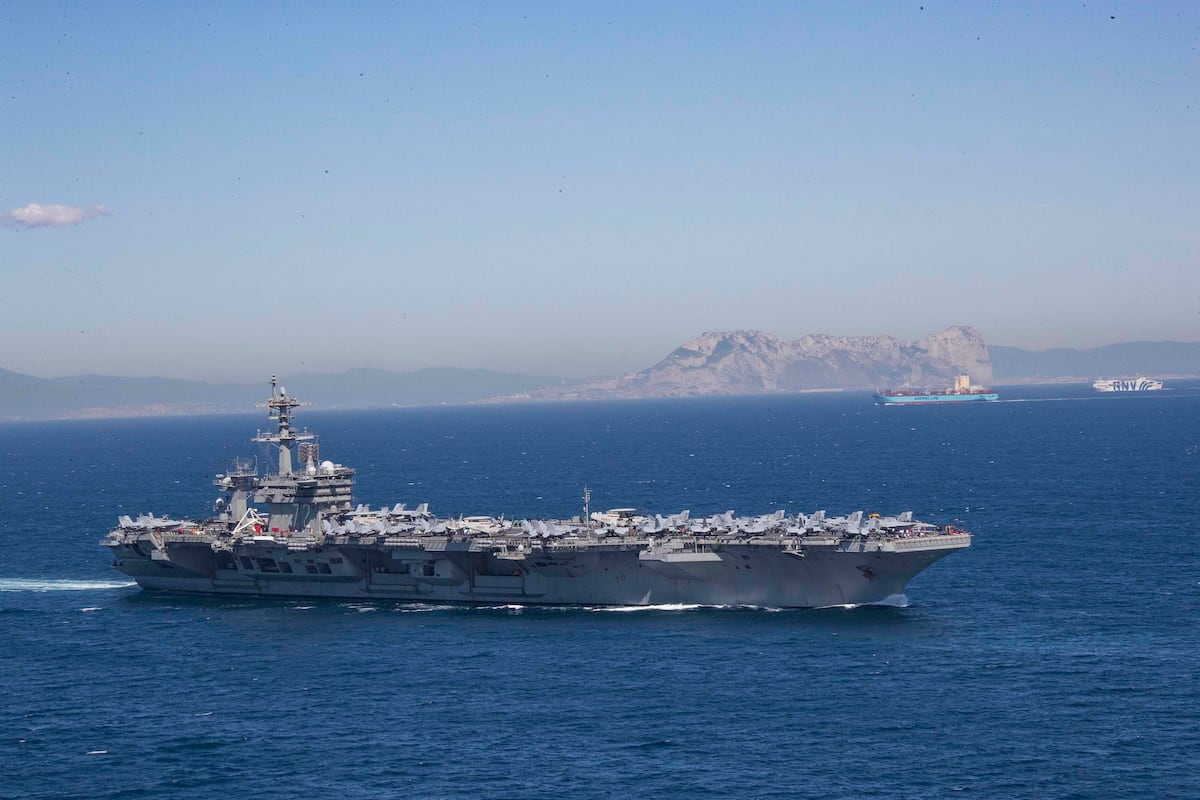
The centerpiece of the U.S. military deployment is the aircraft carrier USS Abraham Lincoln, which entered the U.S. Central Command’s area of responsibility on March 11, 2024. Additional military assets, including warships and F-15E Strike Eagle fighter jets, have also been dispatched to the region.
Iran’s Military Readiness
Iranian officials have been vocal about their military capabilities, indicating enhancements to their naval and missile technology aimed at U.S. warships. According to Ali Vaez, Iran project director for the International Crisis Group, these capabilities were not utilized during the previous 12-day conflict with Israel, suggesting their readiness for future confrontations.
Vaez asserted that while the U.S. possesses greater military resources, any conflict would come with significant costs, which may deter immediate action from Washington. “The U.S. can no doubt defeat Iran,” he stated, “but it will come with the kind of price tag that so far the president has demonstrated he’s reluctant to pay.”
As both nations remain entrenched in their positions, the situation continues to evolve, raising concerns about the potential for conflict in the already volatile region. The international community watches closely, hoping for a diplomatic resolution to avert further escalation.