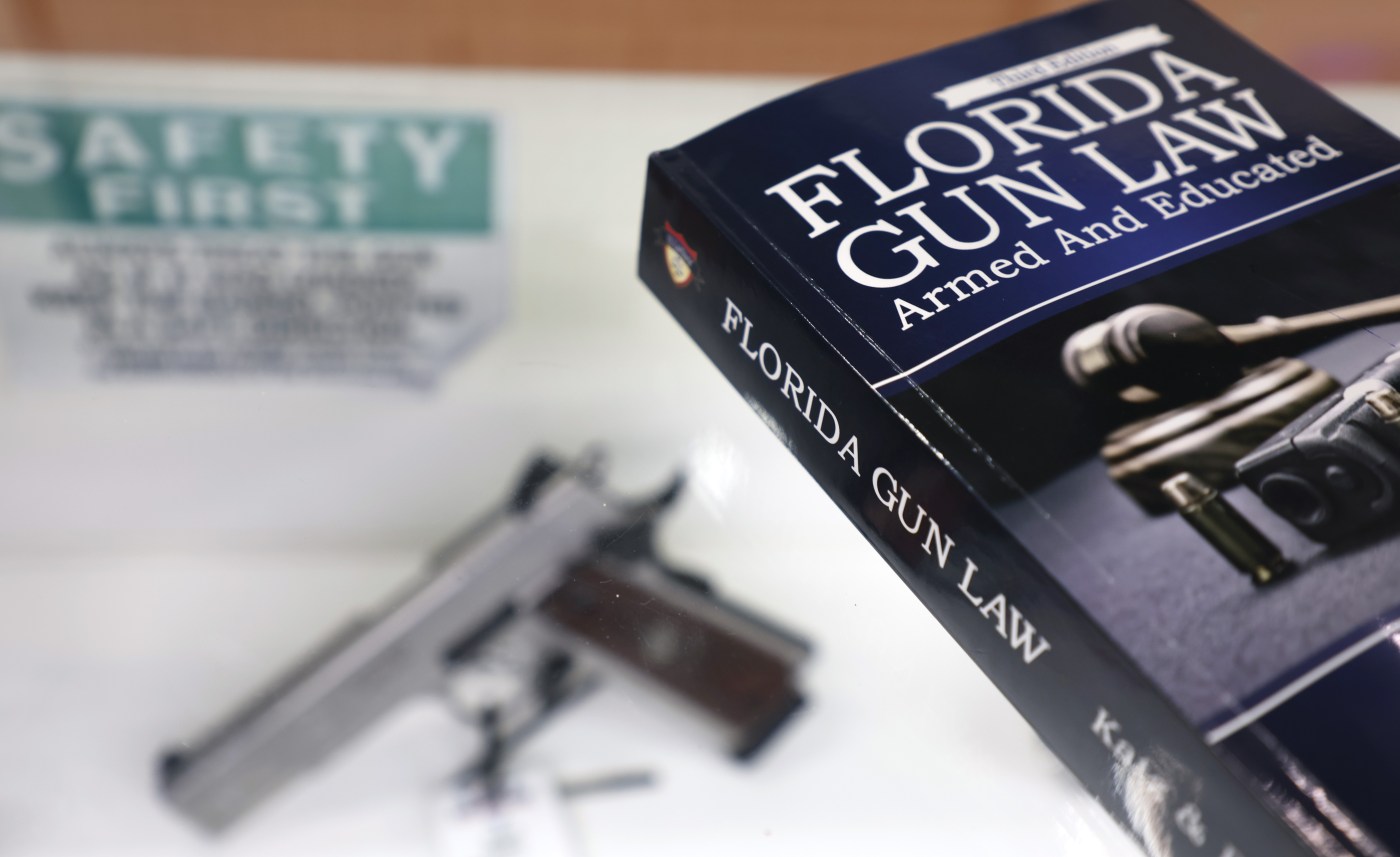
Florida Attorney General James Uthmeier has sparked controversy by requesting that an appeals court uphold a teenager’s right to carry a concealed weapon. This decision comes despite a Broward County judge’s ruling last year affirming the constitutionality of a law that bans individuals aged 18 to 21 from carrying concealed firearms. This move represents a significant setback for gun-control advocates in Florida, who have been working to impose stricter regulations on firearm possession.
The law in question dates back to 1987 and has survived numerous challenges regarding gun rights and legislation. In October 2022, Broward Circuit Judge Frank Ledee dismissed charges against a teenager arrested for carrying a concealed handgun, deeming the ban unconstitutional under the Second Amendment. Judge Ledee stated, “Because the Second Amendment’s plain text applies to the concealed carry of firearms, Florida’s concealed carry ban, as applied to 18-to-20-year olds, is unconstitutional.” However, in a related case, Judge Lorena Mastrarrigo upheld the same law, indicating the ongoing legal debates surrounding this issue.
Uthmeier’s request to the appeals court reflects his belief that the state should not prosecute the defendant in the earlier case, which has drawn criticism from multiple fronts. He has also opted not to allow the Broward State Attorney’s Office to defend the concealed carry law, a decision that some officials argue undermines the state’s obligation to uphold laws enacted by the legislature.
Broward State Attorney Harold Pryor expressed his disagreement with Uthmeier, emphasizing the serious implications of gun crimes in Florida. He pointed to the tragic events of February 14, 2018, when a mass shooting at Marjory Stoneman Douglas High School resulted in the deaths of 17 individuals and injuries to many others. “Given the impact of gun crimes in the State of Florida… we respectfully disagree with the position taken by the Office of the Attorney General,” Pryor stated, reaffirming his commitment to enforcing the existing law despite Uthmeier’s stance.
Criticism of Uthmeier’s actions has come from various quarters, including Florida House Representative Dan Daley, who accused the attorney general of prioritizing political beliefs over established law. “While our appointed Attorney General might not be aware, he does not have the authority to abandon a state law simply because he disagrees with it,” Daley remarked. He has called on Governor Ron DeSantis to intervene, noting that the Governor has previously removed state attorneys for less significant infractions regarding enforcement discretion.
Gun-reform advocates have also weighed in on the matter. Fred Guttenberg, whose daughter Jaime Guttenberg was killed in the Stoneman Douglas shooting, expressed deep concern over the attorney general’s refusal to defend the concealed carry law. “No single official should be able to decide which laws are worth defending, especially when those laws are designed to protect the public from gun violence,” Guttenberg stated. He emphasized the importance of laws that aim to safeguard communities and preserve lives.
The ongoing debate surrounding concealed carry laws in Florida continues to evoke strong emotions and differing opinions. As the case moves through the appeals process, the implications of these legal decisions will likely resonate throughout the state and beyond, influencing the future of gun legislation in the Sunshine State.