The United States boasts a diverse array of airports, many of which are not only among the busiest in the world but also the largest by land area. This expansive capacity allows these airports to handle a significant volume of flights and facilitates potential for future growth. This article highlights the ten largest airports in the U.S. by land area, which, while busy, do not always align with the rankings based on passenger traffic.
10. Detroit Metropolitan Wayne County Airport
Covering an area of 7.3 square miles (19 square kilometers), Detroit Metropolitan Wayne County Airport (DTW) ranks as the largest airport in Michigan and the tenth largest nationwide. It serves as a crucial hub for Delta Air Lines and Spirit Airlines, and previously supported Northwest Airlines. The airport features six runways, the longest being Runway 4L/22R at 12,003 feet (3,659 meters). DTW has two passenger terminals with a combined total of 150 gates, including the Edward H. McNamara Terminal, which is notable for its three concourses and extensive facilities.
9. John F. Kennedy International Airport
Located in New York, John F. Kennedy International Airport (JFK) spans 8 square miles (21 square kilometers) and is the busiest of the three major New York airports. Its size allows for high flight traffic, making it the primary international gateway to the U.S. JFK features four runways, with the longest being Runway 13R/31L at 14,511 feet (4,423 meters). The airport houses five terminals with a total of 130 gates, supporting major airlines such as American Airlines, Delta Air Lines, and JetBlue.
8. San Francisco International Airport
Spanning 8.1 square miles (21.07 square kilometers), San Francisco International Airport (SFO) is the largest airport in California. It serves as a major hub for United Airlines and a smaller hub for Alaska Airlines. SFO operates four intersecting runways, with the longest being Runway 10L/28R at 11,870 feet (3,618 meters). The airport features four terminals with a total of 121 gates and is known for its unique approach and departure capabilities, despite facing operational constraints during adverse weather.
7. Chicago O’Hare International Airport
With an area of 11.9 square miles (30.9 square kilometers), Chicago O’Hare International Airport (ORD) is one of the busiest airports globally and the most connected airport in the U.S. Home to a hub for American Airlines and the busiest hub for United Airlines, O’Hare features eight runways—the most of any airport worldwide. It boasts four terminals with a total of 216 gates, making it a critical hub for domestic and international travel.
6. Salt Lake City International Airport
Covering 11.96 square miles (31 square kilometers), Salt Lake City International Airport (SLC) is Utah’s largest and busiest airport. It primarily serves as a hub for Delta Air Lines and features four runways, with the longest being Runway 16L/34R at 12,002 feet (3,658 meters). The airport has a single terminal with two concourses and plans to expand its facilities with additional gates by late 2026.
5. George Bush Intercontinental Airport
Located in Houston, George Bush Intercontinental Airport (IAH) spans 15.4 square miles (40 square kilometers) and serves as a significant hub for United Airlines. It has five runways, with the longest being Runway 15L/33R. The airport features five terminals and a total of 121 gates, playing a pivotal role in connecting domestic and international flights.
4. Washington Dulles International Airport
At 20 square miles (52 square kilometers), Washington Dulles International Airport (IAD) serves as a secondary transatlantic hub for United Airlines. The airport features four runways, with plans for a fifth. Dulles has a total of 139 gates across its main terminal and two midfield buildings, making it a significant gateway for international travelers.
3. Orlando International Airport
Covering 20.8 square miles (54 square kilometers), Orlando International Airport (MCO) is Florida’s busiest and largest airport. It serves multiple budget airlines, including JetBlue and Southwest Airlines, but lacks a major hub from the three largest U.S. airlines due to market dynamics. The airport features four parallel runways and a total of 130 gates, catering primarily to a large volume of vacation travelers.
2. Dallas/Fort Worth International Airport
Spanning 26.6 square miles (69 square kilometers), Dallas/Fort Worth International Airport (DFW) is the second-busiest airport globally by passenger numbers. It serves as the primary hub for American Airlines and features seven runways, allowing operations for aircraft as large as the Airbus A380. DFW has six terminals, housing a total of 193 gates, with ongoing expansion plans that will increase its capacity even further.
1. Denver International Airport
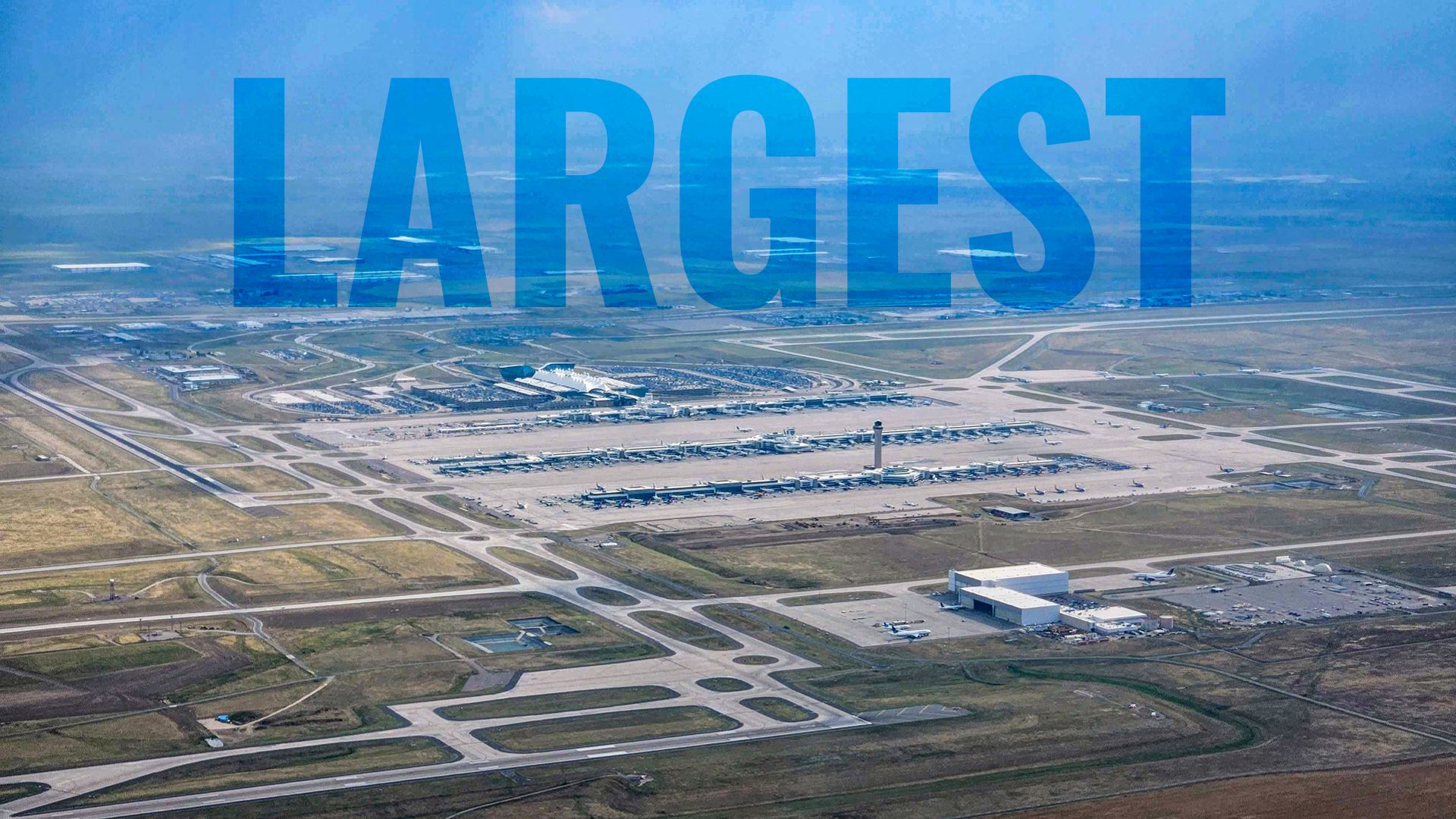
The largest airport in the United States, Denver International Airport (DEN), spans an impressive 52 square miles (135 square kilometers). It serves as a major hub for United Airlines and features six runways arranged in a unique pinwheel design, which optimizes efficiency and reduces on-ground time. The airport includes a single terminal, the Jeppesen Terminal, alongside three midfield concourses, providing a total of 169 gates.
These airports are not only vital for air travel but also serve as key economic engines for their respective regions, demonstrating the significance of air transport in modern society.