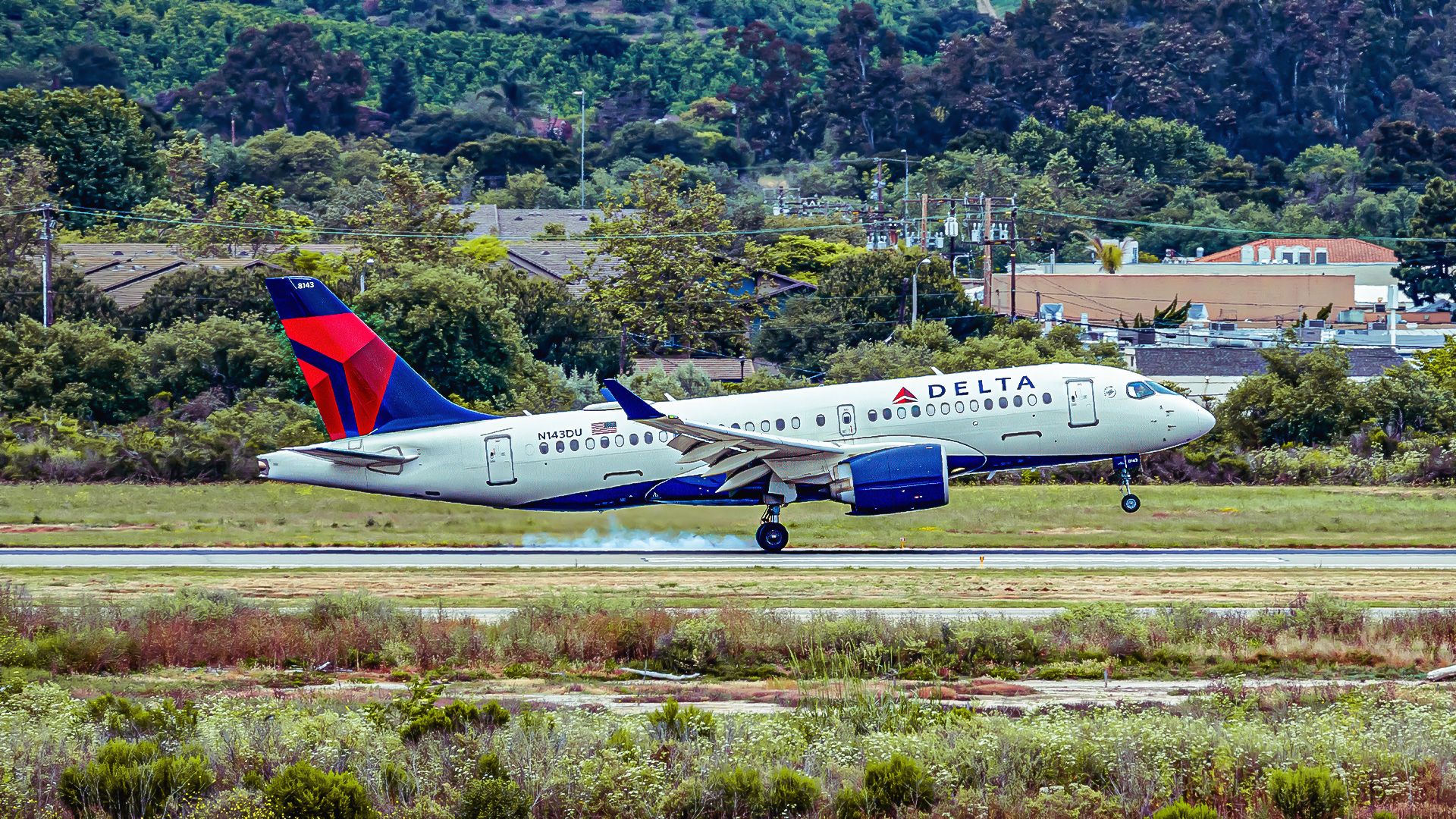
Delta Air Lines is set to operate a remarkable **97,438 flights** using its Airbus A220 family in **2026**, reflecting the airline’s strategic focus on expanding its fleet of narrowbody aircraft. This extensive operation highlights Delta’s unique position among legacy U.S. carriers, as it continues to embrace smaller, fuel-efficient aircraft, notably while its competitors concentrate largely on Boeing and Airbus larger models.
Delta was the first U.S. operator of the Airbus A220 and is currently its largest customer. Upon completion of its aircraft deliveries, the Atlanta-based airline will have a total of **145 A220s**, comprised of **45 A220-100s** and **100 A220-300s**—the latter includes **64** aircraft still on order. The A220 fleet is designed to offer passengers enhanced comfort through features such as spacious overhead bins, large windows, and a low noise level, making it an appealing option for travelers.
Flight Operations and Route Strategy
According to data from aviation analytics firm Cirium, Delta plans to average nearly **267 flights per day** with the A220 series in **2026**. Specifically, **51,303 flights** will utilize the A220-100 model, while **46,135 flights** will be operated by the A220-300. The seating capacity also varies, with Delta selling **5,997,550 seats** on A220-300 flights compared to **5,592,027 seats** on A220-100 flights, underlining the operational efficiency of the larger variant.
The A220 aircraft will be based in key locations, including **New York**, **Salt Lake City**, **Seattle**, and a new pilot base that will open in **Minneapolis** in the spring of **2026**. This strategic distribution enables Delta to effectively deploy the A220 on long-haul routes where its fuel efficiency and range can be maximized.
The A220 primarily replaces older models such as the **Airbus A319-100** and the **Boeing 717-200** on longer routes, allowing Delta to capitalize on the newer aircraft’s superior performance. The A220-100, for instance, features a capacity of **109 seats**, comparable to the 110-seat configuration of the 717-200. Meanwhile, the A220-300 is configured with **130 seats**, closely matching the Airbus A319-100’s **132 seats** but with greater range and fuel efficiency.
Key Routes and Passenger Experience
Among the busiest routes for the A220-100 will be the corridor between **Salt Lake City International Airport** and **Orange County John Wayne Airport**, with **1,577 flights** scheduled annually. This route sees between three to five daily flights, particularly in the summer months. Other notable routes include **Minneapolis/St. Paul International Airport** to **Chicago O’Hare International Airport**, with **1,128 flights** planned, and **Salt Lake City International Airport** to **San Jose Mineta International Airport**, featuring **977 flights**.
The A220-300 will also find significant usage, with its busiest route being from **New York LaGuardia Airport** to **Chicago O’Hare International Airport**, slated for **1,332 flights**. This route benefits from the A220-300’s capacity and operating economics, maximizing efficiency for Delta on popular business routes.
Onboard, both the A220-100 and A220-300 feature **12 First Class seats**, similar to the configurations of Delta’s other narrowbody aircraft. The Delta Comfort+ section on the A220-300 includes **43 seats**, while the A220-100 has only **15 Delta Comfort+ seats**. These aircraft are equipped with advanced entertainment systems and offer improved cabin pressure altitude, which enhances passenger comfort.
As Delta continues to integrate the A220 into its fleet, the aircraft’s versatility and economic benefits position it as a key player in the airline’s future operations. By replacing older jets and optimizing route capacities, Delta aims to maintain its competitive edge while providing an elevated flying experience for its customers.