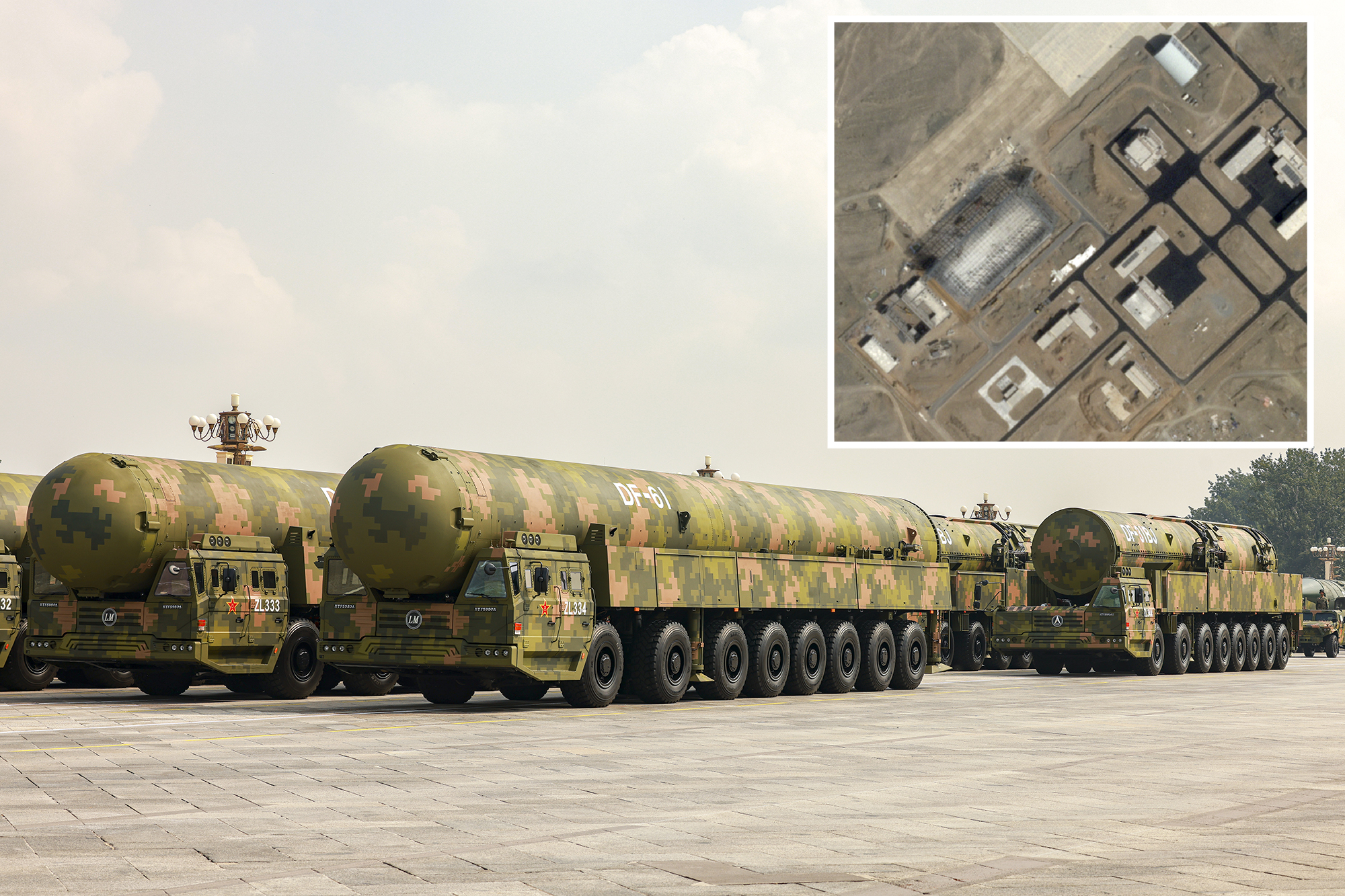
China is reportedly advancing its nuclear capabilities with the development of a “new generation” of nuclear weapons, according to assessments from US intelligence agencies. Recent reports indicate that Beijing has conducted at least one undisclosed nuclear test, raising concerns about a significant shift in China’s nuclear strategy.
US officials disclosed to CNN that China’s nuclear arsenal currently includes approximately 600 operational warheads. The introduction of this new generation of weapons, which lacks a comprehensive database, signals a potential escalation in China’s military capabilities. An unnamed US source highlighted the urgency of the situation, stating, “They have a brand new generation of weapons for which they have no database.”
As part of its modernization efforts, China is reportedly pursuing the development of low-yield, tactical nuclear weapons for the first time. These weapons could be deployed in scenarios involving military interventions by the United States in defense of Taiwan. This strategic shift has been fueled by substantial financial investments, although the exact amount remains undisclosed.
Secret Nuclear Test Conducted in February
According to reports, China conducted a secret nuclear test in February 2023 at its Lop Nur Facility, located in the country’s remote northwestern region. This facility has been the site of previous nuclear tests, including a notable explosion in June 2020, when China conducted a test despite a self-imposed moratorium established in 1996.
The June 2020 test was confirmed to have registered an explosion of 2.75 on the Richter scale, as detailed by Christopher Yeaw, the US Assistant Secretary of State. Yeaw stated, “I’ve looked at additional data since then. There is very little possibility I would say that it is anything but an explosion, a singular explosion.”
This information has reinforced suspicions within the US government that China is actively enhancing its nuclear program. The implications of these developments are significant, prompting discussions among international security experts regarding the future of nuclear deterrence in the region.
In response to these allegations, a spokesperson for the Chinese Embassy in Washington, DC, accused the United States of distorting and misrepresenting China’s nuclear policy. The ongoing tensions surrounding nuclear capabilities highlight the critical need for dialogue and transparency among global powers to prevent escalation.
As China’s nuclear strategy evolves, the international community watches closely, weighing the potential ramifications for regional and global security.