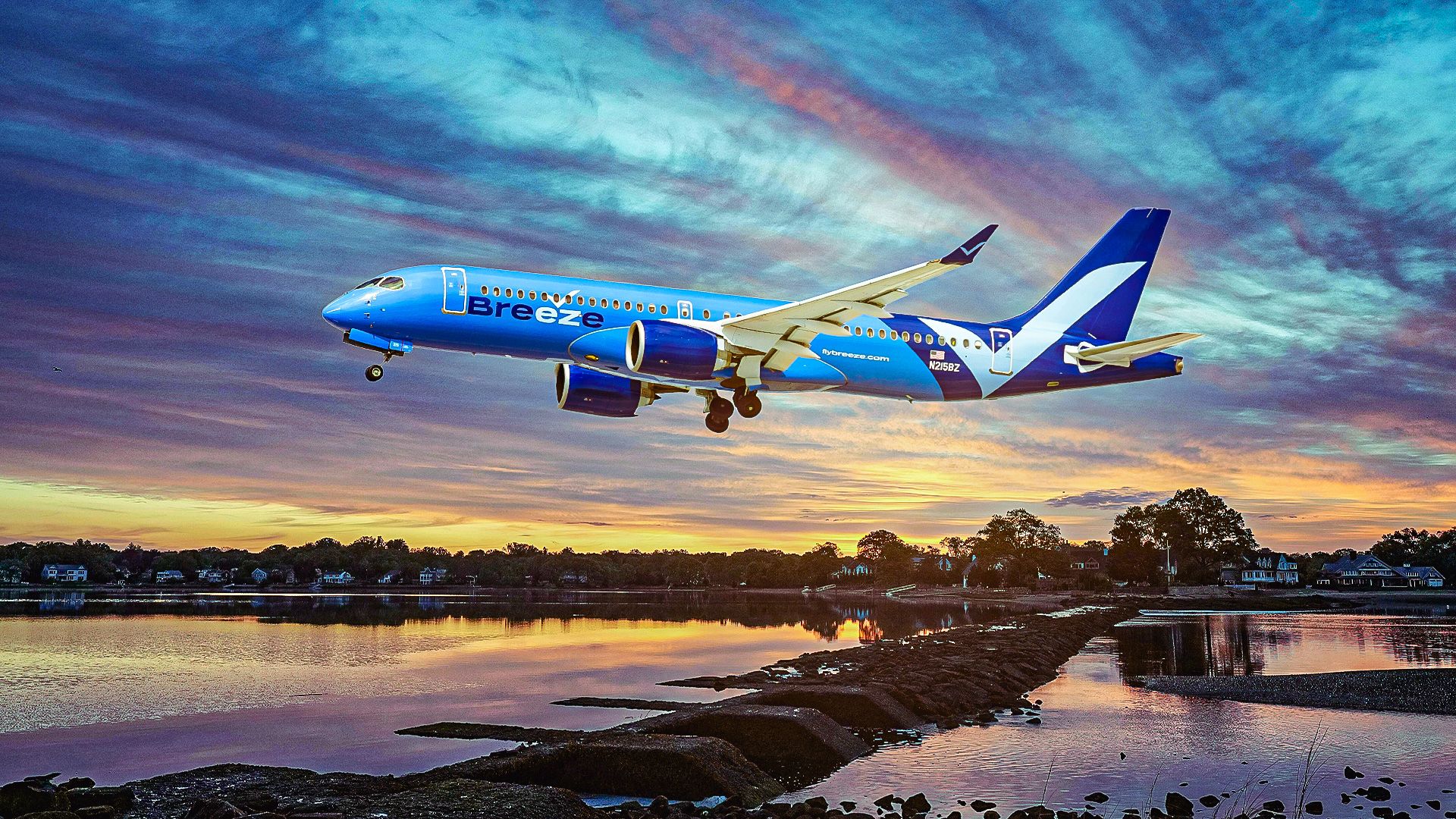
Breeze Airways has recently come under scrutiny for its performance on various routes, particularly as it expands its network. The airline, which began international operations and added new domestic routes in late 2024, has revealed that a significant number of its routes are experiencing low passenger load factors. According to the US Department of Transportation, Breeze carried just over six million passengers in the twelve months leading up to November 2025, reflecting a 49% increase from the previous year. Despite this growth, the overall load factor stands at 77.4%, slightly below the average for the US domestic market.
Ten Routes Struggling to Fill Seats
An analysis of Breeze’s operational data from December 2024 to November 2025 highlights ten routes with notably low seat load factors. These routes have all seen load factors significantly lower than the airline’s average. The findings indicate that routes with fewer than 1,500 passengers were excluded from the analysis to ensure reliable data.
The route from Washington Dulles to Ogdensburg topped the list with a dismal load factor of 24.7%, having transported 21,850 passengers during the period. This route, which began in September 2024 as part of an EAS (Essential Air Service) funding initiative, has seen its frequency cut significantly despite ongoing operations.
Other routes with low load factors include:
– Orange County to Montrose: 36.5%, began December 2024
– Raleigh/Durham to Ogdensburg: 39.7%, began September 2025
– Richmond to Charleston (SC): 41.1%, operational since 2021
– Raleigh/Durham to Key West: 42.6%, began October 2025
– Tampa to Charleston (WV): 46.7%, began October 2023
– Tweed New Haven to Jacksonville: 46.9%, began February 2025
– Tweed New Haven to Fort Myers: 47.4%, began December 2024
– Orlando to Mobile International: 49.2%, operated April 2024 to January 2025
– Daytona Beach to Akron/Canton: 49.4%, began September 2025
While these figures might raise concerns, it is essential to consider the broader context. Factors such as the timing of route launches, operational frequency, and local demand play significant roles in determining load factors.
Understanding the Challenges
Breeze’s route from Washington Dulles to Ogdensburg illustrates the complexities of operating in niche markets. The airline replaced United Express, which previously served the route with smaller aircraft, allowing for more flexibility and a broader network. Despite receiving approximately $18 million in funding through September 2026, the load factors have prompted Breeze to reduce the flight frequency to four times a week.
In stark contrast to its predecessor, Breeze’s larger aircraft have not attracted sufficient demand, reaching a low of 12.0% in January 2025. This route’s performance raises questions about the viability of such services, particularly when considering whether the economic benefits justify the funding provided.
As Breeze Airways continues to expand its reach, the airline faces the challenge of balancing growth with sustainable operations. The future of these underperforming routes may hinge on strategic adjustments that address both demand and operational efficiency. With the aviation market continuing to evolve, Breeze’s efforts to carve out a niche could determine its long-term success in the competitive airline industry.