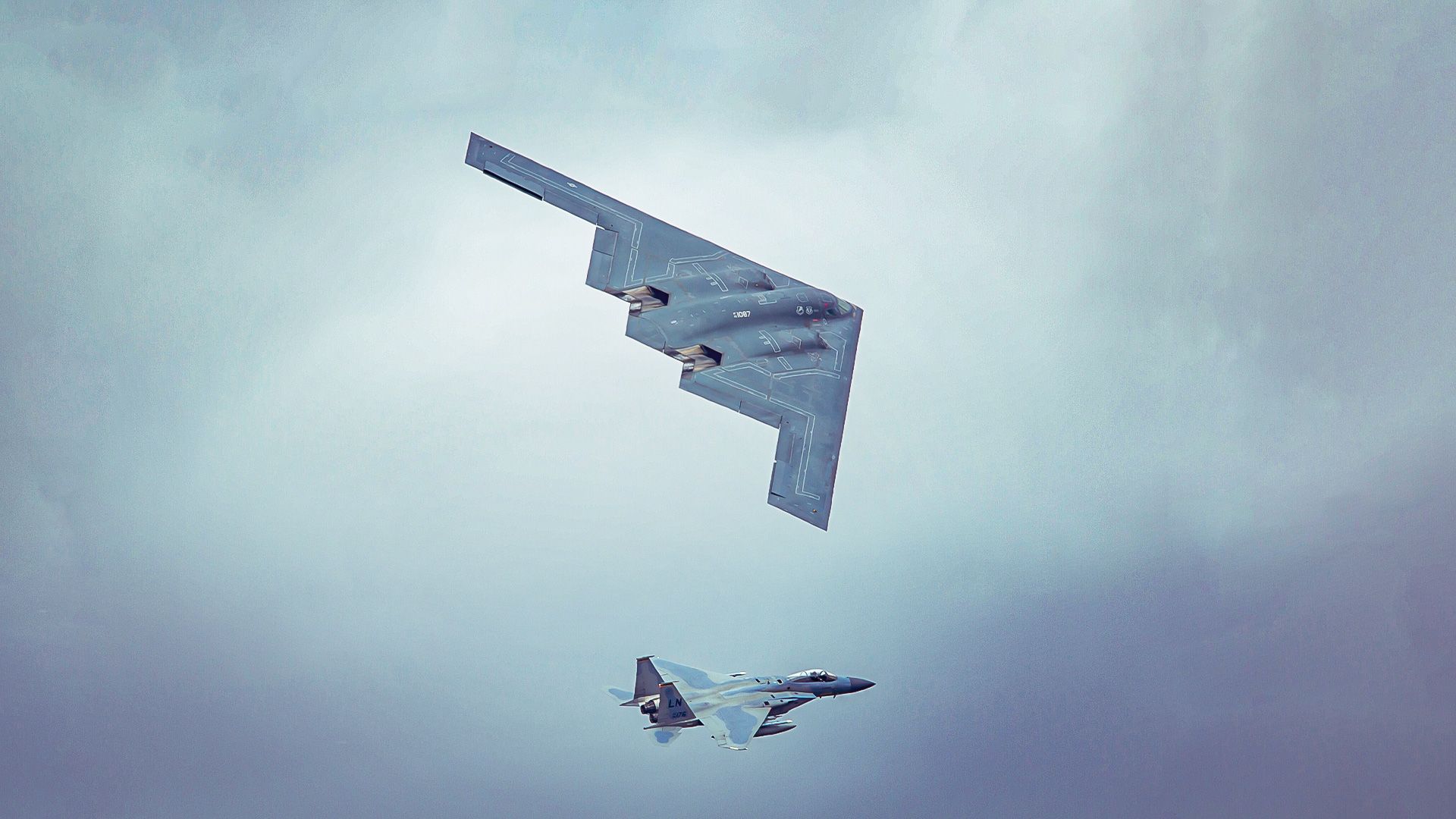
The future of the Northrop B-2 Spirit bomber appears secure, with the United States Air Force (USAF) indicating that these aircraft will not retire until the 2030s or even the 2040s. Currently undergoing a mid-life upgrade, the B-2 will remain operational alongside the incoming B-21 Raider, projected to enter service in 2027. As the USAF prepares for a transition in its strategic bomber fleet, the B-2 will continue to play a critical role, particularly until the B-1 Lancer is phased out.
While initial plans suggested that some B-2s could retire as early as the late 2020s, those timelines have shifted. The B-2 is recognized as one of the most advanced bombers in the world, and its limited numbers—only 21 were acquired—make each aircraft loss significant. The USAF plans to hold onto these bombers until there are sufficient B-21s to take their place.
The B-21 Raider and Strategic Bomber Fleet
In 2025, the USAF took delivery of its second B-21 Raider prototype, with more expected by 2026. This new aircraft’s entry into service will complement three existing types of bombers: the classic B-52 Superfortress, the B-1 Lancer, and the B-2 Spirit. The B-52 fleet, which entered service in the 1950s, is anticipated to remain operational until at least the 2050s, primarily to deliver stand-off munitions from outside contested airspace. The B-2 and B-21, in contrast, are designed to penetrate such airspaces.
Despite its advanced capabilities, the B-1 Lancer is set to retire first, as the USAF transitions to the B-21. The Air Force reported in 2021 its intention to retire 17 B-1B Lancers, reducing the active fleet to 45. However, operational challenges have necessitated pulling additional airframes from storage to maintain numbers. The aging B-1 fleet has suffered significant wear, with some aircraft requiring up to $30 million in repairs to remain flightworthy.
The Department of Defense’s report on force structure changes for the fiscal year 2025 indicates no planned retirements for the B-1 or B-2 until at least FY 2028, when nine B-1s are expected to be retired, followed by another ten in FY 2029. This suggests that the number of B-1s could dwindle to 26 by the end of FY 2029.
Challenges and Upgrades for the B-2 Spirit
The B-2 Spirit, while remaining a cornerstone of the strategic bomber fleet, faces challenges that could impact its long-term operational capacity. The fleet is undergoing a mid-life upgrade intended to extend its relevance into the 2040s. However, recent mishaps have decreased the number of operational B-2s. Notably, the “Spirit of Hawaii” was damaged beyond repair in 2022, reducing the fleet to 19 operational units.
Originally, the USAF had planned to acquire a total of 132 B-2 bombers, but budget constraints and the end of the Cold War limited this to just 21. This makes every loss of a B-2 particularly impactful. While the Air Force has older B-52 and B-2 airframes in storage at the Davis-Monthan boneyard, the same cannot be said for the B-2 fleet, as there are no plans for replacements.
Significant investment is being made to sustain the B-2. In 2024, the USAF awarded Northrop Grumman a $7 billion contract to upgrade the B-2 fleet, which amounts to approximately $350 million per aircraft. This investment includes enhancements to capabilities, logistics, and maintenance support, indicating a commitment to retaining the B-2 for the foreseeable future.
As the B-21 Raider prepares for its operational debut, it remains uncertain how this new aircraft will affect the B-2’s longevity. While the B-21 is expected to be a smaller, more advanced platform, it may not match the B-2’s payload capacity, which is estimated at 60,000 lbs when carrying two GBU-57 bombs. By comparison, the B-21’s capabilities remain largely classified, but estimates suggest a lower payload capacity.
The projected timeline for the B-21’s production indicates deliveries could continue into the late 2030s. This means that the USAF will need to retain its B-2s until sufficient B-21s are in service. The current production rate is anticipated at 7-10 aircraft per year, which would allow the Air Force to replace the B-1 and B-2 fleets progressively.
In summary, the B-2 Spirit is poised to remain a vital part of the USAF’s strategic capabilities for many years. The combination of significant upgrades, limited fleet size, and the gradual introduction of the B-21 Raider suggests that the B-2’s retirement may not occur until well into the 2030s, ensuring its role as a critical component of America’s aerial defense strategy.