The legacy of the 101st Airborne Division, known for its valor in numerous conflicts, is intertwined with the story of a remarkable bald eagle named Old Abe. This iconic bird, captured during the American Civil War, has become a symbol of resilience and courage for the division, which has fought in every major war since its establishment.
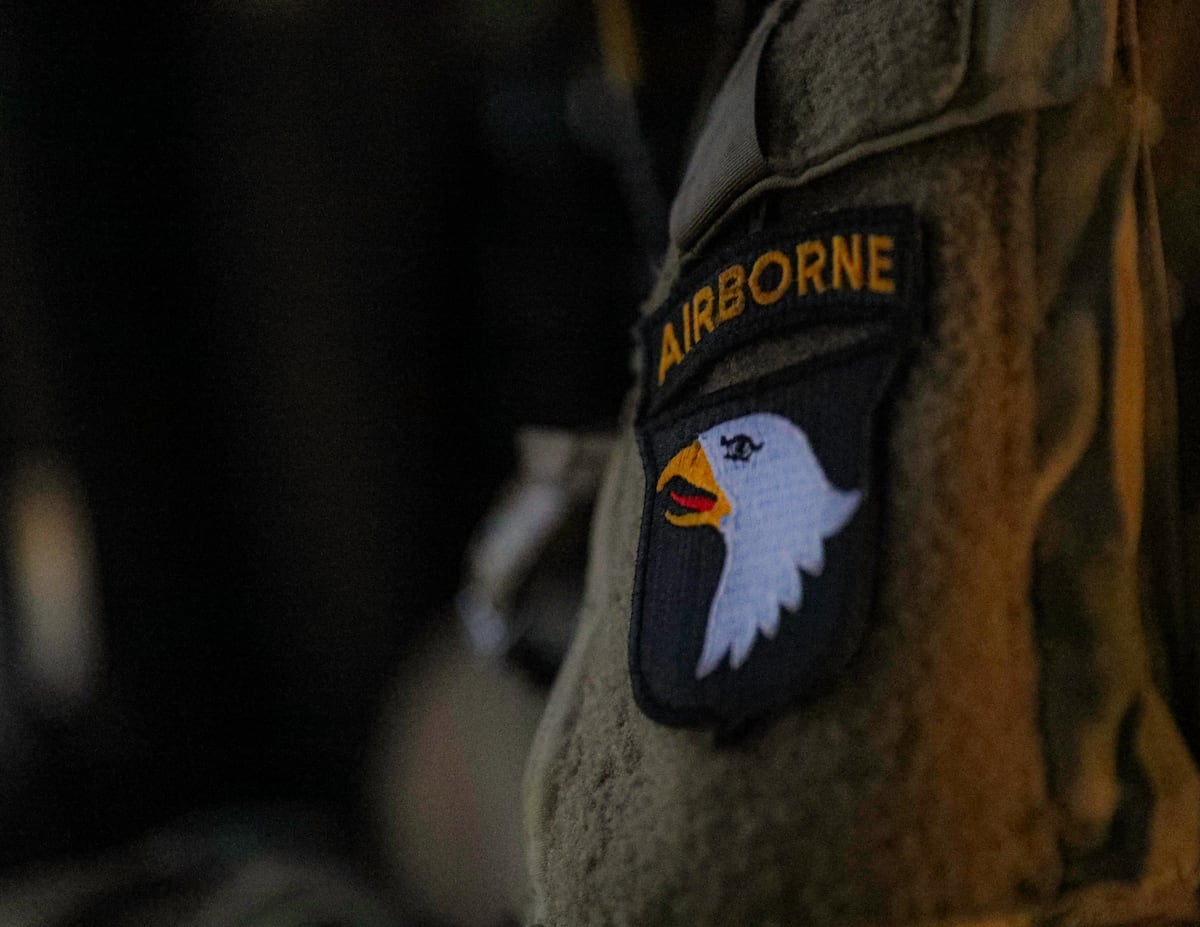
The 101st Airborne Division, famously highlighted in Stephen Ambrose’s book “Band of Brothers,” has a history that dates back to its formation during World War II. Its distinctive patch, featuring a screaming eagle on a black shield, is one of the most recognizable emblems in the U.S. Army. However, the story of this insignia traces back to a real eagle that captured the hearts of soldiers over a century ago.
Old Abe was captured as a young eaglet in 1861 by Ahgamahwegezhig, also known as Chief Big Sky, of the Lac du Flambeau Band of the Lake Superior Ojibwe. Shortly after, he was sold to Daniel McCann of Chippewa County, Wisconsin, for a bushel of corn. Initially kept as a pet, Old Abe’s size prompted McCann to seek a new owner among the Wisconsin troops heading to Camp Randall in Madison.
Eventually, the eagle was purchased for $2.50 by Capt. John E. Perkins, the commanding officer of the militia company known as the “Eau Claire Badgers.” Following the reorganization of his unit into the 8th Wisconsin Volunteer Infantry Regiment, Old Abe became an integral part of the company, which quickly earned the nickname “Eagle Regiment.”
Carried into battle by a sergeant on a black shield, Old Abe participated in 37 battles and skirmishes, including the significant confrontations at Vicksburg and Corinth. His presence was not only a morale booster for the troops but also a source of inspiration. According to the Wisconsin Historical Society, Colonel Rufus Dawes noted that Confederate prisoners would have preferred capturing Old Abe over taking an entire brigade.
The eagle’s fame grew, particularly noted during the Battle of Corinth when Confederate General Sterling Price declared that capturing Old Abe was a greater priority than taking a whole brigade or multiple battle flags. Despite the Confederate efforts, Old Abe remained with his Wisconsin handlers and mustered out alongside them in 1864.
After the war, Old Abe was donated to the state of Wisconsin and spent his remaining years in the state capitol building, where he was a constant reminder of the bravery displayed during the war. Unfortunately, conditions deteriorated over time, and the famous eagle suffered from malnutrition and exhaustion. In 1881, following a fire in the capitol, Old Abe succumbed to smoke inhalation and died within a month.
Old Abe’s legacy endures as a symbol of the 101st Airborne Division. Adopted as the unit’s insignia in 1921, the eagle represents both airborne and air assault combat capabilities. The story of Old Abe not only highlights the rich history of this division but also serves as a tribute to the bond between soldiers and their symbols of strength and resilience.