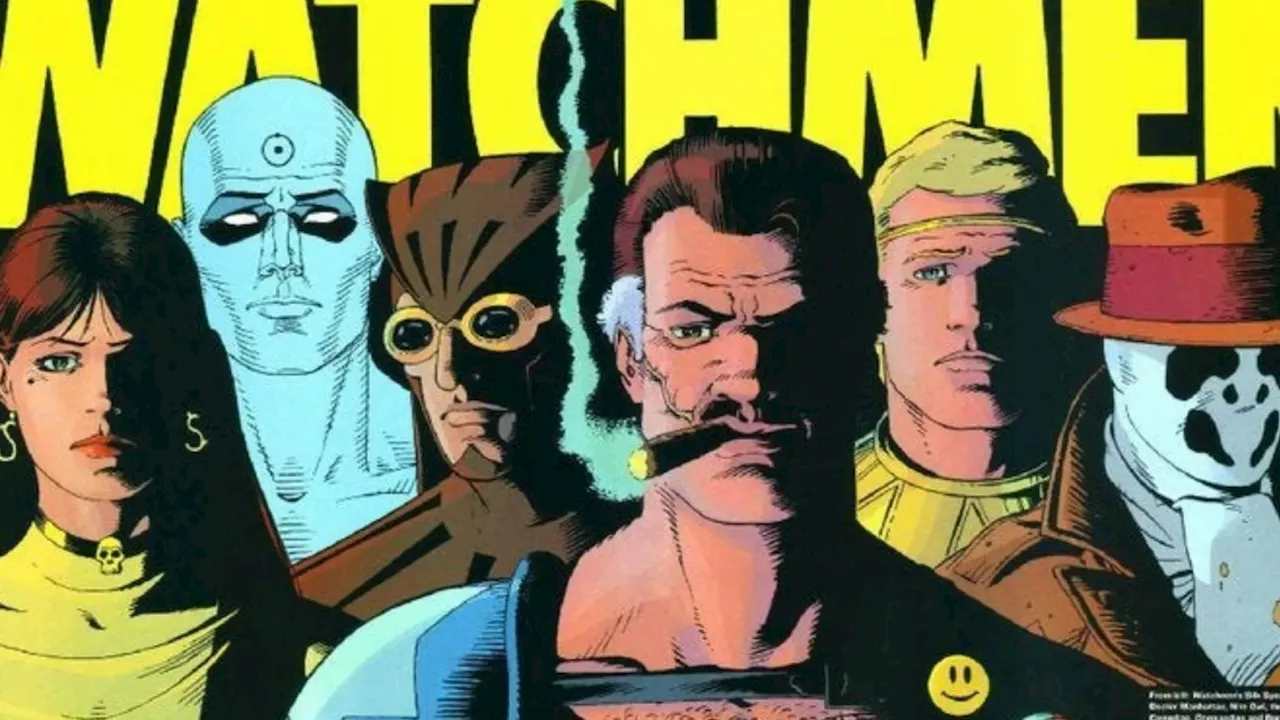
UPDATE: As the iconic comic Watchmen celebrates its 40th anniversary, new analyses are emerging that challenge its revered status in the superhero genre. Released between 1986 and 1987, this groundbreaking work by Alan Moore, Dave Gibbons, and John Higgins is now under scrutiny for its contemporary relevance and legacy.
This critical re-evaluation comes amid a shifting landscape in comic storytelling and reflects on how Watchmen has influenced generations of creators. While it was hailed for its complex narrative and innovative art, many argue that its enduring legacy has been misinterpreted, leading to a proliferation of narratives that often miss the mark.
Originally crafted as a satirical deconstruction of superhero tropes against the backdrop of the Cold War, Watchmen encapsulated the anxieties of its time, including the threat of nuclear war and political corruption, especially highlighted by events like the Watergate scandal and the Vietnam War. However, as society has evolved since the late 1980s, some critics suggest that the comic’s themes are no longer as relevant or resonant.
The 1990s ushered in significant social changes, and today’s exploration of heroism and morality looks vastly different. Critics argue that clinging to the standards set by Watchmen is akin to holding onto outdated technology when new ideas are emerging. This raises urgent questions: Are creators interpreting the essence of Watchmen correctly? Or are they replicating its shock value without grasping its deeper themes?
As the discussion heats up, it is crucial to recognize that the comic’s complex characters and morally ambiguous narratives have influenced many works. However, the focus on replicating its gritty tone has led to a wave of stories that may lack the depth that Watchmen originally brought to the table. The issue lies not with the comic itself but with the subsequent narratives that may distort its foundational messages.
In light of these developments, the comic industry must reassess how it honors Watchmen’s legacy while fostering new, innovative storytelling that reflects current societal issues. As we move forward, the challenge will be to create narratives that resonate with audiences today, without being overshadowed by the monumental influence of Watchmen.
Stay tuned for further analyses and reactions from the comic community as this milestone prompts a broader conversation about the future of superhero narratives in light of Watchmen’s legacy.