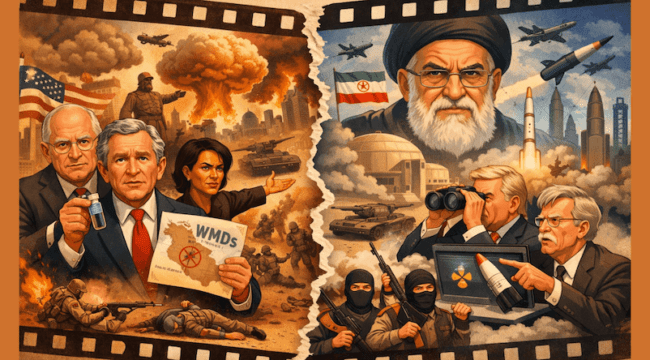
UPDATE: Concerns over Iran’s nuclear ambitions are escalating rapidly, mirroring the alarming rhetoric that preceded the Iraq War in 2002. Officials are now warning that Iran is “just a week away” from developing a nuclear weapon, raising urgent questions about the potential ramifications for global security.
In a climate reminiscent of past miscalculations, the narrative surrounding Iran’s capabilities is becoming increasingly murky. Current reports indicate that Iran possesses enough material for 11 nukes and has long-range missiles that could strike the U.S. mainland. However, a key contradiction arises: if U.S. forces have already “decimated” Iran’s nuclear facilities, how can the regime still be on the brink of acquiring a nuclear bomb?
The echoes of the past are jarring. In October 2002, two-thirds of Americans were convinced that Saddam Hussein was close to obtaining nuclear weapons, a belief that would lead to the deaths of 4,500 American soldiers and an estimated 150,000 to 1,000,000 Iraqi civilians. Investigations later revealed that these claims lacked credible evidence and were built on a foundation of political pressure and uncertainty.
Now, as tensions escalate, the Trump administration appears to be employing similar tactics to justify military action. The administration announced a military strike through social media, creating a narrative that shifts frequently, leaving many questioning the actual goals of the operation. These developments have led to concerns about the potential for mission creep, with objectives expanding beyond initial targets.
As reported by Reuters, there is internal debate among aides regarding how far to escalate military action against Iran, revealing a disconcerting focus on midterm electoral optics even amidst a potential conflict. This raises critical questions about the motivations driving U.S. policy and the implications for American lives.
The political environment in Washington has fostered a culture of threat inflation. In the past, accurate assessments of threats have often been overshadowed by more sensational claims that resonate with the public. Officials have learned that framing an issue in stark terms—such as declaring Iran “a week from the bomb”—can galvanize support for military action, despite the reality of the situation being far more complex.
Critics argue that this pattern of behavior is not merely a result of individual malfeasance but rather a structural issue within the political system that rewards overselling perceived dangers. Military analysts highlight significant uncertainties regarding the capabilities and intentions of Iran’s nuclear program, yet these nuances rarely make it into public discourse.
As military action appears increasingly likely, the lessons from the Iraq War loom large. The U.S. government’s historical tendency to turn uncertainty into definitive claims raises alarms about the potential for another costly conflict based on flawed intelligence.
The stakes are higher than ever. If the U.S. enters a prolonged military engagement with Iran, the consequences could be dire, leading to further loss of life and destabilization in the region. The situation demands urgent scrutiny and accountability from officials who are once again asking the public to trust their assessments without sufficient clarity.
In reflecting on the past, the imperative is clear: demand transparency and critical evaluation of military actions before committing to another potentially catastrophic conflict. As the situation develops, the public must remain vigilant and question the narratives being presented.
What happens next? The international community is watching closely. As military operations commence, it is crucial for citizens to engage in informed discussions about the implications of these actions, ensuring that history does not repeat itself.