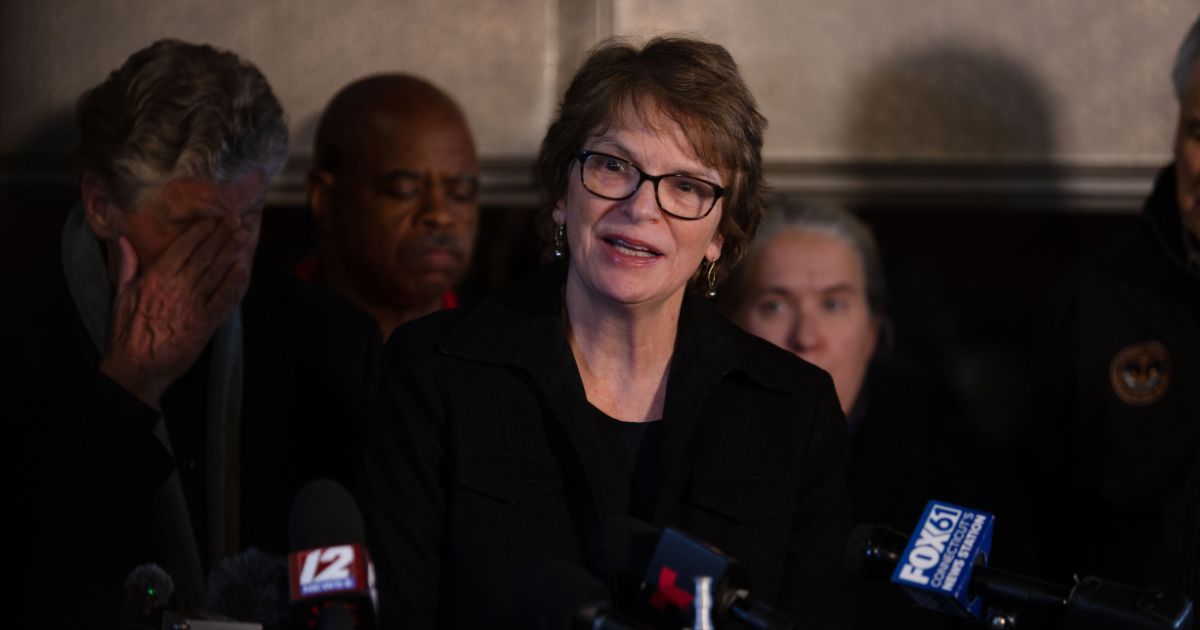
UPDATE: Tensions escalated at a press conference as a reporter confronted Brown University President Christina Paxson over grave security failures that led to the tragic shooting deaths of two students over the weekend. The shocking incident, which occurred on campus, has raised urgent questions about the lack of security measures, specifically the absence of surveillance cameras in critical areas.
Law enforcement took five days to apprehend the alleged gunman, who entered the building unhindered. This delay has intensified scrutiny on Brown University, which boasts an $8 billion endowment yet reportedly had no security cameras in the section where the shooting took place. The absence of surveillance allowed the suspect to roam freely, compromising safety on campus for days.
During the heated press conference on Tuesday, the reporter pressed Paxson to acknowledge the lack of security cameras directly. “You didn’t have cameras in that building. Just say it, so we can get this over with,” he urged. In response, Paxson dismissed the impact of the missing cameras, stating, “I do not think a lack of cameras in that building had anything to do with what happened there.”
The situation has drawn ire not just for its immediate implications but also for the broader security culture at Brown. Criticism mounted when accusations surfaced that the university removed security cameras to comply with sanctuary laws protecting undocumented immigrants. “This insanity has to stop,” stated one observer, reflecting a growing frustration with perceived neglect of safety in the name of political correctness.
Brett Smiley, the mayor of Providence, Rhode Island, highlighted the vulnerabilities of the campus, noting that it has “no gates,” allowing anyone, including potentially dangerous individuals, to enter without restriction. For students paying nearly $100,000 annually, the open campus raises serious concerns about their safety and security.
Junior student Clarissa Thorne-Disla described the campus atmosphere, revealing that many buildings do not require ID for entry. “The doors are propped open all weekend because people know that the space is utilized by a lot of people who might not have swipe access,” she said, emphasizing the lax security measures that have become the norm.
Rodney Chatman, who has been overseeing Public Safety at Brown since 2021, was brought in to address concerns related to bias in policing but has faced criticism for the lack of visible action in ensuring campus safety. Observers have noted his absence during crucial discussions, questioning the effectiveness of his leadership in the wake of these tragic events.
The debate over security at Brown University reflects a broader national discussion on safety and responsibility in educational institutions. As the community grapples with the aftermath of the shooting, many are now calling for immediate reforms to enhance security measures to prevent further tragedies.
With these developments unfolding rapidly, the impact on students, parents, and university officials cannot be overstated. The urgent need for accountability and transparency in campus security policies is becoming increasingly clear. As the situation continues to evolve, all eyes will remain on Brown University and its leadership.