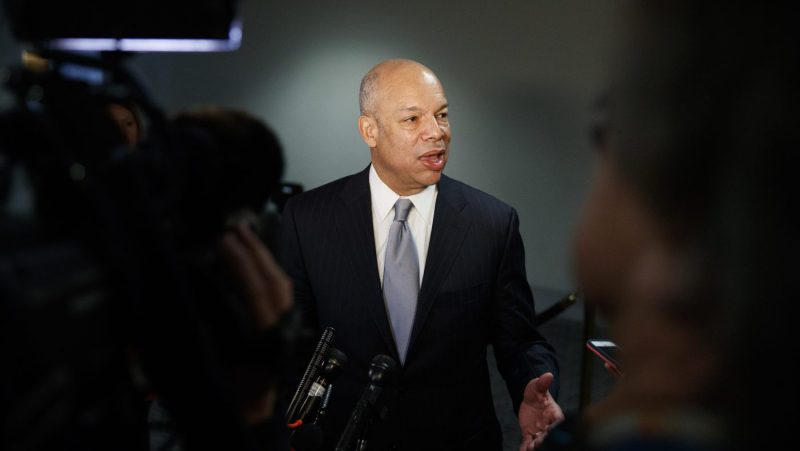
UPDATE: Former DHS Secretary Jeh Johnson has raised alarming concerns regarding the current recruitment practices for ICE (Immigration and Customs Enforcement) amidst claims of divisive rhetoric. Speaking out earlier today, Johnson highlighted that the phrase “Defend your culture” is a troubling signal that may resonate with extremist ideologies.
Johnson’s remarks come as recruitment strategies for ICE are under scrutiny, suggesting that potential recruits might be motivated by the controversial and unfounded Great Replacement theory. This theory posits that there is a deliberate plot to replace native populations with immigrants, a narrative that has been linked to various acts of violence and hatred.
The situation is developing rapidly as officials grapple with the implications of this recruitment language on public safety and community trust. Johnson emphasized that such rhetoric could effectively serve as a “dog whistle,” calling on individuals with extremist views to join the ranks of federal law enforcement.
This urgent update sheds light on the broader implications for immigration policy and community relations in the United States. The recruitment of officers who may hold these divisive beliefs raises significant questions about the integrity and mission of ICE, an agency already facing challenges in public perception.
As the conversation unfolds, community leaders and advocates are urging for transparency and a re-evaluation of recruitment strategies to ensure that ICE operates within the values of inclusion and fairness. The potential impact of these recruitment practices on immigrant communities is profound, stirring fears and anxieties among those who feel targeted.
Authorities are expected to respond to these concerns in the coming days, and many will be watching closely to see if changes are made to recruitment tactics. The implications for future policy and community trust are substantial, making this an urgent matter for citizens across the nation.
For now, the spotlight remains on ICE and its recruitment policies, as debates about culture, identity, and immigration continue to evolve.