UPDATE: President Donald Trump is set to meet with Israeli Prime Minister Benjamin Netanyahu at his Mar-a-Lago estate in Florida on Monday, as urgent discussions unfold regarding a critical U.S.-brokered ceasefire in Gaza. This meeting comes at a pivotal time, with the ceasefire facing potential delays and complications in its next phase.
Both leaders aim to leverage their close ties to expedite the peace process, especially as Netanyahu faces accusations of insufficient pressure on Israel to accelerate negotiations. Although the ceasefire, championed by Trump, has largely held since its inception in October 2023, recent reports indicate significant stagnation, with both sides trading accusations of violations.
The ceasefire’s initial phase began days after the two-year anniversary of a devastating Hamas-led attack that killed approximately 1,200 people. While 251 hostages have been released, the next phase of negotiations poses a far more complex challenge.
Trump’s ambitious 20-point plan, which has received approval from the U.N. Security Council, outlines a vision for dismantling Hamas’ control over Gaza. This includes the establishment of a “technocratic, apolitical” committee to manage daily affairs under international oversight. The leaders are also expected to discuss broader regional issues, including Iran and its nuclear capabilities, which Trump claims have been “completely and fully obliterated.”
“This is going to be a really tall order, I think, for President Trump to get Netanyahu to agree,” said Mona Yacoubian, director at the Center for Strategic and International Studies.
If successful, the second phase would focus on rebuilding a demilitarized Gaza, with an international Board of Peace overseeing reconstruction under a two-year, renewable U.N. mandate. However, significant hurdles remain, including Israel’s slow vetting process of the Palestinian committee members and continuing military operations that complicate efforts.
Recent discussions also involved U.S. Middle East envoy Steve Witkoff, who met with officials from Egypt, Qatar, and Turkey to negotiate the ceasefire. A Western diplomat highlighted a “huge gulf” between U.S.-Israeli understandings of the proposed International Stabilization Force and the perspectives of other nations, raising concerns about its potential perception as an “occupation force.”
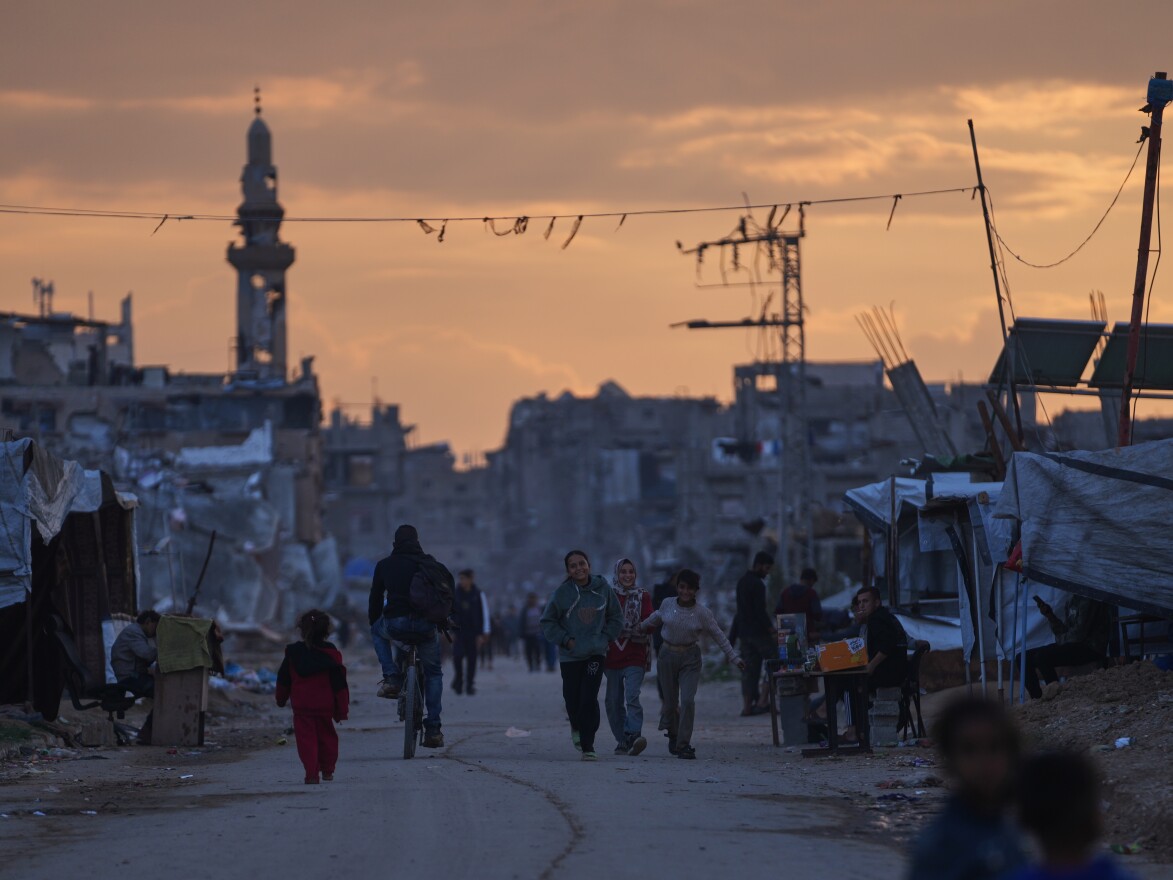
As the meeting approaches, the future of Gaza reconstruction remains uncertain. The devastation caused by Israeli bombardments has left neighborhoods in ruins, with ongoing humanitarian crises pressing for immediate solutions. Discussions are underway for funding from the United Arab Emirates to support reconstruction efforts, although these plans remain in flux.
In the coming days, all eyes will be on the outcomes of the Trump-Netanyahu meeting, as many critical elements of the ceasefire’s second phase hinge on their discussions. Will they forge a path forward, or will divisions continue to stall progress? The global community is watching closely.