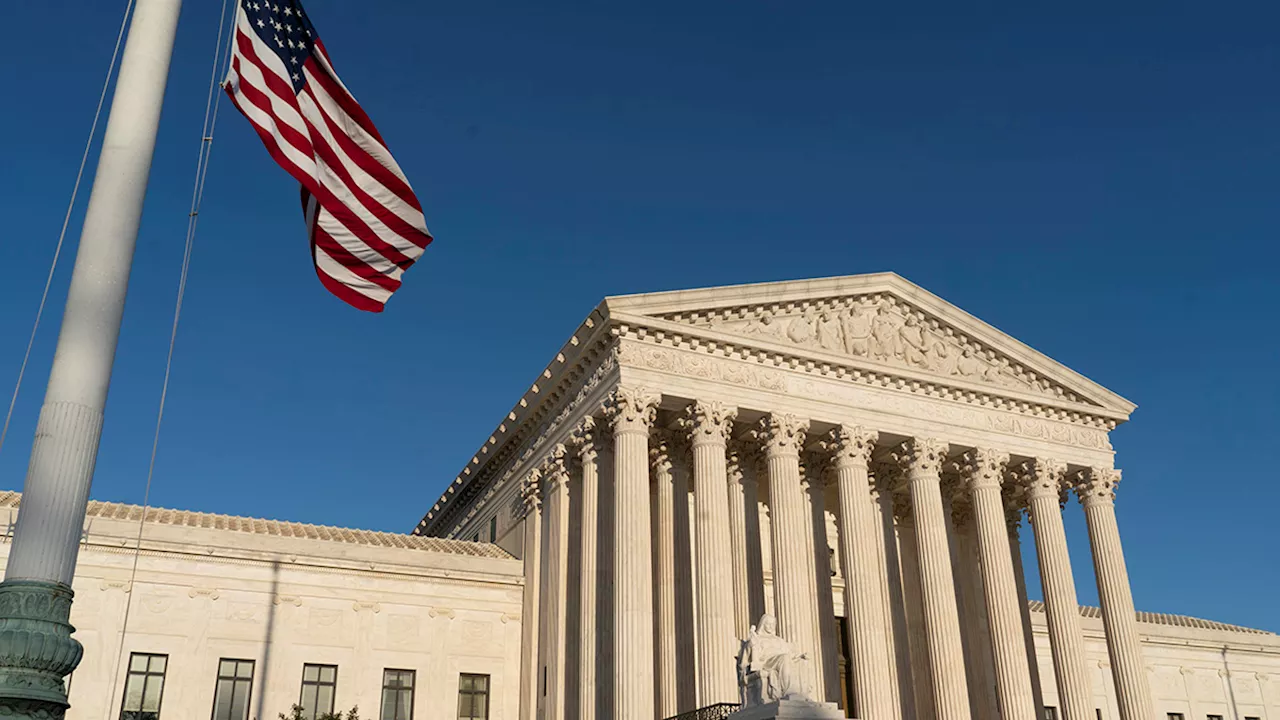
UPDATE: The Supreme Court has just announced it will hear an urgent appeal from Donald Trump regarding his controversial order on birthright citizenship. This appeal challenges a lower court ruling that deemed his directive unconstitutional, claiming children born to parents in the U.S. illegally or temporarily are not entitled to citizenship. This landmark case is set to unfold in the spring, with a definitive ruling anticipated by early summer.
This case carries significant implications for immigration policy and could overturn over a century of established legal precedent rooted in the 14th Amendment. Trump’s order, signed on January 20, 2023, as part of his broader immigration crackdown, threatens to redefine what it means to be an American citizen.
The justices will scrutinize the legality of the executive order, which has faced mounting challenges in lower courts. Legal experts note that this could fundamentally alter the understanding that anyone born on U.S. soil is automatically granted citizenship, with very few exceptions.
According to the administration, children of noncitizens are not “subject to the jurisdiction” of the United States, a viewpoint underscored by top Supreme Court lawyer D. John Sauer. He argued that the 14th Amendment’s Citizenship Clause was crafted specifically to secure citizenship for newly freed slaves and their descendants, not for the children of foreign nationals.
The Supreme Court’s decision to hear this case comes as multiple lower courts have struck down Trump’s order, signaling a potential constitutional crisis. Every court reviewing the issue has concluded that the order likely violates the 14th Amendment. This ruling has sparked widespread concern among advocacy groups, who have filed temporary restraining orders to prevent the order from taking effect.
This is the first Trump-era immigration policy to reach the Supreme Court for final judgment. The justices have previously issued mixed signals, temporarily blocking the administration’s use of the Alien Enemies Act for expedited deportations, while allowing certain immigration enforcement practices to resume, such as the controversial stops in the Los Angeles area.
In addition to the birthright citizenship order, the Court is also expected to consider the administration’s appeal regarding the deployment of National Guard troops in Chicago for immigration enforcement actions, which has been halted by a lower court.
The implications of this ruling will resonate across the nation, particularly in states with significant immigrant populations. Advocacy groups warn that if Trump’s order is upheld, it could create a patchwork of citizenship rights across the country, leading to severe disparities in treatment for children born to noncitizens.
What’s Next: As the Supreme Court prepares to hear this pivotal case, all eyes will be on the justices in the coming months. The decision could reshape immigration policy in the United States for generations to come, making this a critical moment in the ongoing debate over citizenship and immigration rights.
Stay tuned for updates as this story develops. The future of birthright citizenship hangs in the balance.