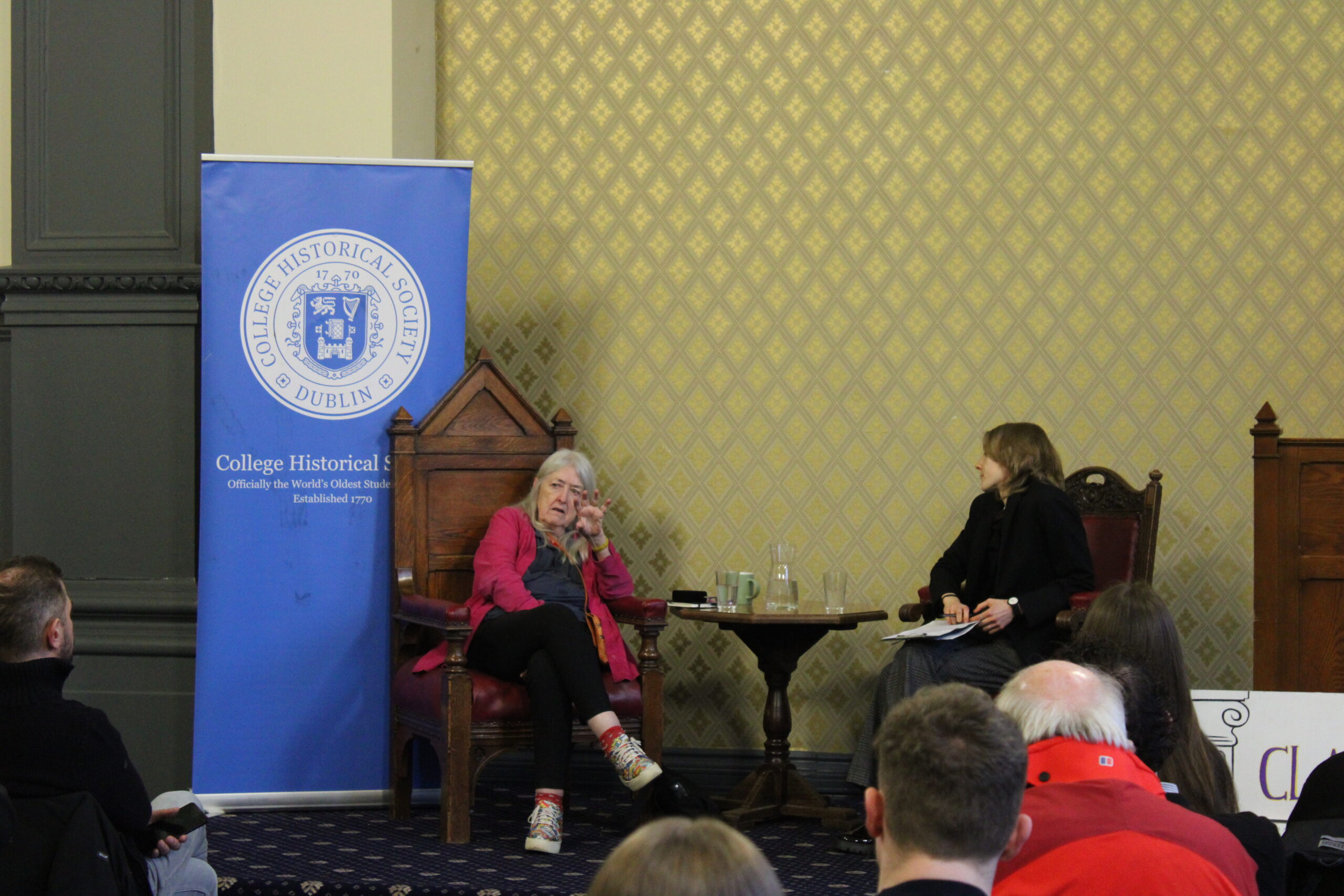
UPDATE: In an inspiring ceremony at Trinity College Dublin on February 6, 2024, renowned classicist Professor Mary Beard was awarded the Gold Medal for Outstanding Contributions to Public Discourse by the College Historical Society. This accolade recognizes her transformative impact on academia and public engagement.
Beard captivated attendees with a personal story from her childhood, recalling a visit to the British Museum at just five years old. “I have never forgotten this little piece of bread,” she said, referring to a 4,000-year-old artifact that sparked her passion for sharing knowledge. This experience shaped her belief that academics must “open museum cases for other people,” highlighting the crucial role of education in society.
The veteran historian emphasized the importance of humanities degrees, arguing they are essential for fostering responsible citizenship. “The world of public debate is dominated by those who have never thought about what it would be like to think differently,” Beard stated, urging for a broader perspective in public discussions.
However, she also humorously noted that “some of the monsters of world history have studied Latin,” advocating for a deeper understanding of historical conflicts. Beard’s previous debates, including a notable clash with former British Prime Minister Boris Johnson over the merits of Ancient Rome versus Greece, spotlight her commitment to keeping these discussions alive.
During the forum, Beard voiced her concerns about the direction of conservation and curation in museums, stating that current practices often limit engagement. “It’s a risk I’m prepared to take,” she asserted, advocating for hands-on experiences with artifacts to inspire future generations.
As a trustee of the British Museum, Beard believes that these historical connections are vital, even as she acknowledges the challenges posed by modern adaptations of classics in film. She noted the upcoming adaptation of the Odyssey by Christopher Nolan, which she feels will spark renewed interest in ancient stories, despite historical inaccuracies.
Beard’s thoughts on the evolving role of artificial intelligence in academia were equally engaging. She described herself as a “post-truth historian,” increasingly interested in narratives that transcend literal truths, asserting that “the untruths reveal what society values.”
Her reflections on the potential role of AI in education sparked lively debate, as she shared her own experience using AI to generate an essay in her style. “It revealed … my clichés,” she remarked, suggesting that while technology can aid learning, it cannot replace the unique voice developed through personal experience.
As Beard concluded her discussion, she addressed the pressing concerns of authoritarianism in contemporary culture. When challenged about parallels between historical figures and modern leaders, she pointed to Roman Emperor Elagabalus as a comparison for today’s political landscape, emphasizing the complexities of power and governance that remain relevant.
With a call for curiosity and open dialogue, Professor Mary Beard inspires both academics and the public to engage meaningfully with history. Her message resonates strongly in today’s world, urging us all to “speak the truth more often.”
This urgent update from Trinity College Dublin underscores the growing importance of humanities in understanding our past and shaping our future.