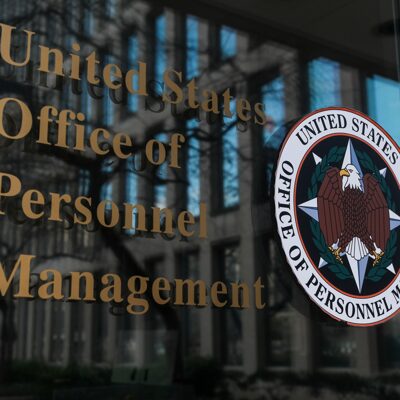
UPDATE: The Office of Personnel Management (OPM) has just clarified that federal agencies must not violate court orders while moving forward with the termination of union contracts. This urgent guidance follows a memo issued last week that inadvertently suggested agencies could disregard judicial restrictions.
In a significant development, OPM Director Scott Kupor emphasized that agencies currently bound by court orders should continue to comply with those rulings despite the previous memo’s implications. This clarification comes as tensions rise between federal unions and the administration over two controversial executive orders signed by President Trump last year, which stripped collective bargaining rights from approximately two-thirds of the federal workforce.
While most agencies complied with the orders last summer, some continue to recognize labor representatives due to ongoing legal challenges. The memo’s initial language prompted backlash from unions, particularly the National Treasury Employees Union (NTEU), which alerted appellate judges about the OPM’s guidance. In response to the uproar, Kupor reiterated that his instructions do not apply where court orders are in effect, stating clearly, “This guidance does not apply to bargaining units where there is a currently-applicable court order preventing implementation of the executive orders with respect to those units.”
The controversy centers around the use of a rarely invoked provision of the 1978 Civil Service Reform Act, allowing for union bans in the name of national security. This has raised significant concerns from unions and legal experts alike, who argue that these actions undermine workers’ rights and protections.
In a recent filing, the NTEU challenged the OPM’s termination template, which instructs agencies to file decertification petitions with the Federal Labor Relations Authority (FLRA). The union argues that the executive orders improperly exclude certain agencies from federal labor law coverage, rendering the agency’s actions invalid.
Contrarily, the Justice Department maintains that unions have the right to contest any filings made by the agencies with the FLRA, reinforcing the belief that the executive orders are lawful. “The OPM guidance proceeds on the premise…that the executive order is lawful,” the administration stated. However, they assured that unions can still challenge the orders’ validity.
As this situation unfolds, the implications for federal employees are profound. With many workers’ rights hanging in the balance, the outcome of ongoing litigation will be closely monitored. Unions are poised to escalate their legal battles, advocating for the rights of federal employees across the nation.
Moving forward, stakeholders should watch for further legal developments and additional clarifications from OPM as agencies navigate this complex landscape. The urgency of this issue cannot be overstated, as the rights of federal employees are at the forefront of this contentious legal and political battle.