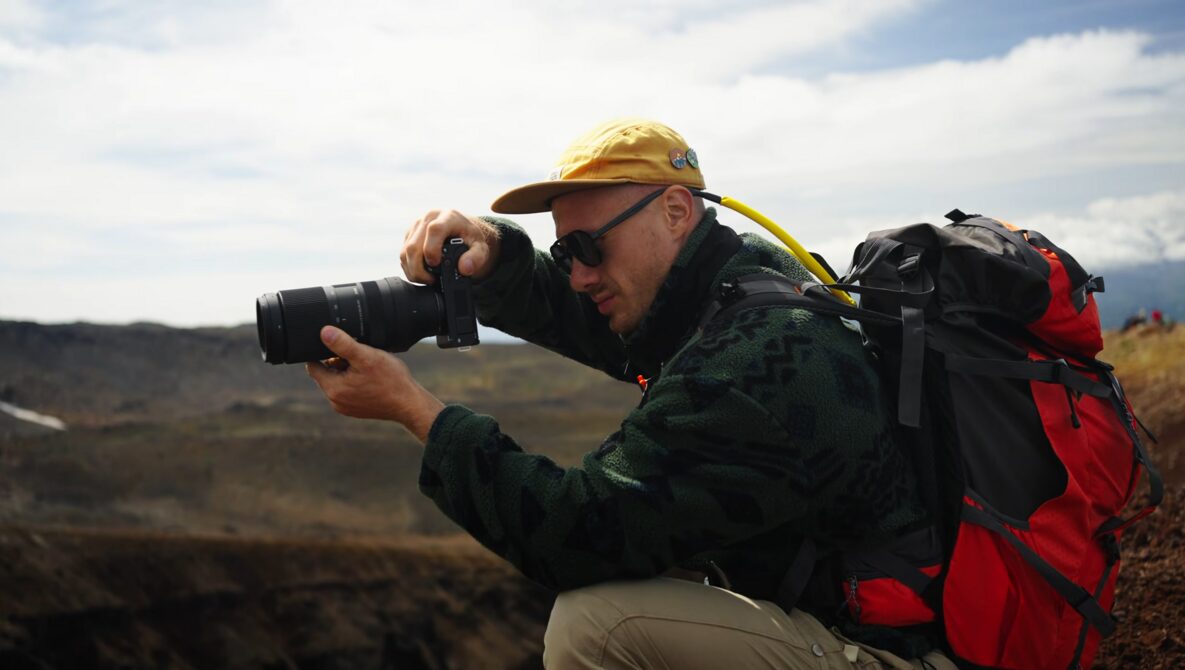
URGENT UPDATE: A groundbreaking new video reveals 11 critical photography mistakes that could be ruining your images—just released by professional photographer Shannon. This practical guide comes at a pivotal time for photographers eager to elevate their skills and avoid common pitfalls.
Photographers often fall into habitual mistakes that can compromise their work, especially when they believe their setup is perfect. The video emphasizes the concept of “tunnel vision,” particularly among those who rely heavily on long lenses like the 400mm or 600mm. It highlights a case in Denali where photographers missed capturing the full narrative of a scene by focusing too narrowly on tight frames.
Shannon encourages a shift to shorter focal lengths to encapsulate the environment and its subjects—an approach that can create memorable images. If you’re stuck in the mindset that “closer is better,” you might be inadvertently cropping out essential elements of your photos.
In a critical takeaway, the video stresses the importance of shooting with editing in mind. According to Shannon, “software is for finishing, not manufacturing the photo from scratch.” Decisions made before pressing the shutter—such as protecting highlights and choosing cleaner backgrounds—are crucial for reducing editing time later.
“Don’t force the photograph when conditions refuse to cooperate,” Shannon asserts, highlighting the futility of stubbornness in photography.
Moreover, fellow photographer Nick Page addresses the mental aspect of tunnel vision, warning against sticking to a pre-planned shot while ignoring changing light and weather conditions. This often results in missed opportunities and a memory card filled with “almost” images.
The video also introduces two transformative concepts for planning photography trips. First, it notes that light can be more critical than location, challenging the belief that iconic spots guarantee stunning photos. Second, it encourages photographers to embrace risk and skip safe shots in favor of more dynamic, unpredictable captures. Page exemplifies this with an extreme technique: using a camera in an underwater housing on a tripod, continuously shooting for days to achieve a single, remarkable frame.
As the video transitions to more technical advice, it reveals common practices that complicate the shooting process. It discusses techniques like stacking, bracketing, and panoramas, emphasizing that a tripod isn’t always necessary if you shoot quickly enough to maintain frame alignment. For example, focus stacking can replace the need to stop down to f/22, which can soften images due to diffraction. Additionally, handheld exposure brackets can be effective when shutter speeds are fast enough to counteract movement.
Shannon also connects the concept of stitching to wildlife photography, expanding its applicability beyond just landscapes. He advocates for deliberate focus mode choices rather than default settings, explaining that manual focus peaking can be essential in chaotic environments filled with branches or water that steal focus.
This video is a must-watch for anyone passionate about photography, offering insights that can drastically improve your work. Don’t miss the full rundown from Shannon and the invaluable tips that could transform your approach to capturing images.
For those eager to refine their skills, check out the video above now. Alex Cooke, a Cleveland-based photographer and meteorologist, also shares his expertise, making this a resource rich with insights. Engage with the community and share your thoughts on how these tips have impacted your photography!