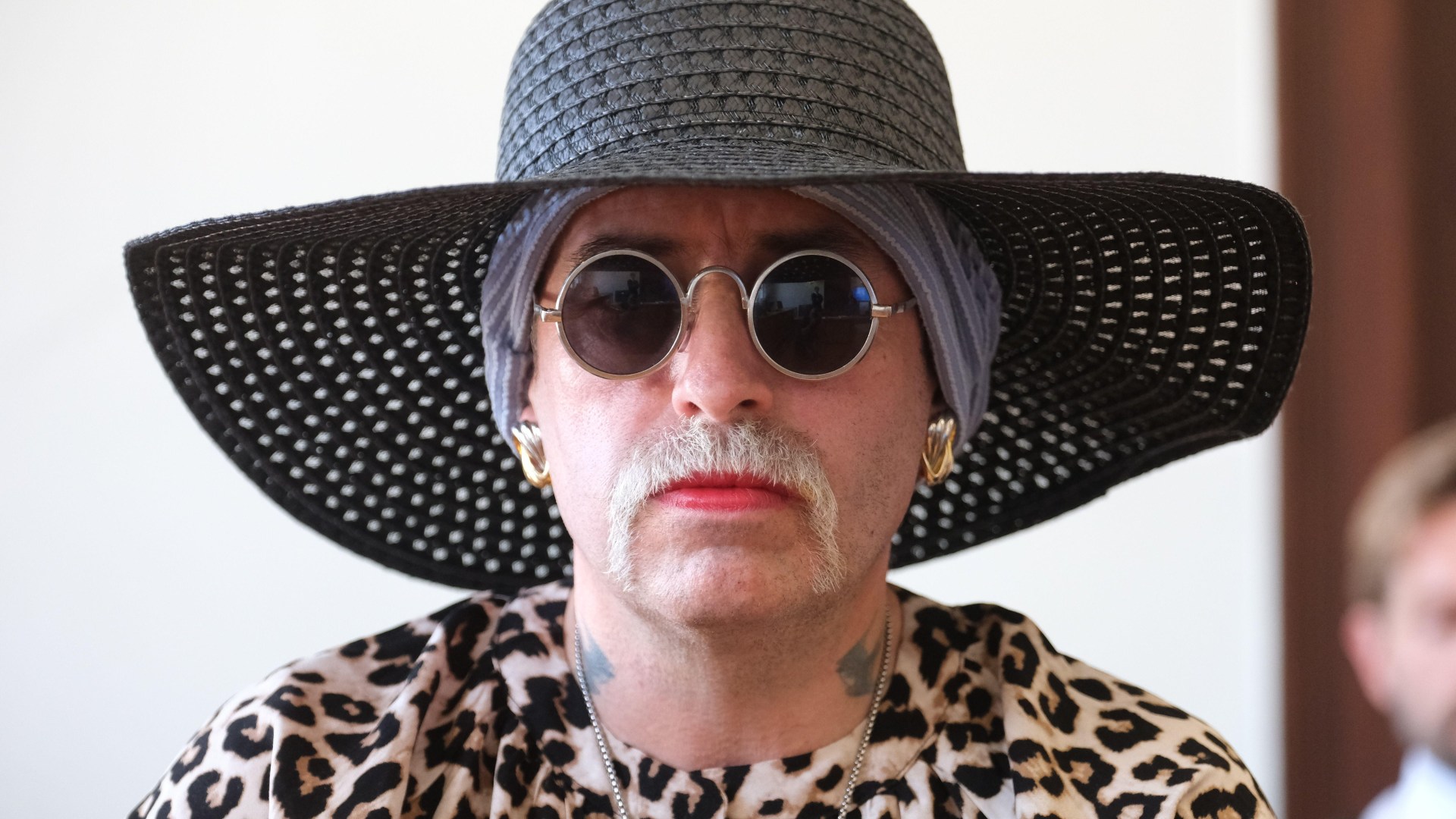
BREAKING: A former neo-Nazi, now a fugitive, has submitted a new request to change gender status to non-binary after previously identifying as female. Marla-Svenja Liebich, previously known as Sven, was convicted of inciting hatred and was sentenced to 18 months in prison in July 2023. This latest development comes just days after Liebich failed to report to Chemnitz women’s prison in Saxony, raising serious concerns about her intentions.
In a shocking statement to Euronews, Liebich expressed that public backlash surrounding her gender transition had “ruined” her experience as a woman. “Being a woman no longer feels right,” Liebich stated, citing harassment and smear campaigns as factors contributing to her identity crisis. This dramatic shift in gender status follows a controversial application to transition from male to female just before sentencing, attracting significant media attention.
Liebich’s past is steeped in far-right extremism; she was a member of the banned neo-Nazi group Blood and Honour and has a history of participating in hate rallies. Her previous comments denouncing transgender individuals as “parasites of society” raise questions about the sincerity behind her recent gender changes. Critics fear this move might exploit Germany’s recent reforms in gender registration laws, which now allow individuals to change gender status with just a signature—no medical assessments required.
As she remains on the run, Liebich has been active on social media, posting “love from Moscow” alongside an AI-generated image of the city. German authorities classify her as a fugitive after she neglected to report to the designated prison. Her legal team argues that the requirement to appear in person at a registry office for a gender change violates her personal rights, claiming that her potential arrest would obstruct the process.
The case has ignited heated debates regarding Germany’s self-determination law, enacted in 2023. Under previous regulations, individuals were required to obtain approval from two medical professionals to change their registered gender. Now, reforms allow for changes up to twice a year, a shift intended to empower transgender, intersex, and non-binary individuals. However, Liebich’s situation has raised alarms about the potential for abuse by offenders seeking to exploit these laws.
With a history of leading far-right movements in eastern Germany, Liebich’s actions have drawn scrutiny from German intelligence, which labeled her activities as “unparalleled” across the country. Her vocal support for Vladimir Putin and the invasion of Ukraine further complicates her profile, as she has been seen promoting products bearing the Russian ultra-nationalist “Z” symbol online.
The neo-Nazi’s tumultuous history includes a notorious incident during Pride month in 2022, where she posted an incendiary comment alongside an image of a burning rainbow flag, aiming to belittle the LGBTQ community. This latest attempt to redefine her gender identity raises urgent questions about the intersection of crime, identity politics, and the legal frameworks designed to support marginalized communities.
As this story develops, the implications of Liebich’s case are likely to resonate across Germany and beyond, spotlighting ongoing discussions about gender identity and the legal protections afforded to individuals in such contexts. Authorities are expected to respond in the coming days, and updates will be closely monitored as the situation unfolds.