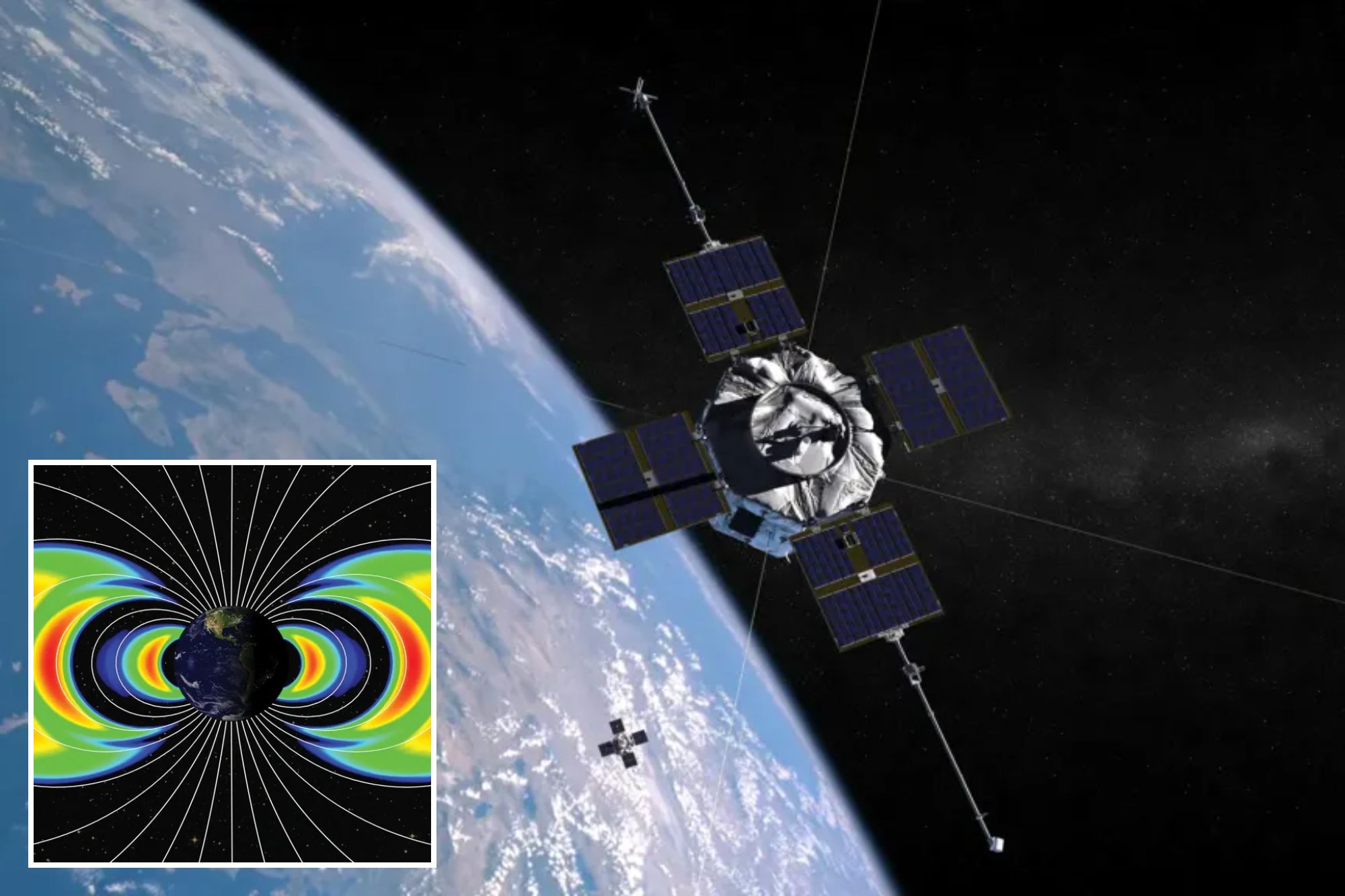
NASA’s Van Allen Probe A, a satellite weighing over 1,300 pounds, made a dramatic return to Earth on March 11, 2024. After nearly 14 years in space, the spacecraft re-entered the atmosphere and splashed down in the eastern Pacific Ocean, located south of Mexico and west of Ecuador, at 6:37 a.m. EDT. This event was confirmed by the US Space Force.
Before its descent, NASA assessed the risk of the probe causing harm upon reentry as low, estimating it at approximately 1 in 4,200. The satellite had experienced years of orbital decay, and NASA anticipated that it would burn up and disintegrate largely during reentry. Some components might have survived the intense heat of the atmosphere, the agency noted.
Initially, scientists predicted that the satellite would re-enter Earth’s atmosphere around 7:45 p.m. EDT on March 10, 2024, allowing for a 24-hour margin of error. The mission of the Van Allen Probe A began with the aim of studying the rings of charged particles surrounding Earth. From 2012 to 2019, the probe, along with its twin, Van Allen Probe B, provided valuable insights into how Earth’s magnetic field captures and releases radiation.
Significant Discoveries and Early Reentry
After the mission concluded in 2019, data analysis revealed that the spacecraft was expected to re-enter Earth’s atmosphere in 2034. However, these calculations were based on earlier predictions that did not account for the current solar cycle. The solar maximum reached by 2024 led to a series of frequent and intense space weather events, which increased atmospheric drag on the spacecraft beyond initial projections.
This acceleration caused the satellite to re-enter earlier than expected. The mission yielded critical discoveries regarding the operation of Earth’s radiation belts. Among these findings was the identification of a transient third radiation belt, enhancing scientists’ understanding of space weather and its far-reaching effects.
The data collected by both Van Allen Probes will continue to be instrumental in advancing research on space weather, contributing to a deeper understanding of the complex interactions between solar activity and Earth’s environment.