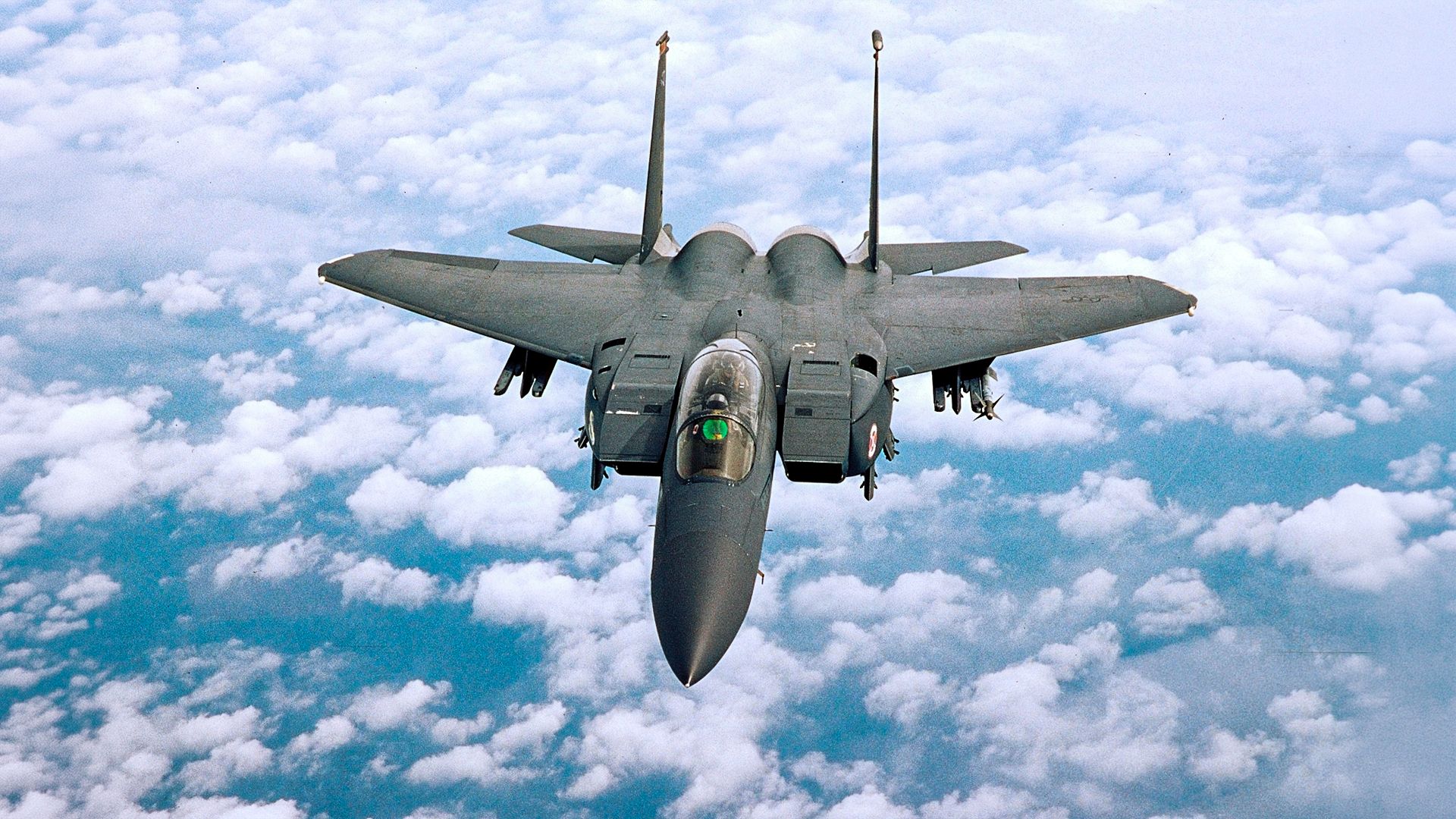
The Boeing F-15 Eagle, a cornerstone of American airpower, has solidified its reputation as a formidable fighter jet since its introduction in the 1970s. Known for its impressive combat record, the F-15 has never been shot down in air-to-air combat, making it a unique symbol of military excellence. With the current procurement of the F-15EX Eagle II, a modernized variant expected to serve well into the 2040s, the legacy of this aircraft continues to evolve.
Unmatched Performance and Historical Significance
Since entering service in 1976, the F-15 has achieved a remarkable 104 aerial combat victories without suffering a defeat in combat. Its first recorded kill occurred in 1979 when Israeli pilot Moshe Melnik downed a Syrian MiG-21. The jet played a pivotal role during Operation Desert Storm in 1991, where the F-15C accounted for 36 of the 39 aerial victories claimed by the US Air Force.
The Israeli Air Force (IAF) has been instrumental in showcasing the capabilities of the F-15, particularly during the 1982 Lebanon War, where Israeli aircraft destroyed over 80 Syrian jets without sustaining any losses. The Royal Saudi Air Force has similarly relied on the F-15C and F-15SA models for regional defense, with notable successes including the downing of Iraqi aircraft during the Gulf War.
Design Innovations and Technological Advancements
The F-15 was revolutionary upon its debut, being the first US fighter jet to feature engines capable of producing more thrust than the aircraft’s weight. This capability allows for vertical climbs and impressive acceleration. Its design includes a large wing area relative to its weight, enabling tight turns at speeds of up to nine Gs without losing airspeed.
Over the decades, the F-15 has undergone several iterations. The F-15A and F-15B models were the initial versions, while the F-15C and D introduced advanced electronics and increased fuel capacity. The F-15E Strike Eagle, developed in the late 1980s, transformed the aircraft into a lethal deep-strike bomber, capable of carrying a diverse array of air-to-ground munitions.
The latest variant, the F-15EX, incorporates cutting-edge technology, including a digital fly-by-wire flight control system and a high-performance mission computer. Designed as a ‘missile truck,’ the F-15EX can carry a substantial payload of munitions to support stealth fighters like the F-22 Raptor and F-35 Lightning II.
The F-15’s rugged construction has contributed to its longevity. Approximately 26% of its structure is made from titanium, providing strength in high-stress areas, while the fuselage design acts as a lifting body, contributing to the aircraft’s overall lift. This robust engineering has allowed the F-15 to endure significant damage and still return safely to base.
The evolution of the F-15 embodies a blend of air superiority and strike capabilities, ensuring its relevance in modern warfare. As the US Air Force continues to integrate the F-15EX into its fleet, the aircraft stands as a testament to the enduring legacy of the F-15 Eagle and its impact on aerial combat.
With its storied past and future advancements, the F-15 remains an iconic symbol of not just American airpower, but also the evolution of military aviation technology.