UPDATE: New York City has just announced a groundbreaking $68 million flood prevention initiative aimed at protecting Brooklyn from severe flooding. This project introduces Brooklyn’s first-ever Bluebelt, a revolutionary system of natural drainage corridors designed to manage stormwater effectively.
Mayor Eric Adams, alongside city officials including Rohit T. Aggarwala from the Department of Environmental Protection and Iris Rodriguez-Rosa from the Department of Parks & Recreation, unveiled the plan on Wednesday. The initiative focuses on enhancing Prospect Park’s natural features—its lakes and wetlands—to tackle the growing threat of flash flooding exacerbated by climate change.
The Bluebelt system will incorporate streams, ponds, and wetlands to store and filter stormwater, significantly improving the park’s ability to handle intense rainfall. Officials have confirmed that up to $50 million will be allocated from the Department of Environmental Protection for the Bluebelt, complementing the ongoing $20 million lakeshore restoration plan by the Prospect Park Alliance.
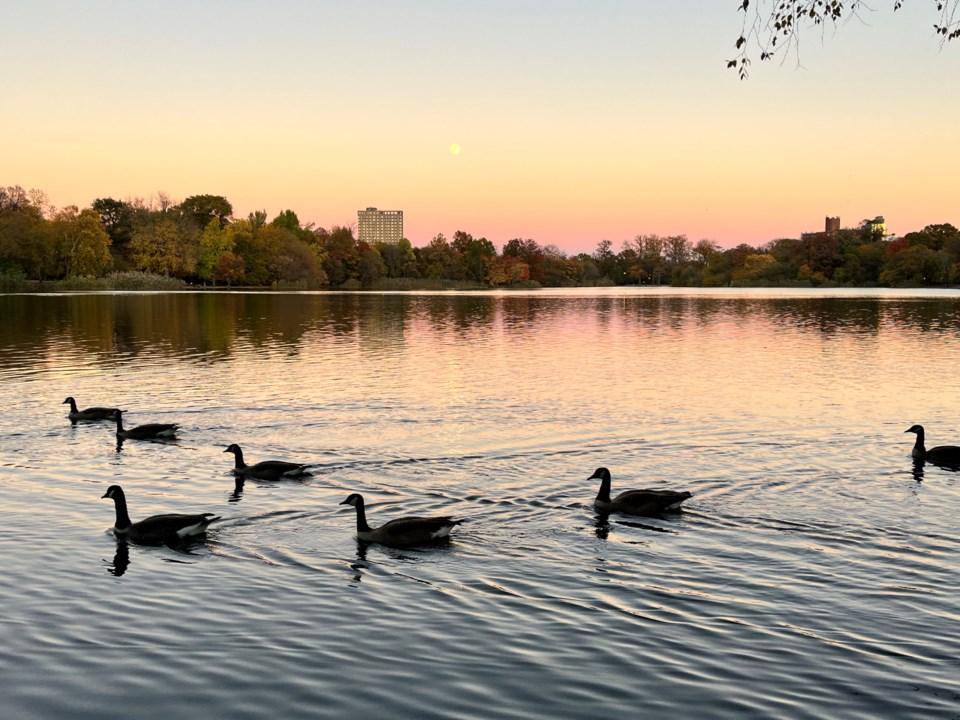
“This project harnesses nature-based solutions to strengthen the park’s lake and wetlands, allowing us to better manage intense rainfall,” said Mayor Adams in a statement. The project follows a year-long study by the Department of Environmental Protection that revealed how stormwater flows through Prospect Park and its surrounding neighborhoods during heavy rains. The findings highlighted that rainwater often floods the area rather than being absorbed into the park’s 60-acre lake, leading to flash flooding that strains the sewer system.
The upgrades to the lake are crucial. As the lake is over 150 years old, its limited capacity often results in overflow during storms. The anticipated construction will take place from 2029 to 2032, with significant improvements expected for neighborhoods including Ditmas Park, Kensington, Prospect Park South, and Windsor Terrace.
“By using Prospect Park to manage stormwater, we’re turning one of Brooklyn’s most cherished public spaces into a powerful tool for climate resilience,” stated Commissioner Aggarwala. The introduction of Brooklyn’s first Bluebelt represents a major step forward in urban climate strategy, merging environmental preservation with community safety.
As flooding becomes more frequent due to climate change, this initiative is not just an investment in infrastructure; it is a commitment to the safety and well-being of Brooklyn residents. Officials emphasize the importance of acting now to protect future generations from the impacts of extreme weather events.
Stay tuned for more updates on this developing story as construction plans unfold and further details emerge.