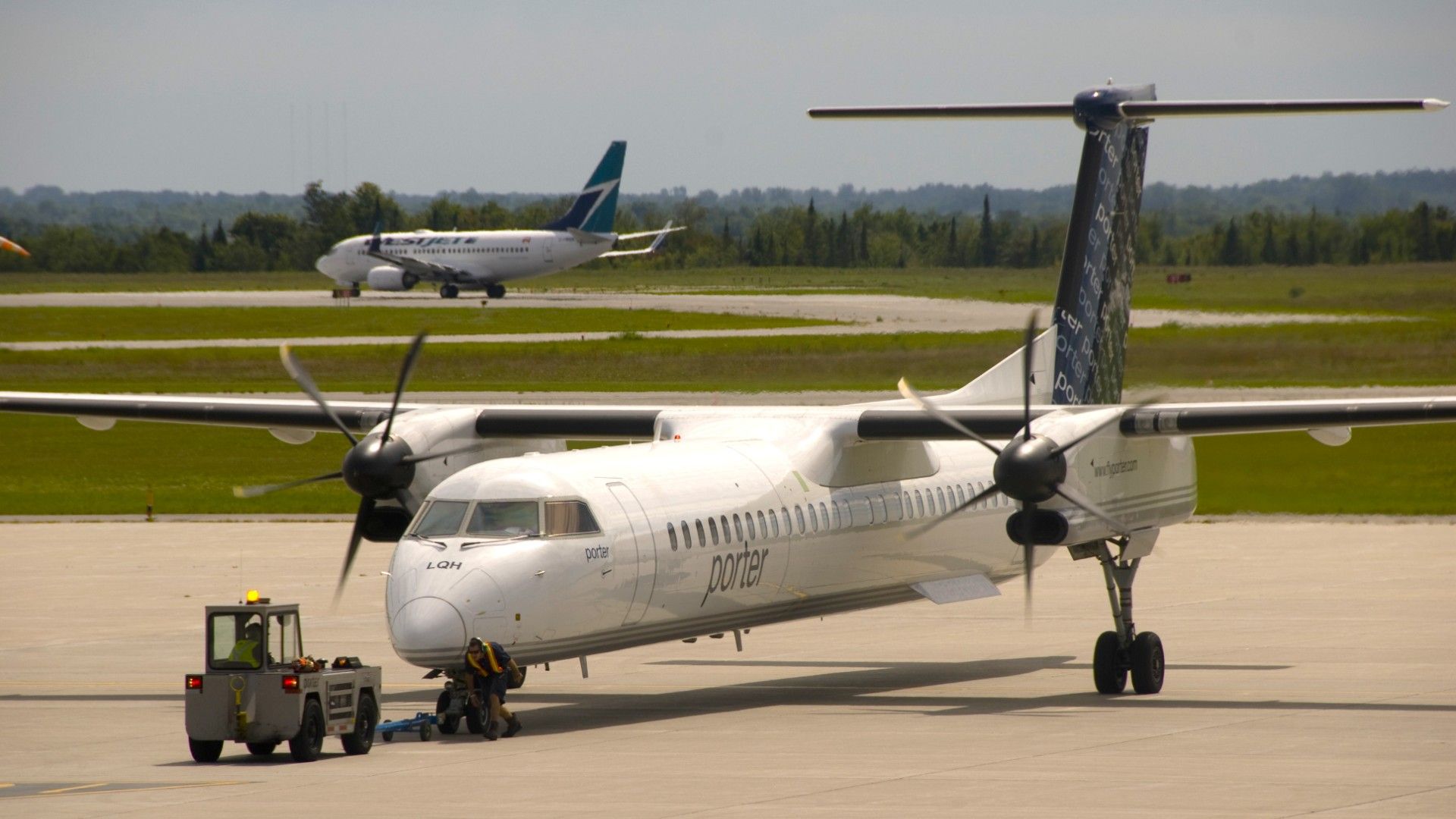
The legroom experience on flights can significantly influence passenger comfort, particularly on long journeys. A recent analysis of the three largest carriers in Canada—Air Canada, WestJet, and Porter Airlines—reveals notable differences in onboard legroom across various aircraft types. Using data from aeroLOPA, the following examination sheds light on what travelers can expect when flying with these airlines.
Air Canada: A Comprehensive Fleet
Air Canada, the nation’s flag carrier and largest airline, operates a fleet of 265 aircraft, which includes models such as the Boeing 787-9 and Airbus A320. Its most spacious aircraft, the Boeing 777-300ER, accommodates up to 450 passengers, while its smallest, the Airbus A319, carries just 136.
When assessing legroom in economy class, the most generous space is found on the Airbus A320 models, offering between 31 to 33 inches of legroom. In terms of seat width, the Airbus A220-300 stands out with a comfortable 19 inches. The legroom provided by Air Canada’s various aircraft types is summarized as follows:
| Aircraft | Number In Fleet | Legroom (Economy Class) | Seat Width (Economy Class) |
|---|---|---|---|
| Airbus A220-300 | 37 | 31 inches | 19 inches |
| Airbus A319 | 16 | 31 inches | 17.2 inches |
| Airbus A320 | 26 | 31 – 33 inches | 17.5 inches |
| Airbus A330-300 | 20 | 31 – 32 inches | 18 inches |
| Boeing 737 MAX 8 | 47 | 30 inches | 17 – 18 inches |
Interestingly, despite the size of its widebody aircraft, the legroom on Air Canada’s Boeing 787 and 777 series remains at a consistent 31 inches in economy class, which does not exceed the comfort standard set by its A320 fleet.
WestJet: Focus on Comfort
As Canada’s second-largest airline, WestJet operates over 160 mainline aircraft. The airline primarily serves routes from its hubs at Toronto Pearson International Airport (YYZ), Calgary International Airport (YYC), and Vancouver International Airport (YVR).
In economy class, WestJet offers competitive legroom, with its Boeing 787-9 Dreamliner providing between 31 to 35 inches, depending on the seat selection. The following table summarizes the legroom and seat width across WestJet’s aircraft:
| Aircraft | Number In Fleet | Legroom (Economy Class) | Seat Width (Economy Class) |
|---|---|---|---|
| Boeing 737-700 | 38 | 31 inches | 17 inches |
| Boeing 737 MAX 8 | 59 | 31 – 34 inches | 17 inches |
| Boeing 787-9 Dreamliner | 7 | 31 – 35 inches | 17.3 inches |
WestJet has faced challenges with passenger feedback regarding cabin configurations, notably reverting changes to its Boeing 737 interiors after negative reactions. Its Boeing 787-9 aircraft, utilized for long-haul flights to destinations such as Seoul and London, highlight the carrier’s commitment to providing comfortable travel experiences.
Porter Airlines: Newcomer with Growing Footprint
Founded in 2006, Porter Airlines has quickly established itself in the Canadian aviation market with a fleet of 81 aircraft. The airline operates from Billy Bishop Toronto City Airport (YTZ) and focuses on both business and leisure routes, including popular destinations in the United States and Caribbean.
The economy class legroom offered by Porter Airlines is generally consistent at 30 inches across its fleet, which includes the De Havilland Canada Dash 8-400 and the Embraer E195-E2. The following table illustrates the legroom options:
| Aircraft | Number In Fleet | Legroom (Economy Class) | Seat Width (Economy Class) |
|---|---|---|---|
| De Havilland Canada Dash 8-400 | 29 | 30 inches | 17 inches |
| Embraer E195-E2 | 52 | 30 inches | 18.3 inches |
Porter Airlines is in the process of expanding its fleet of Embraer E195-E2s, which offer a more comfortable 18.3-inch seat width. Despite being a smaller player in the market, the airline provides a unique travel experience, with all flights from Toronto Pearson Airport operated by the E195-E2.
Business Class Comparisons
In terms of business class offerings, both Air Canada and WestJet provide lie-flat beds on their long-haul flights, enhancing comfort for their passengers. Air Canada’s longest route spans from Vancouver International Airport (YVR) to Singapore Changi Airport (SIN), covering approximately 7,965 miles. Meanwhile, WestJet’s longest route connects Calgary to Rome, measuring around 5,265 miles.
Porter Airlines, while lacking widebody long-haul services, offers a limited business class on its Embraer E195-E2 aircraft, featuring a seat pitch of 36 inches.
Conclusion: Who Offers the Most Legroom?
When comparing legroom in economy class, Air Canada’s Airbus A320s and A321s provide the most generous space for short-haul flights, with up to 33 inches available. For long-haul travel, WestJet’s Boeing 787-9s offer a remarkable 35 inches of legroom in select seats. Overall, the legroom options across these three major Canadian airlines align closely with industry standards, providing travelers with various choices to enhance their flying experience.
As more travelers share their experiences, it will be interesting to see how these airlines adapt their services in response to passenger feedback on comfort and overall satisfaction.