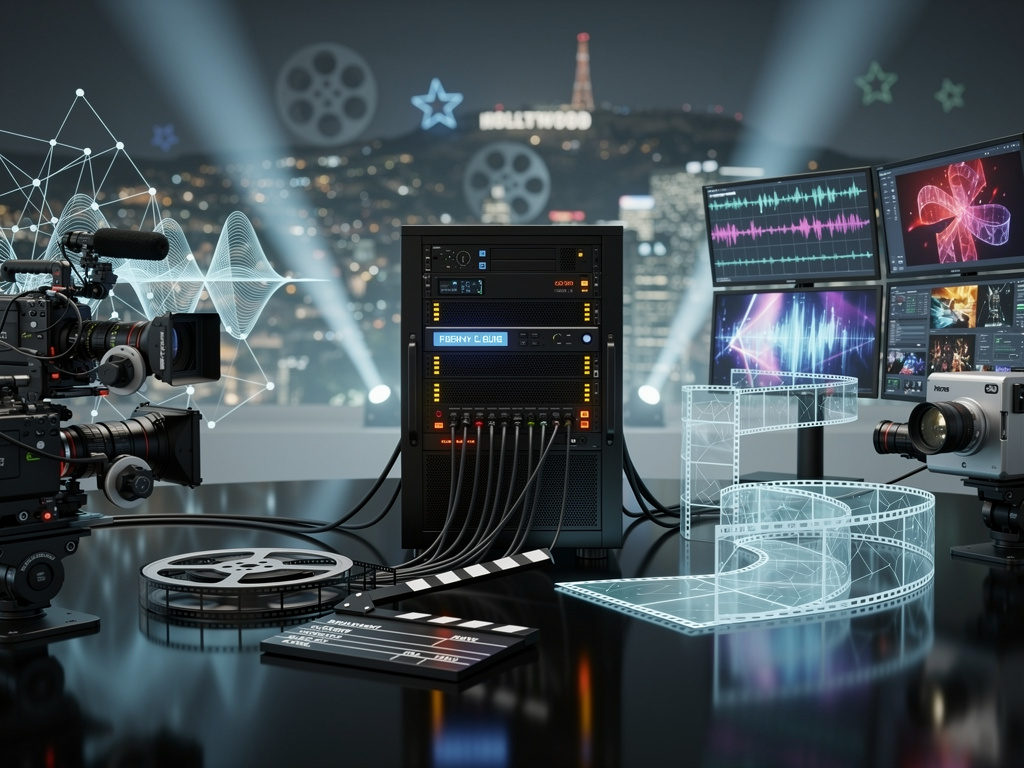
UPDATE: A groundbreaking surge in funding for AI startups is transforming Hollywood, with a staggering $150 billion raised in 2025 alone. These innovative companies are not just entering the scene; they are poised to revolutionize everything from scriptwriting to special effects, fundamentally altering the entertainment landscape.
As the clock ticks down on 2025, the momentum behind AI integration in Hollywood is palpable. Investors are betting big on these startups, seeing them as essential tools for an industry grappling with rising production costs and changing audience expectations. Recent reports reveal that Wonder Studios, based in London, has made headlines by securing significant backing through pitches showcasing AI’s capabilities in visual effects and production efficiency. Their approach promises to create hyper-realistic scenes, drastically reducing the need for costly on-location shoots.
The funding frenzy is not limited to visual effects. Startups specializing in automated dubbing and script analysis are also capturing attention, demonstrating how machine learning can streamline workflows previously bogged down by time and budget constraints. According to a Business Insider analysis, eight startups alone have raised millions by showcasing technologies that tackle everything from synthetic voices to personalized content distribution.
The implications are enormous. Disney’s recent partnership with OpenAI is a pivotal milestone, signaling a broader shift toward embracing AI in major studios. Investors from all corners, including top venture capital firms like Andreessen Horowitz and Sequoia Capital, are eager to capitalize on this potential, viewing Hollywood as a ripe ground for innovation akin to the streaming revolution a decade ago.
As negotiations heat up between AI firms and studios for access to film catalogs and character rights, industry observers on X (formerly Twitter) are buzzing about a potential gold rush in AI-generated content. One notable post highlighted the growing interest in AI-generated trailers that have reportedly boosted viewer engagement by double digits during test runs.
While the excitement around AI in entertainment is undeniable, challenges loom on the horizon. Concerns regarding intellectual property rights are at the forefront, as AI systems trained on existing films could tread a fine line between inspiration and infringement. The recently formed Creators Coalition on AI, representing over 500 artists, is advocating for self-governance to address these issues, wary of potential overreach by technology.
Furthermore, labor implications are significant, with unions like SAG-AFTRA expressing fears of job displacement in voice acting and visual effects. Startups are countering these concerns by framing AI as a collaborator rather than a replacement, emphasizing how it can free creatives to focus on more complex tasks.
Despite these hurdles, the outlook remains optimistic. Experts predict that 2026 could see AI-generated films making their mark at major festivals, with innovations in rapid prototyping capabilities paving the way for new storytelling possibilities. Industry leaders are also exploring global markets, particularly non-English territories, where dubbing technology could enhance cultural relevance and boost revenues.
In the coming months, the industry will be closely watching how these developments unfold. As AI continues to carve out its niche in Hollywood, it remains to be seen whether it will democratize storytelling or lead to a homogenized output. One thing is clear: the future of entertainment is being rewritten, and AI is taking center stage.
Stay tuned as we follow the latest updates on this burgeoning intersection of technology and creativity, where each investment could redefine the entertainment landscape.