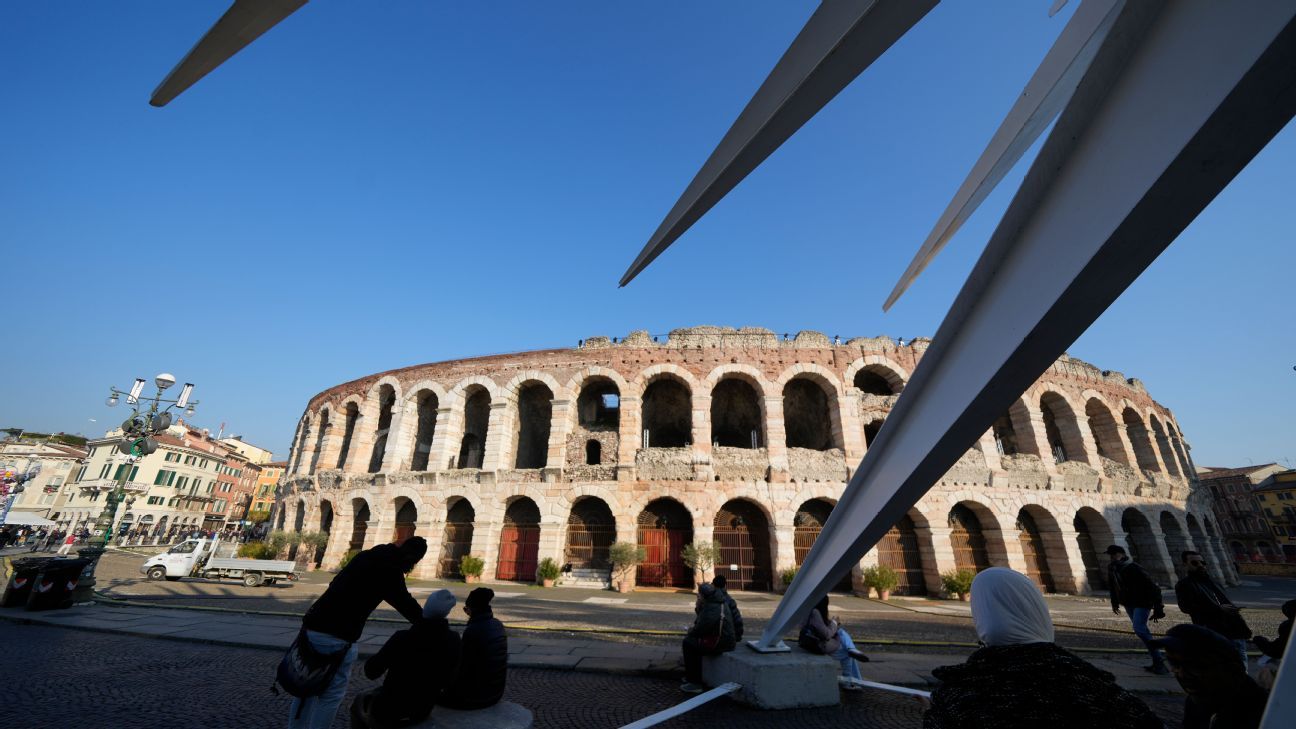
The ancient Roman Arena in Verona, Italy, will undergo significant renovations to enhance accessibility and safety ahead of the 2026 Milan Cortina Games. This historic venue is set to host the Olympic closing ceremony on February 22, 2026, and the Paralympic opening ceremony on March 6, 2026. As part of a broader initiative, the renovations aim to ensure that the Arena is welcoming to all, including individuals with disabilities.
Constructed in the 1st century, the Verona Arena has served various purposes throughout its history. Originally designed for gladiatorial contests and exhibitions of exotic animals, it later transformed into a medieval marketplace and is currently recognized for its distinguished opera festival. Despite its rich history, the arena has not been adequately equipped for those requiring assistance until now.
The planned renovations are part of an ambitious 18 million euro (approximately $21 million) project overseen by the governmental company responsible for Olympic infrastructure. Architect Giulio Fenyves, who leads the design team, emphasized the importance of modernizing this ancient structure to meet contemporary accessibility standards.
Enhancements for Accessibility and Safety
The renovations will improve the area surrounding the Verona Arena, making it safer and more navigable for wheelchair users and families with strollers. This includes constructing curb ramps along a one-kilometer stretch of sidewalks leading from Verona’s main train station to the venue. Additionally, dedicated bike lanes will be introduced to enhance overall mobility.
Paralympians participating in the Parade of Athletes will benefit from a significantly upgraded route that leads through Corso Porta Nuova and across Piazza Bra into the Arena. These enhancements are coordinated with officials responsible for preserving the monument and ensuring compliance with current accessibility legislation.
Fenyves noted that the integration of new features must be done delicately to respect the Arena’s historical significance. “This is an ancient monument that is some 2,000 years old, that remains active and hosts audiences,” he stated, highlighting the need to re-evaluate logistical aspects such as entry and exit points.
Key Features of the Renovation
Inside the Arena, a key component of the project will be a wheelchair-accessible ramp made from pre-rusted steel and local Prun stone, which has adorned the structure since its construction. This stone, found in the nearby Lessinia hills, provides the Arena with its distinctive pinkish-yellow hue and contains fossilized shells from a prehistoric sea.
The ramp will be removable, yet project manager Paolo Zecchinelli hopes it will remain as a lasting legacy of the Games. Previously, individuals requiring mobility assistance approached the Arena from a natural slope leading from Piazza Bra. Alongside the permanent ramp, a temporary ramp will also be installed to accommodate spectators, athletes, the elderly, and families.
Other improvements include the replacement of outdated railings and the installation of new handrails at varying heights throughout the Arena. The city is also undertaking renovations of restrooms to enhance accessibility. Following the conclusion of the Olympic and Paralympic events, plans are in place for the installation of an elevator, providing individuals with limited mobility access to the uppermost level of the Arena.
Zecchinelli expressed optimism about the renovations, stating, “A part will remain as a gift to the city, which will help this beautiful monument to be more accessible both to people who tour it and those who attend opera performances and other concerts.”
As the Verona Arena prepares for its role in the 2026 Milan Cortina Games, these enhancements are set to preserve its historical legacy while ensuring that it serves as a welcoming venue for all visitors.