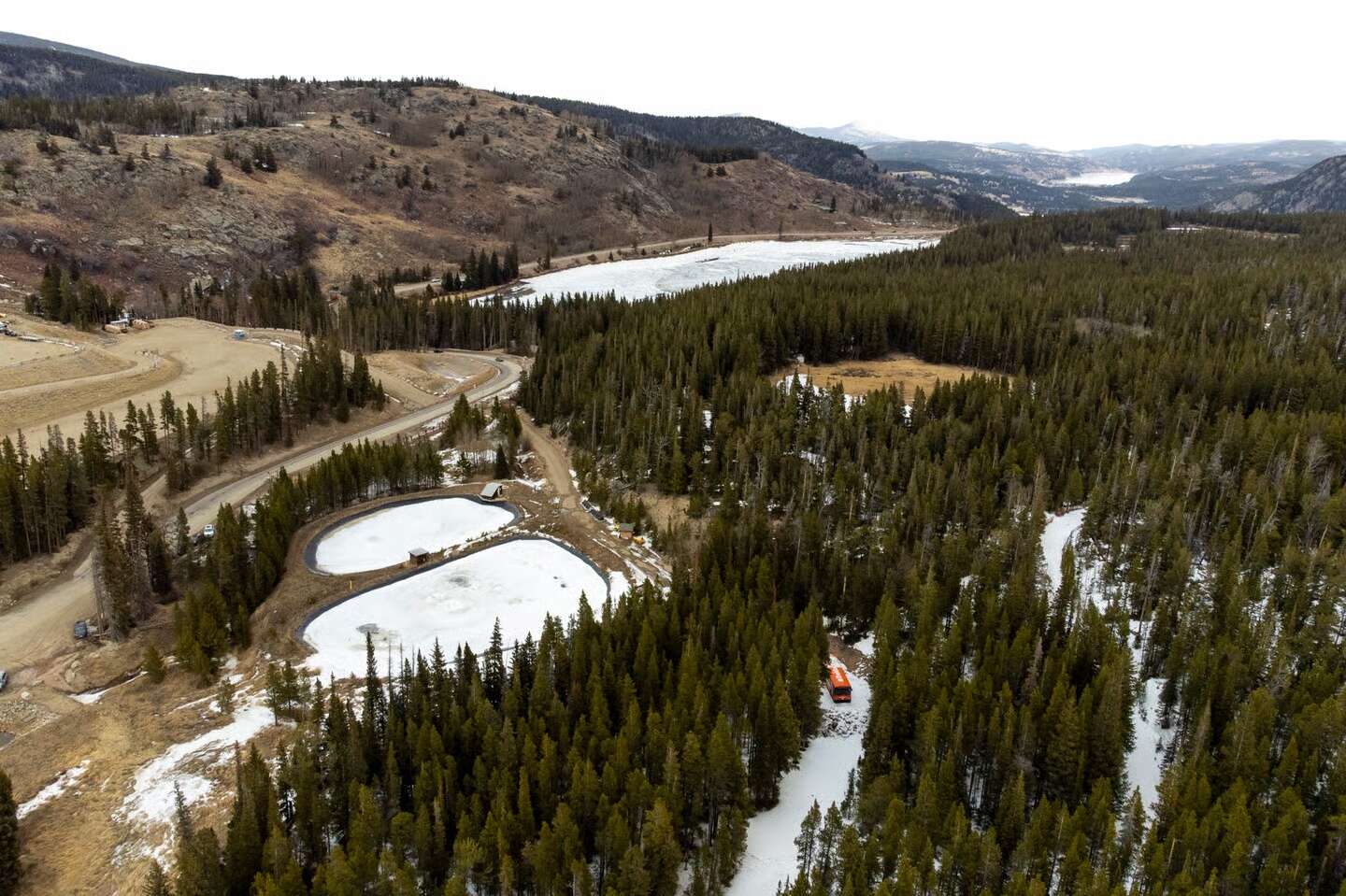
The severe snow drought affecting the Western United States is pushing cross-country ski areas to their limits. The Eldora Nordic Center, located near Boulder, is experiencing a significant decline in visitors due to unprecedented conditions. Manager Aaron Sloan noted that, in a typical winter, the center would be bustling with skiers. This year, however, access has been restricted primarily to holders of season or multiday passes, with limited trails open for exploration.
On a recent morning in February, skiers were only able to navigate a small portion of the resort until 11:00. The remaining hours were dedicated to the labor-intensive process of shoveling snow from nearby woods onto the trails. “We didn’t do our snow dances with enough enthusiasm,” Sloan remarked. “I did not ever, ever dream that the obstacle would be just this level of dirt on the ground instead of snow.” The sight of dirt, rather than snow, has become increasingly common across ski areas in the region.
According to the National Snow and Ice Data Center at the University of Colorado Boulder, snow coverage in the Western U.S. peaked at about 38% of the average in February, marking a record low since satellite measurements began 26 years ago. High temperatures and low precipitation have exacerbated conditions, prompting concerns about the future of skiing in the area. Climate change is likely to increase the frequency of such droughts, creating additional challenges for cross-country skiing venues, which may adapt more slowly than their downhill counterparts.
Research indicates that the average ski season in the United States has shortened by approximately one week from 2000 to 2019 compared to the 1960-1979 period. Projections suggest that by 2050, the ski season could shrink further by one week to nearly two months, contingent on the pace of global efforts to reduce fossil fuel use.
In response to these challenges, many alpine ski resorts are implementing strategies to preserve their operations. Some have developed new terrain at higher elevations or invested in advanced snowmaking technologies. In Colorado, certain ski areas are even funding “cloud seeding” initiatives, where silver iodide is dispersed into the atmosphere to stimulate snowfall.
Despite the efforts of larger resorts, smaller cross-country ski areas often lack the financial resources to pursue similar options. Reese Brown, executive director of the Cross Country Ski Areas Association, pointed out that many of these areas are located at lower elevations, limiting their ability to expand. “There’s no room for growth in terms of altitude,” Brown stated. “Your base area, your entry-point parking lot, is what it is.”
Some Nordic resorts are adapting through innovative methods. A recent study by the CCSAA and the Outdoor Industry Association revealed that around 27% of cross-country trail areas have invested in smaller snowmaking systems, which are less powerful than those used for downhill skiing. However, these systems are only effective when temperatures drop below freezing. This winter, for instance, the Bridger Ski Foundation in Bozeman, Montana, has struggled to operate its snowmaking systems due to unseasonably warm weather.
A more practical strategy adopted by several ski areas is known as “snow farming,” which encompasses various techniques to maximize limited snow coverage. At the Eldora Nordic Center, for example, staff are building snow fences to create drifts and removing rocks to maintain trail usability with less snow. Some resorts are even investing in technology to store snow under insulated blankets during summer months.
While the outlook may seem bleak, some long-time cross-country skiers remain hopeful. Jana Hlavaty, a former member of the U.S. Olympic cross-country team, now runs the Keystone Nordic Center in Colorado. At 84 years old, she continues to ski daily, despite the challenges posed by fluctuating weather patterns. Hlavaty expressed optimism, stating, “It’s going to come back. Mother Nature is never going to have two years this bad,” even though ticket sales have significantly declined this season.
Yet, not all ski areas are managing to endure the current drought. Ellen Miller-Goins, co-owner of the Enchanted Forest Cross Country Ski Area in Red River, New Mexico, shared her heartbreak as this winter marks the first time the resort has been unable to open due to a lack of snow. Founded by her parents in 1985, the resort holds deep personal significance for Miller-Goins, who recently took over operations following the passing of her parents. “It’s just wrapped up with the pain of them and our dream,” she lamented. “So I get a little brittle when we talk about climate science because I’m kind of angry.”
The ongoing snow drought underscores the urgent need for action regarding climate change and its impact on winter sports. Cross-country ski areas are at a critical juncture, facing significant challenges that threaten their future viability. As the season progresses, the resilience of these communities will be tested as they navigate an increasingly uncertain environment.