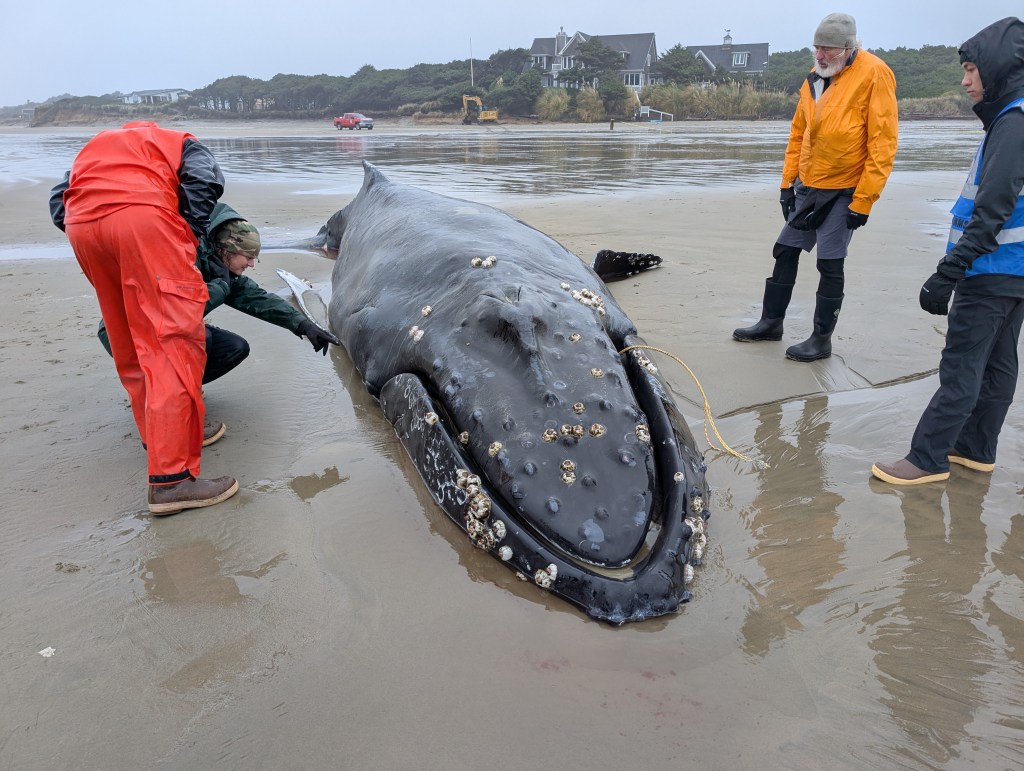
In a significant move to protect humpback whales, the Oregon Department of Fish and Wildlife (ODFW) has announced a change in regulations affecting commercial Dungeness crab fishing. As of this year, the implementation of “late-season” regulations will shift from May 1 to April 1. This adjustment aims to reduce the risk of whale entanglements in crab gear, which has been increasingly problematic for the growing humpback whale population along the Oregon coast.
New Regulations to Mitigate Risks
The updated regulations mandate commercial crab fishermen to operate in waters less than 40 fathoms deep and to reduce the number of pots used by 20 percent. Additionally, each pot must display a “late-season” buoy tag. Justin Ainsworth, ODFW Marine Resources Program Manager, emphasized that while the previous measures had a positive impact, research indicates that implementing these restrictions earlier in the season will further decrease entanglement risks.
Ainsworth stated, “Whale distribution in Oregon waters varies each year, but limiting commercial Dungeness crab fishing to shallower waters in April will help reduce overlap with crab gear.” This proactive approach is particularly relevant as the interactions between humpback whales and fishing gear have increased in recent years. The National Marine Fisheries Service (NMFS) reported incidents of entanglement involving three humpback whales in 2024 and four in 2025, including a juvenile whale that was found stranded alive near Yachats last November.
Community Support Through BottleDrop Fund
In a separate but equally impactful development, the BottleDrop Fund is providing financial assistance to nonprofit organizations across Oregon. Thirteen nonprofits, including the Northcoast Watershed Association in Astoria and Spruce Up Warrenton, are set to benefit from a total of $250,000 distributed by the Oregon Beverage Recycling Cooperative in collaboration with the Oregon Community Foundation.
The BottleDrop Fund was established to support initiatives that align with the spirit of the state’s Bottle Bill. Its focus areas include litter and waste reduction, environmental conservation, education, and job training for low-income residents. These grants aim to foster public-private partnerships and tackle community challenges effectively.
For those who encounter entangled whales or sea turtles, it is crucial to report these incidents immediately to the NMFS entanglement response hotline at 1-877-SOS-WHALE (1-877-767-9425).
As Oregon continues to navigate the complexities of wildlife conservation and commercial fishing, these recent regulatory measures and community support initiatives reflect a commitment to preserving both marine ecosystems and local organizations.